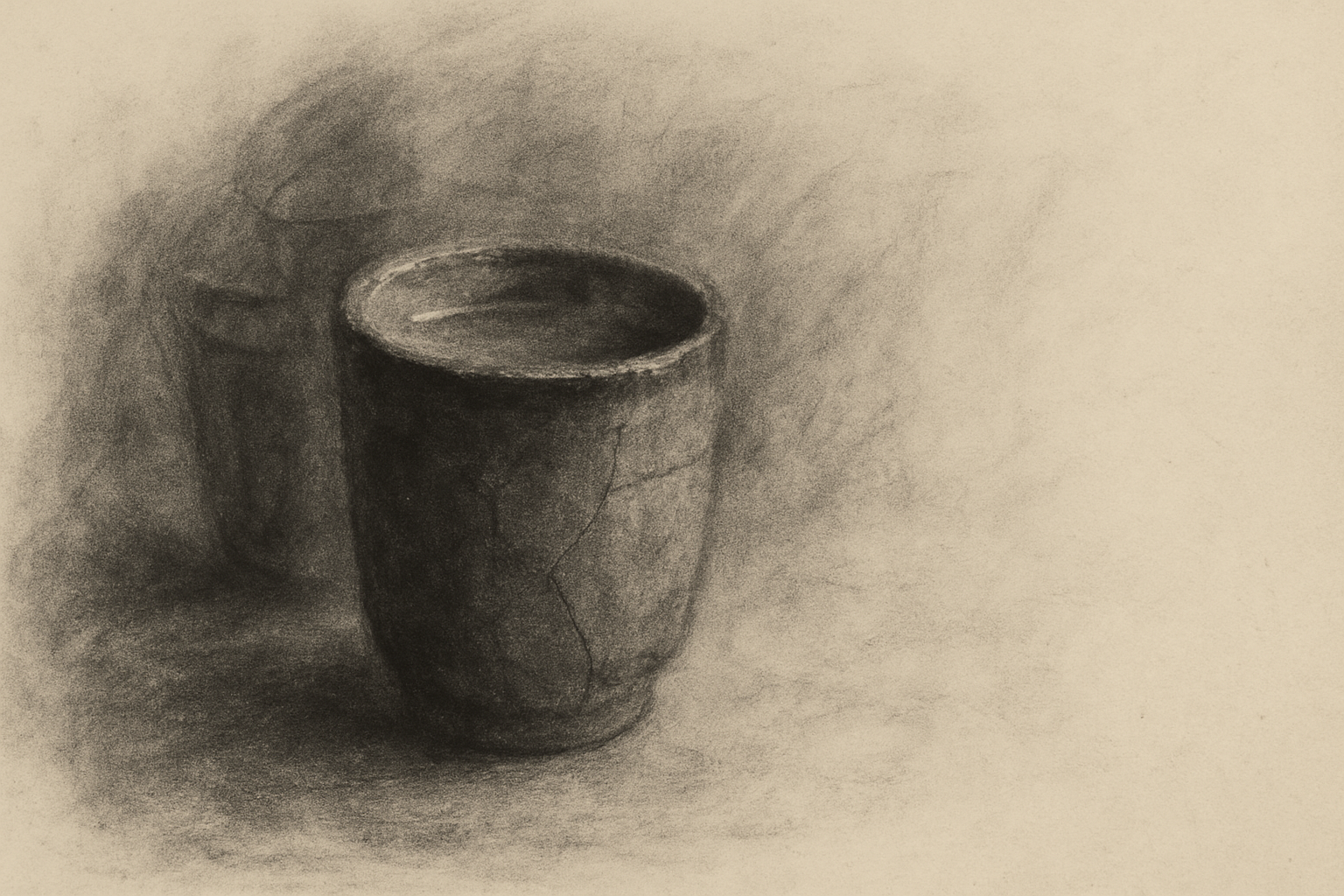
The Love of Insufficiency
El Amor por la Insuficiencia
A question about whether awakening is a gradual process or an immediate shift, leading into an exploration of why we cling to the sense that something is missing.
The Love of Insufficiency
A question about whether awakening is a gradual process or an immediate shift, leading into an exploration of why we cling to the sense that something is missing.
Why ask the question of what consciousness wants to express through me, if it is already experiencing what it wants to?
It has two sides. What consciousness most deeply wants to experience right now, its number one priority, is what it is experiencing right now. And part of what it is experiencing right now is the freedom to co-create, to participate in the movement of what it is experiencing.
The freedom to co-create
It wants to experience the freedom of being you: "What now? What about now? What do you want now? What do you want to experience now?" But the foundation is always that the number one priority is to experience what is being experienced right now, and that is fully satisfied, always. Then, part of what it is experiencing right now, which it is choosing to experience, is to be you, with the freedom and the mystery of "and now what?" That is the perspective where there is movement, participation. I call it co-creation. And if consciousness wants to experience the shift of the center of gravity from identification with something limited to something unlimited, it will, when it does.
It doesn't seem like it's an absolute thing. It seems like there is some movement to our experience. Maybe sometimes it is predominantly one or the other, but for me that is important to remember: it is not an absolute thing. I can have a moment of contraction, and it is so easy then to say, "I am contracted," as opposed to recognizing that there is contraction going on.
It is exactly that. And it is both. I would even say that the most important aspect is the one that is gradual, because it has to do with every minute shifting toward more peace.
Two kinds of events
Then the other side, the thing that is like an event, has two forms. One is an event where there is an absolute knowing or recognition of your true nature. But you can have that event and still, minute by minute, live identified. So there are two events. One is a singular event of recognition, and another is that at any moment there can be a shift: am I identified or not? Do I believe or not? It is binary. I either believe that I am limited, or I do not. At any moment there could be an event, but it is literally a choice, and it is that simple.
Freedom versus victimhood
These are all maps. But the point of them is to break up and undo certain beliefs about how things are, how they should be, how this whole thing plays out, and to really provide something that shifts us into a place of freedom versus victimhood. The victimhood would be: "I'm identified, this is happening to me, I'm trying to get unstuck but I'm stuck. I can't do it and I'm trying. I'm going to push, and maybe tomorrow..." That is a position of powerlessness. But it is not that we need to develop power. It is just a choice to be a victim of the situation. And the only place where there is a victim is identification.
For example, what does consciousness want to live as you? I say priority number one: what it wants to live is what it is living right now, at any moment. Always true, 100% of the time. And that includes the freedom to dance with reality, which involves time, future, past, memory, thoughts, desires. That is a position that is a lot more open, a lot more free, a lot closer to what I would call truth. It is still a map, but it is much closer than the alternative: "What I am is a limited consciousness in a body that is stuck, that is suffering, with reality coming at it, and it can fight it off or try to make it better." In that view, you are at the mercy of the universe.
The fundamental realization
The fundamental realization that every mystic has reported is basically this: the knowing, the deep recognition, that you are not the limited body-mind with the universe out there, while you are in here, limited, just doing your best. Rather, the other map is closer to the truth.
Where religion has said "remove this" or "add that," you could simply substitute the word "God" when I say "universal consciousness." I am not saying "universal consciousness" to remove God-like qualities. I am giving God conscious, universe-like qualities. I could say: God is consciousness and is the universe. One is the seen, the other the unseen. And what you are is consciousness with a perspective inside of a universe. That perspective, that point of view, is the free choice of divinity, of consciousness, to be a part of its creation.
Why? Because it is beautiful. Because it is incredible. Because it is amazing. Otherwise there is only emptiness, spaciousness, infinite timelessness.
Why create at all
The mystery is why consciousness decided to create all this. If you answer that question as innocently and sincerely and childlike as you can right now, what would you say?
I guess it is fun. But I do not know what to say, because there is also a lot of suffering and destruction and horrible things. So maybe I think that is fun as well. But there is always the opportunity in each moment to see it differently, to create something, to move. No matter what the situation is, we always have the opportunity. Maybe that is the beauty of it. And maybe these awful, quote unquote, moments are wake-up calls where we can see what we are capable of. It depends on how we look at it, I think.
Consider that the constraints we have as human beings have a reason. By constraints, I mean: I cannot fly right now. I cannot choose for you to be at peace 24/7. But there is still infinite freedom within constraints. I would say that those constraints are intentional, and without them, some aspect of the beauty of creation would be lost.
So in that moment I was asking you, "Why did you create this as it is right now?" And I asked myself, and the answer that came is: because I love it. Because it is beautiful. In every way.
Contrast as the ground of love
Even the opportunity to discover peace and communicate it to those who overlook it: I find that beautiful. And if that were not part of reality, something would be lost. If there were no war and no opportunity for human beings to learn to be individuals, to not sacrifice their freedoms but to be in community in peace, something would be lost.
Because there is war, there is love for peace. All of these contrasts highlight what, within form, we want to create. Otherwise there is no form, no time, no thing, no awareness of peace, because there is nothing that is not peaceful.
From that, it is inevitable for consciousness to project the universe. From the place of what there is, what everything is (infinite, spacious, but no form, just pure beingness without objects, no time, no space): from that, I say it is inevitable that the universe would be projected.
Why? I am trying to find words. The words would be: it is love. Consciousness can always go back to its source, and so at some point the desire to forget infinite peace is the most beautiful act of freedom. I do not say the choice to project the universe is because of love, or a motive, or a reason. There is no reason. It is just that what is, is beautiful. It is magnificent, especially knowing how infinitely free it is. The pros greatly outweigh the cons, I would say.
You are not a victim of identification
What I am trying to communicate is that this is you. Take it as poetically as possible. These are like true maps and scientific theorems, but expressed in metaphor and poetic form, and they are the most accurate thing I could say right now.
Any real struggle has only the source of believing that a limited identity is all you are. And you are not a victim of that. You are not something that identification happened to, something trying to free itself from identification. It is a conscious choice, moment by moment: my conscious choice to forget, to live from a limited perspective. Totally free to choose something different any minute.
Suffering as just another appearance
Just remember: you have thoughts you do not like. You have emotions you do not like. You have bodily sensations you do not like. You have an external experience of what your reality is in this world and you do not like that. Anything you do not like is something that is appearing in the same space as everything else.
The disliking is just another appearance. That which dislikes is just like another sound, just like another thought, just like another image, a car driving by. That which is disliked is just another thought, like a sound, like a car passing by. We tend to focus on our thoughts, on the sensations we do not like, the situation we do not like, the interpretation of reality we do not like. We tend to focus on that and think it is more real and important than a car passing by. I am not saying a car passing by is more important or real. I am just saying it is all happening in the same space.
Walking around focused on that, treating everything else as secondary and that as primary: that is a choice. All of it is happening in the same space as everything else. What is more important? You will decide moment by moment. But why is the sound of a car driving by in the distance, or a bird singing, neutral and unimportant, while the experience of disliking is non-neutral and very important?
The same attitude toward suffering
Any sensation you would call suffering (contraction, an emotion, a stormy thought, the mind being active and fast) is like the car driving by. Why are you okay with a car driving by? You do not need it to slow down. You do not need it to stop or be quiet. But this, you do.
You could walk down the busiest street in Manhattan, the loudest, craziest street in any city, and you would be going, "Wow, amazing! The crazy chaos, the noise!" Why not the same attitude toward suffering? "Wow, my mind is going crazy. Wow, my back is really tight. Wow, I am out of money. Wow, I do not have words." Wow. And then dance with it.
But the experience, the story, the sensations of dislike, the pushing and pulling and trying to change something: that is like looking at a computer screen and wanting it to not be a computer screen. You could instead say, "I do not mind. I can work with things and change them." What gets amplified is amplified only because we are focused on it. It is like putting a magnifying glass on a sensation. Take the magnifying glass away and look out the window. The habitual, hyper-focused attention on the inner map of what your reality is, who you are, all your problems: it is repetitive, obsessive thinking, problem-creating and problem-solving on a loop.
What you are saying makes sense in that it is a process. I work with reality, I work with the thinking, I work with looking, I work with noticing that I am obsessing, and then I can take a distance. I can relate to what you are saying, but as a process, not as an absolute.
Yes, until you discover that it is absolute.
Exactly. But here I am. I am not going to wait for tomorrow. I am going to be in my process, because that is where I am right here, right now.
It is available right now
That is too much belief in the idea that it is a process, that it will happen tomorrow, that one day the apple will fall from the tree. Right now, you can look at your experience, 100% of it, what is happening right now, what you do not like, what you struggle with. Nothing needs to change, only how you relate to it. Is it something you need to change in order to be okay? You are choosing to struggle.
And that points to exactly the paradox, because I might see the struggling, or I might not see it. But I do make the choice, and I take responsibility for my experience of it.
Okay, but what is happening right now? Is that happening now? Is there anything you are struggling with?
Well, one example: my partner lives in the States, and we have not figured out a way for us to live in the same place. I do not struggle with it. I do not like it, but I do not obsess about it. My preference would be to be in the same place.
For sure. But what is the problem?
I guess I would like to find a solution. It would be good to find one.
Do you have a problem with the situation you just described? Do you have a problem with it?
Not really, not right now.
Okay. Do you have a problem with anything right now?
Yeah, the cold. I am having a hard time with the cold weather.
The difference between preferences and deep not-okayness
Understandably. But what is important is to be able to recognize the difference between things we are experiencing that we like or do not like (preferences and things we can change, which is all fine) and something that is like a deep not-okayness, a sense that something is fundamentally not right. That can start feeding what we would call suffering.
What I propose is that anything you experience, even this sense of not-okayness, can be looked at in a way that shifts it into being just one part of the rest of your experience.
It is just something that shows up, is what you are saying. Nothing I have to do anything about unless I choose to. I do not have to fight it or wish it otherwise. Not resist it, I guess. Is that what you mean?
Yes, because the way for the resistance to be gone is to basically see that it is just happening and that it is actually not real. But you have to look at it, rather than being on the train of resistance. Whatever train of resistance anybody would bring to a session like this, the only way they would not get off that train is if they did not want to. You can get off that train unless you want to stay on it, because there is nothing that is not just what is happening.
There will be an attachment if you cannot get off that train. There could be a dialogue where I sense the other person is just reacting, basically saying, "Let me stay on my train of resistance." That could be partly a lack of artfulness on my part to guide the person, but ultimately it is a choice. Because there is no experience from which one cannot step off the train of resistance.
Obviously, if somebody is going through an extremely difficult situation, the dialogue I would have would change and be sensitive to that. But we rarely are in situations that require that level of sensitivity. A lot of the constant anxiety and struggle is just obsession and identification.
A personal example
I remember about ten years ago I was in an office working, and I was really struggling. I had already had very significant openings and shifts, but I was as tight as ever, contracted, really struggling, even though I had tasted something different. I was working, and I had this sudden insight: this is obsession. Non-stop thinking, thinking, thinking. The instant I realized that, I looked at it, and my whole sense of self shifted. I was in a big office building, and it felt like suddenly the sense of self expanded so that everything around me became inside. I saw the mind just go silent. And the instant before and after was clear: this has been the train of thought since I was a child, since I have memory. What had been going on was thinking, thinking, thinking, thinking.
I saw it was just a train of obsessive thinking. And there was a nostalgia to it. It was like, "This is me. This is my childhood struggle, my childhood sense of heartache, my struggles with my family and my friends." Stories are beautiful. The whole story of my life. I was very attached to it. All of that was not just memory. Through all of that time, I was thinking, identification, contraction. But it was literally just a constant inner movie running alongside my actual life, and I was not looking at the life; I was looking at the movie. It was a frustration to be living that way, and I just wanted it to stop. It was not like some event happened because of grace (though I could call it grace). I can also say I was simply willing to see reality. I was interested in the truth of what was going on. I was just obsessed with the story of me.
I remember your intense thinking face. You used to look so serious and contracted.
So that must be something for you, to see this transformation.
Yes, it was. And it is enjoyable and beautiful also.
The neutrality of suffering
You said you had a question. I am not sure if we covered it.
I think you partly did, when you were talking about why our suffering or our problem is not as neutral as the car passing by, and how it has to do with focusing and making it so much more important. But doesn't it also have to do with the fact that suffering is more intense, more uncomfortable to be with? Or is that also a creation?
No, it really is not. It is very mysterious to me, a lot of these things. After seeing reality more clearly, I explored many things that in the past used to be suffering: trying to get my mind as active as I could, exhausting myself, overworking. And I found it had nothing to do with that, because I could not get anything to stick at the level of importance it once held.
One thing that was actually a key source of distress was cold. I really wanted to leave Canada. Even swimming in the ocean during summer was unbearable. It created a kind of suffering, just being in cold water, that was unbearable. One spring, we were at a beach, and the water (which I later learned is the coldest in Western Canada) was freezing. Someone I know swims in the ocean in winter, dives in, stays for a few minutes, comes out fine. But this time, she went in with her daughter and said it was incredibly cold. They got in up to the waist, went down, stood up twice, got out, grabbed a towel: "It is so cold."
I was curious. I wondered how it would be for me now. I did not even have my bathing suit because I had not planned to swim, but I was in my shorts and said, "I am going to go in." I went in. I was swimming for thirty minutes. Swimming, floating. I could not believe it. Neither could the others.
What happened was that all of the distress around it simply did not have any importance. But the intensity was there, the same intensity. In fact, at one point it got so intense that I thought I should get out because I was completely numb, with a lot of pain, basically all of my flesh and muscles turning into cramped pain. I thought I should be sensible and not push it. But then I thought, "What if I just wait one more minute? See what happens."
And then suddenly I started feeling fire, heat from my hip, from my back. Just heat, heat, heat. My whole body was in this glowing warmth. I felt hot in the coldest water. All the numbness went away. I was floating, swimming, in freezing cold water. I got out. It was windy. Everyone else was shivering, putting on clothes and hats. I did not even need a towel for about five or six minutes. Totally fine, no cold, just hot. Then I changed and went on.
That was like, "Okay, there is more to this than I would have thought."
Intensity is a story of importance
That is also why I was giving the example of imagining you are in the middle of a busy street, crazy traffic, people pushing you around. You could be angry, or you could feel, "Wow, where am I? This is a crazy, amazing place!" You are in the middle of Manhattan, and the intensity: you could like it or dislike it. But the intensity you dislike is a self-created story, an attachment to the dislike, an attachment to "this is not okay." You could choose to just see it as neutral, like the sounds of cars, like a car honking at you. It could just be neutral.
So that is essentially "stop amplifying it." But can you get there? Does it not need some kind of training? I remember a teacher I studied with used to say you need to train the muscle of attention to be able to withstand more intense experiences. Does it not require training, or can you just drop the excess thinking and be there?
I think it needs training, but you have trained. With some people I talk to, I say, "Yes, you need to train this, you need to practice." It is like working out, like muscles. But there is something beyond that, and I do not think there is a hard requirement. What you are bringing up now is just another trick: "I am not ready. I need to develop an ability. I need to train the muscle of awareness." It is another way of pushing it to tomorrow. "One day, maybe tomorrow, if I work hard and train." It is available right now.
The pattern of mental trickery
With some people I speak to, I do not talk about this at all. I talk about how to distinguish one sensation from another, how to learn to feel fear, how to observe what the mind does. We are talking about that here too. But with you, I hear a lot of these tricks: mental trickery for keeping the resistance, keeping the seeking going. "Not ready. I cannot. One day maybe I will cross the road."
That is the mechanism of creating a map in which something is not sufficient and you need to work it out so that in the next moment, or tomorrow, or in the future, it will be. If you are seeing these mechanisms, they need to be addressed at the level of how the thoughts work. So we need to look at the belief itself: "I need to develop a muscle I have not yet developed." That is a perfect pointer for someone who is starting out, who does not meditate. But for someone who has been hearing that phrase for twenty years? "I need to develop a muscle" is just another useful belief to keep you in the loop.
Look at why you keep coming up with these: "Something is missing. I do not have this. I need this." This can be an emotional attachment, a desire, even a love of a certain flavor of suffering.
You ask really valid, important questions. But what keeps coming up for you is the narrative. Notice that the pattern is a looping sense of something missing. One thing gets debunked, and then: "But don't we need to develop a muscle? Don't I need to undo the tensions in my back? Don't I need to..." That which keeps coming up for you is coming up because there is a kind of love of it. It creates something familiar, like a cuddly teddy bear. It is the small, struggling sense of suffering "me."
The love of the original wound
It is the love of that which you started calling "me" when you were three or four years old. It is a kind of struggle and insufficiency and insecurity. "Something is not right, something is missing." What you are pointing to with those phrases is a kind of sensation. We become addicted to it. There is a love for it, because "who am I if I am not that?"
So notice: rather than the insufficiency being something that merely guides and rules your experience ("I need to get somewhere, I need to fix something"), consider the hypothesis that you are creating it because you love it. You are attached to it. Explore it. See if it is true for you.
Observe it. Stay with it. Touch it. Feel it. Not like something you are a victim of, but something you are creating, something you are craving. Just sit with it. You might still want it to stop, want it to go away. But you can say: "If this is going to be here the rest of my life, I am okay." That is the attitude.
Accepting the insufficiency
Because the way it works is: there is an insufficiency, and "I need to stop it, I need to fix it." But if you develop an acceptance of that insufficiency, an attitude where you can say, "If this is how the rest of my life is going to be, I am okay with it," then it is going to respond. It is as if it says, "Oh, really? You do not love me anymore?" Because what it is there for is for you to want to fix it, want to change it, want to stop it. And if you say, "It is okay. I can be with you for the rest of my life," then its whole motive for being is completely eliminated.
You can sit with it and say, "Yeah, it is okay. I can be with this sensation for the rest of my life. It is not a problem." And then one day you are going to wake up and it is going to be gone, because you are not feeding it. You basically go through a withdrawal, because it is an addiction. It is the source and root of all addictions.
The wound of separation
It is the wound that appears when we split the ocean and believe we are only one part of it. We cut something off, or pretend to cut something off, and that feels like something tight, something missing, something wrong. Then we try to fix it, but the thing that tries to fix it is the separation trying to fix itself, to remain separate and fix itself. But the wound is actually the separation itself, so it cannot get fixed. It can only not be separate. And then nothing really fixed it, because there was never a problem to begin with. You realize there was never anything lacking. It was just the separation and the belief "that is all I am."
That creates a sense of lack, a sense of contraction. From the energy of that need, whatever motive it generates is going to feed it. So if you just accept that and learn to be okay with it, saying, "I can be with this for the rest of my life; it does not need to go away," then all of the habits it is motivating (the addictive thinking, the creating of time, the belief that tomorrow you will be fixed if you do this or get that) will lose their fuel. All of that just feeds the habit that creates the need, that fortifies the belief in separation and time and space.
Sitting with what is already clear
If you can already touch that sense of insufficiency, that sense of something missing, and put it in those words and be aware of it, then that is it. You have cleared all the layers of the onion. Now you sit with that. The commitment, the question, is: "Am I truly okay if this is how it is, if this is present for the rest of my life? I have no need for it to stop, no need for the sense of insufficiency to go away."
All of the fireworks of madness that it creates will subside. Most people who have not touched that directly will be talking about some problem (a relationship, a situation, an emotion), and that is the level at which it needs to be addressed. The more you work through that, the more you come to a point where you see: none of that is taking away this underlying sense. You start to see the meta-structure, which is simply a constant sense of something missing. No matter what you fix, no matter what you do, it is not going away.
And then you stop buying into the thing you created in the first place. We create these things when we are children and then forget the structures and trains we put in motion. They were given to us by our society, by our parents. We are just living them out. But at some point, we see: no matter what I achieve or gain, no matter what desire I satisfy, this is not going away. That is a really big discovery. And if you see it truly, not just as something you heard and believe, but something you really see, then you can stop putting energy into fixes that do not work.
That is where you learn to just meet that sensation directly and sit with it. The commitment is to not want it to go away, to just be fully okay. This is the rest of your life. That is basically a vow of total acceptance: "I vow to accept this. I am going to be okay with this. It does not have to go away. Can I be okay with life if this is how it always is, so that I do not try to make it stop?"
The sensation of it is going to come and go. You are going to learn to sit with it, and it is going to become more and more present. At some point it might burn; it can get really intense. But that is the ultimate thing we run away from. It is the source of all fear and pain.
Fear and pain then create a narrative about how to control things so there is less fear and pain. And so we numb it all up. Peeling the layers is facing fear and pain, facing fear and pain, until you learn to stay with it and then discover the source of it: this deep sense that something is not okay, that something is missing.
That does not always appear as the most unbearable thing. It could be super subtle. It could shift and become much more present and intense, but usually it is like a whisper always in the background, a quiet anxiety, like nails on a chalkboard but quietly in the corner of the room. Something is just not right. And then if somebody asks you the question, you can explain what is not right: "It is because of this, and because of that, and if this changes, then that." But really, those are the narratives trying to solve this problem. Something is just not right, and it is not right in me, or not right in the world, or both. Depending on the person's narrative, where the problem seems to be changes. But usually, the closer you look, it is: something in me is not right. Something in me is not okay. And there is almost a shame underneath it, an anxiety and a shame.