Wasting Time and the Mind's Resistance to Emptiness
Perder el tiempo y la resistencia de la mente al vacío
A student reflects on how the teacher's mention of "wasting time" revealed a hidden pattern, and the teacher explores how the mind experiences freedom as threat, and why the process of disidentification must unfold gradually.
Wasting Time and the Mind's Resistance to Emptiness
A student reflects on how the teacher's mention of "wasting time" revealed a hidden pattern, and the teacher explores how the mind experiences freedom as threat, and why the process of disidentification must unfold gradually.
When you mentioned wasting time, you blew my cover. It was great. I didn't even know that was such a constant pattern in me. I can see how, as you say, there's nowhere to go, but this process is just uncovering and uncovering. There's something that feels so good about it somehow: lifting up those stones and seeing all the bugs underneath. Something about that is very freeing.
I was feeling quite playful during the meditation, on the edge of cracking up. But I also know that at moments I'm speaking directly to the mind, to the "I." It's not fun. That's where all our resistance is, where all suffering is. So I was speaking a little bit in the mind's language.
Two flavors of "nowhere to go"
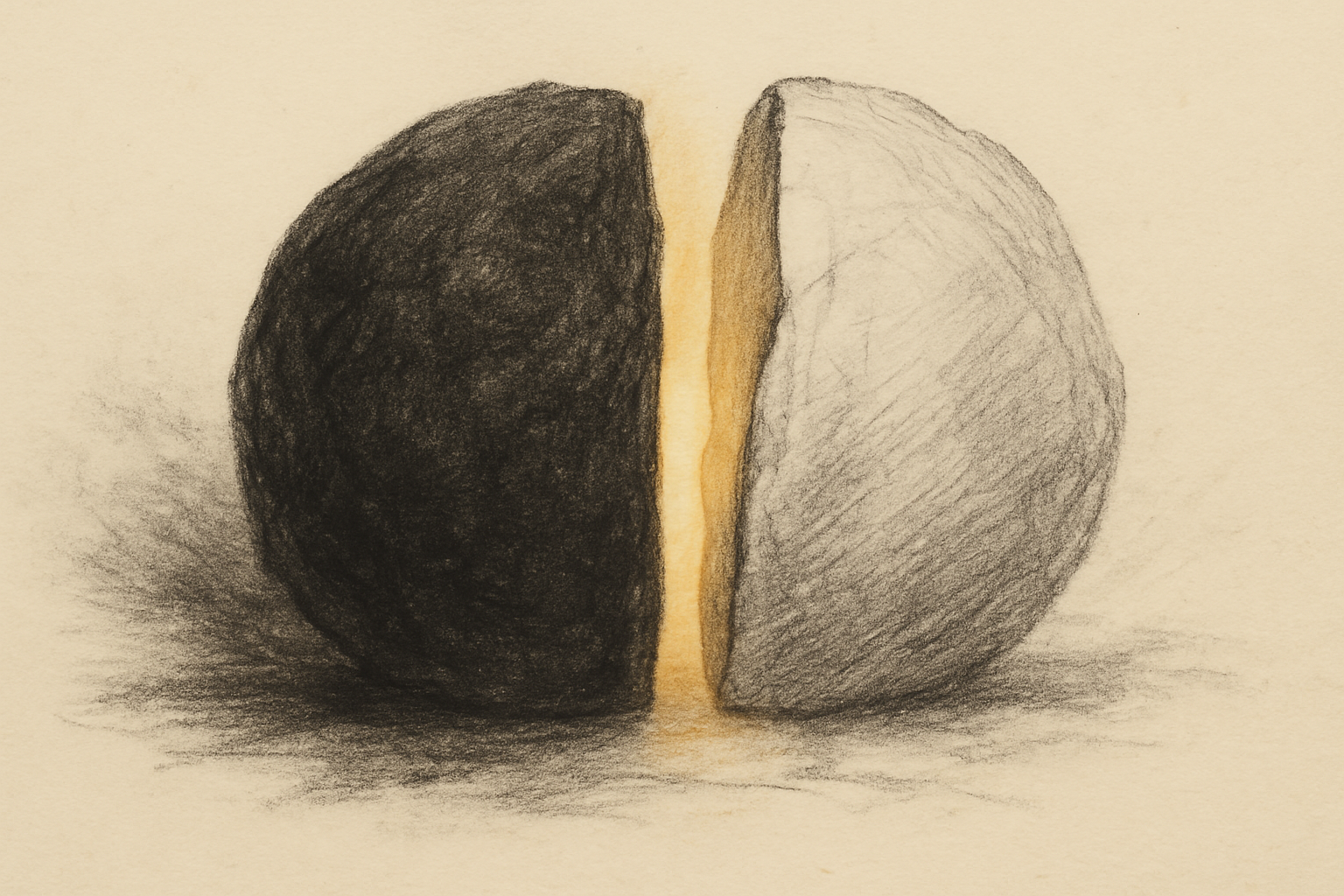
From one side, it's freedom, which is outside of the mind. But for the mind, for the "I," coming close to that will not be instantly known as freedom. It will be known as emptiness, death, depression. So in a sense, the dance in this work, the part of it that is a process, is how to unwind that in a gracious way so that ultimately the mind can integrate it, and not just completely resist or contract against it. There is that darkness, that emptiness, and it's a subtle line: if something is approached too quickly, too abruptly, the mind might contract back into "I don't want this."
And it's true. The mind doesn't want that. That's why the process is really one of identity. As we disidentify from the mind, we no longer react to that emptiness, because we are that emptiness. But when we are identified with the mind, coming close to that emptiness is literally the end. It's loss. That's why the words used are "surrendering" and "letting go." It's not something the mind, or us as identified with the mind, can do, because the definition of the mind is to resist. That's all it can do. And so it is surrendered, not something we accomplish.
The pressure cooker of mortality
That's what I was pointing to. "There's nothing to do, nowhere to get to" can have two flavors. One is relief: "Ah, I can let go." The other is despair: "I can't get anywhere, I can't achieve, it's just failure. Whatever I try, whatever I try to do or gain, it's ultimately always going to fail." And that is a good pressure cooker. That's the beauty of life, in the sense that it is so undeniably known that we will die. Death is the pressure cooker of a process that can lead to disidentification from that which dies.
Being recognizing itself
So in fact, the experience you're describing, that it felt good in some way, is a good sign. It means the process is leaning on the side of being. Being is hard to describe, but being is being. The knower is intimately of that nature, yet no description quite captures it. But I know.