The Camera Is Part of the Experience
La cámara es parte de la experiencia
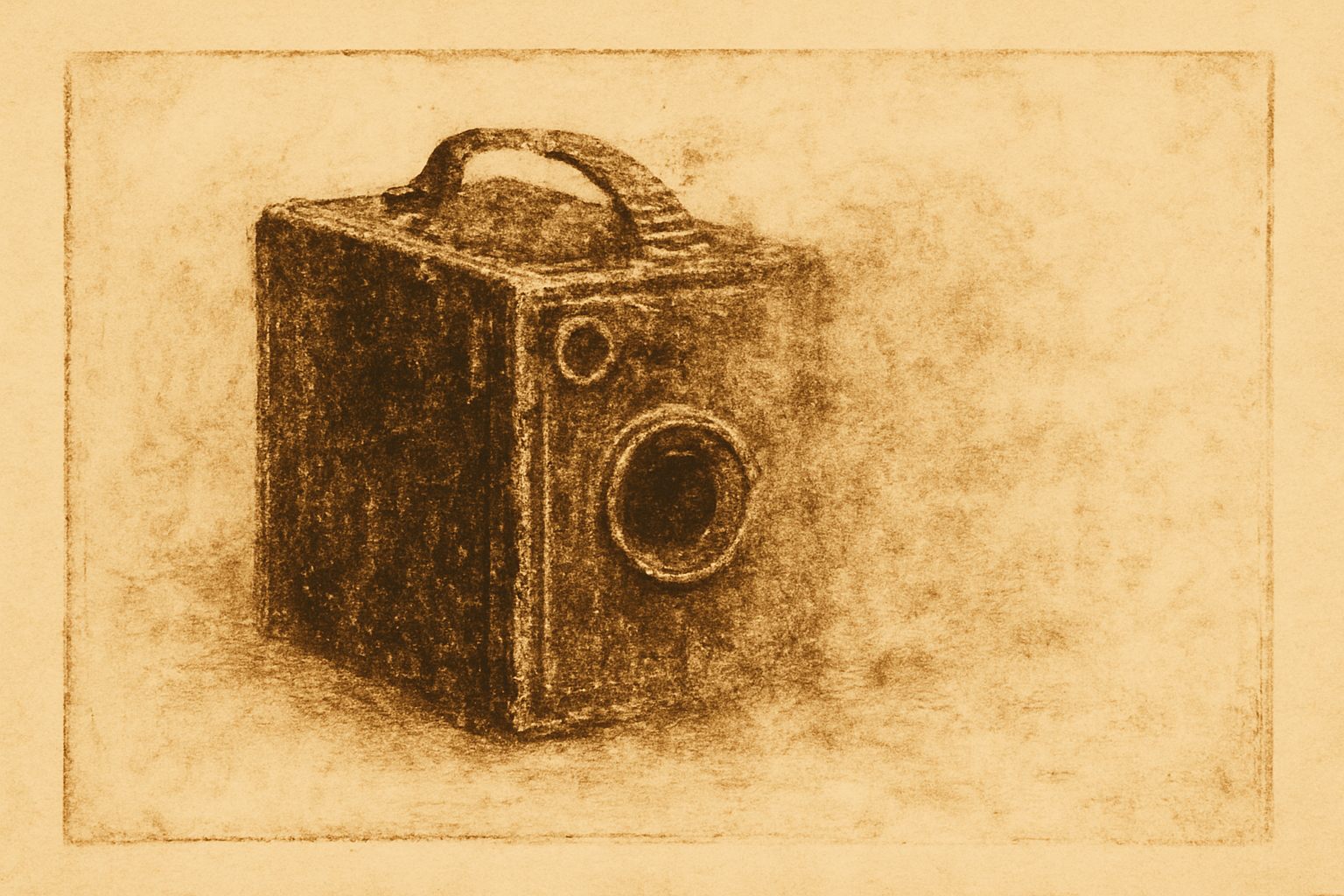
A student explores the relationship between thought and direct experience, noticing that the "camera" of attention, which seems to be the self directing experience, is itself just another appearance within experience.
The Camera Is Part of the Experience
A student explores the relationship between thought and direct experience, noticing that the "camera" of attention, which seems to be the self directing experience, is itself just another appearance within experience.
The meditation was beautiful, so expansive. But then through the conversation I started feeling contracted again, as if we were punishing thought. I was exploring all of these thoughts as part of the raw experience. So today you are making an emphasis on looking at things in a more binary way?
Yes, because it is very easy for us to say, "That's a sound, and that's coming from sight." It is very easy to distinguish those. Most people have very little confusion there. That is not the same with thought and direct experience. Those are hard to distinguish for most people.
I can see that, for sure, and for most of the time in experience. Okay.
But once you have that really clear distinction, then it is all perceptions. It is all just experience.
On the role of thought in guiding attention
It seems like thought, or something like it, plays a role. For example, you point through your words to a sensation: "Where is this sound appearing?" Or the tingling of the hands. There is a role for you to use thought and concepts, and for me to use my attention to go there. That is what I was describing with the camera. Eventually, what becomes really interesting is when the experience of the camera itself is also part of the experience, and suddenly there is a kind of separation. Does that make sense?
Yes. I hear you saying that I am using mental images, pointers, words to direct your thinking. That would involve your thinking to understand the words, to direct what you are calling the camera of your attention. And then at some point you notice that the camera itself, and all of those changes happening from the guiding of the meditation, all of that becomes the foreground. It is just part of experience.
Yes, exactly. Even the camera is part of the experience. The camera is not me; the camera is part of the experience. That was my biggest insight, very subtle. Before, I had learned to stay as "I am the camera," guiding the attention. But the camera is part of the experience.
What you are calling the camera is personal awareness, and it is just part of experience. It is part of the human mind.
Do we need the camera?
But at the same time, don't we need it? Don't we need it to find that?
We need it to be human.
But we need it for inquiring, then?
I am not so sure, and I am not sure what you mean exactly. The camera is just the nature of a human mind.
That's okay. It will become conceptual if I go further, because it was still there in my experience. We can stop there.
False beliefs experienced as reality
The confusion is to believe that something is not what it is. For example, if I have an understanding of my body and it is not what it is, there is a problem. Or if I have an understanding of what I am, and it is not what I am, that is a problem.
Right. But that understanding is a belief, not a real understanding.
Let's be precise. It would be a false belief. But I use the word "understanding" because from experience, we do not experience it as "I have a belief, and it is false." We experience it as: this is reality, this is my reality. So by describing it as a belief which is false, it is very natural for someone to say, "Well, I don't have that."
I see. You added the qualifier "false belief," and it is useful to me to look at it that way.
It is useful if I say, "That which you are describing is a belief." But if I say, "Look at your beliefs," it is going to be hard for you to find them.
Right, because at that time you are not even separated from it.
You do not see it as a belief. You do not experience it as a belief. You experience reality. It is distorted and illusory.
I really enjoyed the meditation. Very expansive. It is so beautiful to take a moment to ask, "What is here?" and find that everything is here.
I think so, yes.