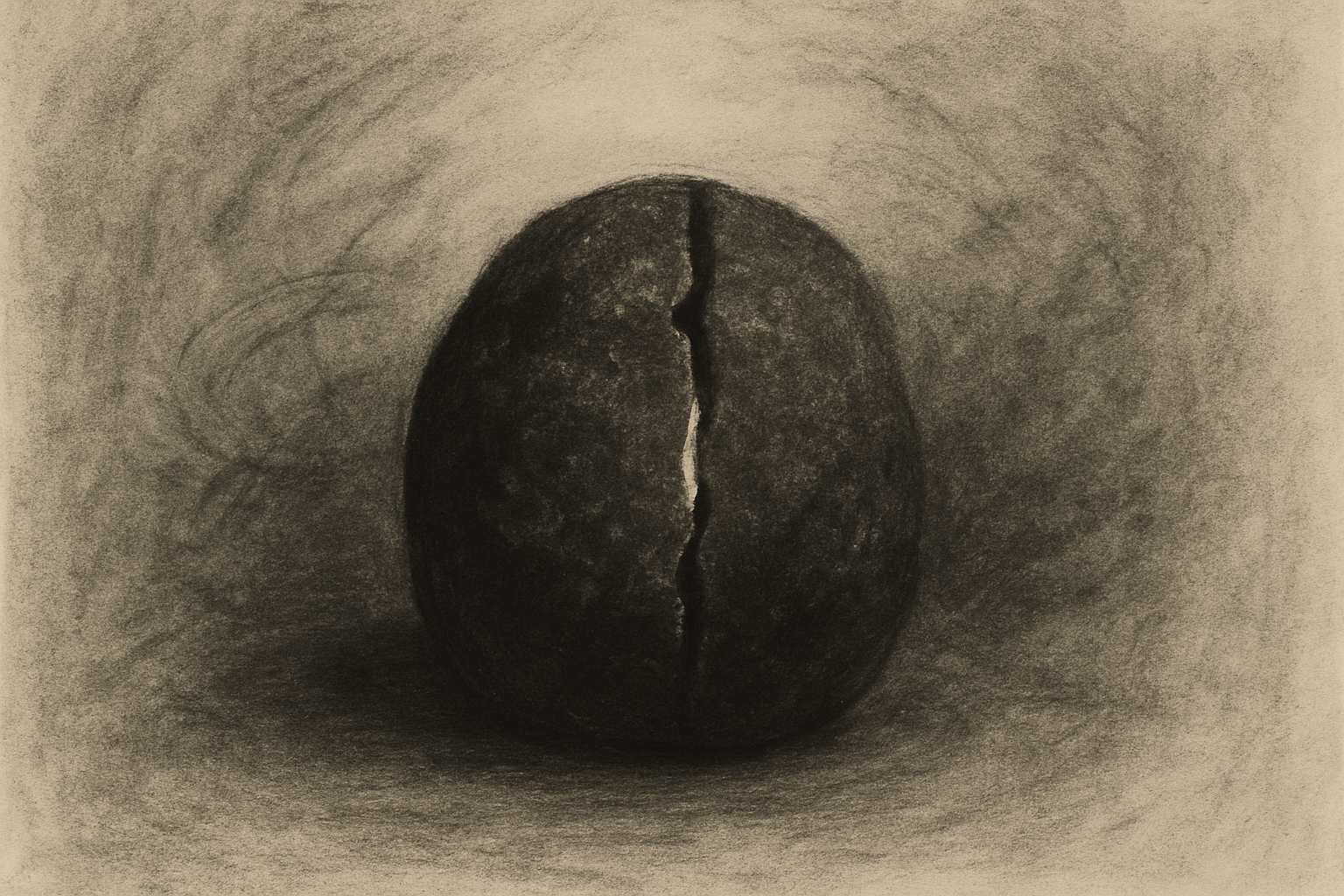
The Wound That Cannot Be Fixed
La herida que no se puede arreglar
A student describes a growing sense of pointlessness in meditation, and the teacher explores how seeing through one's own strategies is actually a sign of deepening, eventually pointing toward the core dissatisfaction that no change of state can resolve.
The Wound That Cannot Be Fixed
A student describes a growing sense of pointlessness in meditation, and the teacher explores how seeing through one's own strategies is actually a sign of deepening, eventually pointing toward the core dissatisfaction that no change of state can resolve.
There was maybe a leaning toward nihilism. I keep meditating, but many times I was thinking, "Why do I meditate?" I would sit down and think, "I don't know what happens in meditation, so I'm just going to sit here and look at the floor."
That is very insightful. You don't see value, meaning, purpose. Or you start to see through your strategies. Paradoxically, that is a positive thing.
Now, that recognition could itself become another strategy. "Oh, now we know this strategy." But it doesn't matter, because as you see through your mind, which is what's happening, you can't undo that. The more you start to see through the strategies of getting away from where you are, the more those strategies begin to fail. Even meditation can become "I'm going to sit and create a state, or get out of this state." That's going to start to fail, which is what you're describing. Even if the changing of states is successful, what's going to fail is that it's not going to satisfy you. It's just a different state, so what's the point?
The limits of changing states
That's a shift into another level, and I want to highlight it. Operating at the level of states, changing states (your mind state, your consciousness state, how you feel), becomes dissatisfying. But first we need to learn to be able to do that. Otherwise, we're operating at a suboptimal level.
It's not so much dissatisfying as unsatisfying. It doesn't do much, but it's not that you have an aversion to it. You just become unimpressed.
Right. At first it gets you out of depression, out of anxiety, out of a noisy, crazy mind. You're able to make all of these changes of state: raise the energy, feel better, lower the energy, feel different. At some point it's going to feel like, "What's the point? It's not enough." That is a progression, but you first need to have that kind of freedom to manipulate states, because otherwise states are just going to take you wherever they go.
It's important to learn to meditate and create a certain presence, a certain calmness of the crazy mind, to be able to get yourself out of emotional states. When we aren't able to do that, we are victims of those states. Then we realize, "Actually, I am the creator of those states," and we can manipulate them to a certain degree. Then at some point that becomes dissatisfying in the sense that it's not enough. It's not fixing the underlying issue.
Layers of the onion
It's like layers of an onion. The first layer is: "My mind is crazy. It's stressful. I can't handle it. It's noisy." Okay, now you can calm your mind. Still, there's dissatisfaction. Calm mind, a certain peaceful well-being, financial situation okay, relationship okay. You can get to a point where everything is pretty much okay, but still there is dissatisfaction.
That's the best translation for dukkha, the term used in Buddhism for the nature of suffering. In my experience, I would describe it very similarly to how you did: "There's something wrong with me." When we touch that sense, that core feeling you put into words as "there's something wrong with me," that's the core issue.
The wound ego cannot heal
We are constantly trying to fix that, and the way we try to fix it is by avoiding it, by covering it up with experiences and sensations. Even familiar suffering (someone who is chronically depressed or chronically anxious) represents habitual ways to create a form of suffering that's comfortable, because the essence of "something's wrong with me" is too unbearable. It's actually something we cannot fix. It is the wound that ego cannot heal.
We can't do anything about it with our usual means, which is perhaps why the experience feels like it simply cannot be healed: there's an impossibility to it. But the direction is to get close to it, to get intimate with it.
Getting close to the core
This is where it can get religious, because you could say God heals it, grace heals it. But that's just one path. Another path is to really discover its true nature. For that, you need to get very close. You need to be very meticulous. You need to touch it very attentively.
When I think, for instance, "I need to meditate more hours, or go on a retreat," so that I can get closer to that, it's another strategy. So when you think that, notice: here's another strategy, the agenda. What is that in service to? What are you feeling that going on a retreat to get close to this is going to accomplish? That's the agenda appearing now, to take you away from now.
There is a feeling I don't like now.
Exactly. And it's always present. You remove the layers, and it's right there.
That feeling, which you now say is a feeling you don't like, can change. It will move. It will take different forms. But it's going to be a sensation with a certain texture. That's all it is. It can be intense and very unpleasant, but that's all it is. The fact that you can know it, touch it, describe it, get close to it: the way this language works, the way I'm describing it, is pretty accurate. It's accurate enough to say that, therefore, it's not you.
Yeah, thanks.