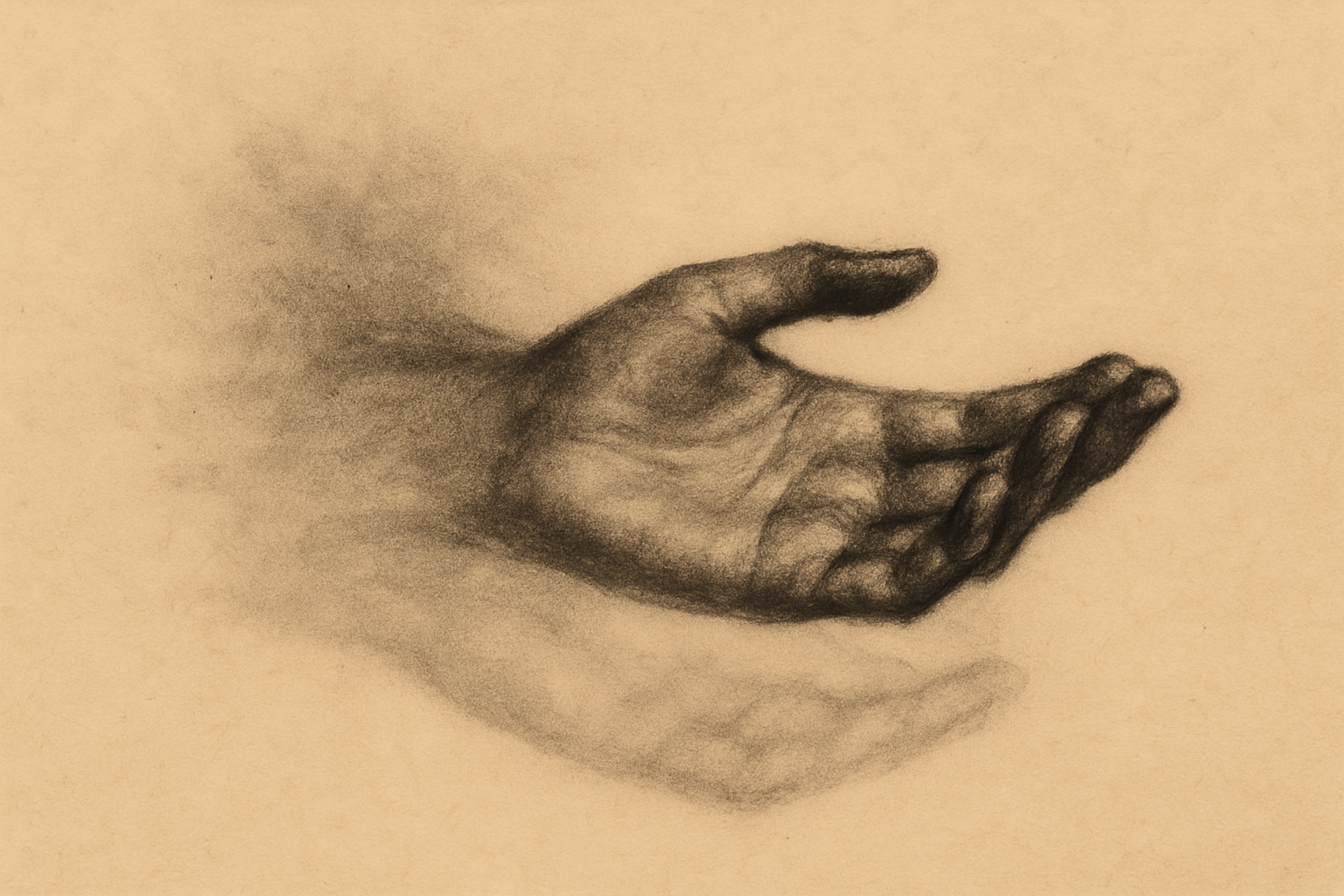
The I That Moves the Hand
El Yo Que Mueve la Mano
A student notices that the sense of "I" that actually moves the hand feels different from the "I" that thinks about moving it, prompting an exploration of the conceptual self versus a deeper, more mysterious sense of agency.
The I That Moves the Hand
A student notices that the sense of "I" that actually moves the hand feels different from the "I" that thinks about moving it, prompting an exploration of the conceptual self versus a deeper, more mysterious sense of agency.
It is not that I don't feel like I'm the one moving the hand. I do feel like I am the one moving the hand. It's just that the "I" that is moving the hand is not the same "I" that thinks about moving the hand.
That makes sense. There is the "I" that thinks about moving the hand, and that is a conceptual "I."
The mysterious I
But the "I" that actually moves the hand is a mysterious "I," and in this kind of exploration, we can say it is more the true "I." That deeper sense of self then gets appropriated by the conceptual sense of self, which experiences itself as separate, independent, possessing its own agency and completely independent free will.
Undermining the fixed self
This is just one of the explorations that can undermine the belief in a very fixed sense of an independent self. That belief is one of the mechanisms through which we constantly have a problem with reality and with what is happening.