The Thick Eggshell
La gruesa cáscara de huevo
A student describes feeling stuck in the head and numb, unable to reach sensations directly. The teacher guides a brief exploration into the texture of present experience.
The Thick Eggshell
A student describes feeling stuck in the head and numb, unable to reach sensations directly. The teacher guides a brief exploration into the texture of present experience.
I keep coming back to the difference between suffering and pain. Right now I'm feeling something that was present throughout the whole meditation. It's something bigger than me and uncomfortable.
What is the discomfort? Can you describe it?
It's like an anguish, or fear, or something. During the meditation I felt it overtaking me.
Dropping below the labels
Don't go to the past. The meditation has passed; it's memory now. What's happening right now? If you look gently down and connect with the sensations in your body and your breath, what is happening? What is missing, or what's present that shouldn't be? What's not okay now?
It's like an underlying dissatisfaction.
Describe the texture. Where is it?
It's in my heart, or in front of it.
Just breathe into it and describe the texture, any qualities that it has.
It's like fear, emptiness, sadness. A bit dark. It's a mix.
Does it move and change a lot, or is it stable?
It moves.
How intense is it, from one to ten?
Right now, maybe a five.
Now, without using words that describe emotions like fear or sadness, describe the sensations, the textures. You could say, for example, it's soft and pulsing, or electric, or rough. Without classifying it as a kind of emotion or feeling.
It's cold, and it seems to suck. It sucks me in, as if it had a soft movement.
Touching it directly
If you touch it now with a gentle attention, imagine you are holding a precious part of yourself in your heart. Do you need that to go away, or can you choose to be with what you're feeling fully?
I can be with it. But it's as if it were disturbing because it's so different and weird.
Different in that it's new and mysterious? Keep bringing this attention that's open, soft, intimate. When that attention is direct, it makes the experience new and mysterious. Keep bringing that quality of attention to the sensation and feeling you're having. You might do it on and off during the group, and later whenever it arises.
What I was trying to guide you through is going down the layers of mental relationship and abstraction. There's an experience you're having, then there's a naming of it, then there's a building of strategies and relationships to the thoughts about it. But when you touch it directly, it won't necessarily have the name "fear" or "sadness." You can name it, but it's more important to touch it directly, where there's even a loss of the sense of it being a particular kind of feeling or emotion.
The moment before classification
Think of when you wake up from a nap and don't know where you are. There's this moment where you lose track of where you are, and then the mind kicks in and says, "Oh, you're at home," or, "You're at a hotel." That moment before you classify and map out your reality: that's the kind of attention you want with this feeling experience, because it's a very direct, heroic experiencing. That is the true intimate relationship with the present, or a truer, more intimate one. Everything else is just a strategy to not go there.
We do this not only with very intense feelings. We do it with things we don't understand, with things that feel strange.
I noticed there's also a belief that it has to be something almost unbearable for me to engage with it this way.
You're right. The thing is, we don't really understand anything. The belief that you can classify something as "what I understand" and "what I don't" misses the fact that we don't understand any of it. If you have an intense fear and do this same kind of exploration, all sense of knowing and understanding what that is will go away when you're fully in relationship with it. There won't be intellectual understanding. There will be an intimate knowing, but it's a mystery. It's just so present that understanding isn't even important.
Subtle experience counts too
To your question: the experience can be very subtle, and that's actually where the practice can come in. You can do this all day as a form of living, because otherwise we're always pushing something away, even if it's a subtle, soft discomfort. The idea that you have to have some really big, intense experience is itself a way to push subtle things away. If you were able to touch what you were touching there for a moment, and do that kind of thing all day, every day, imagine how difficult it would be to find something wrong. The only thing we can ever find wrong is a kind of sensation like that, at the root.
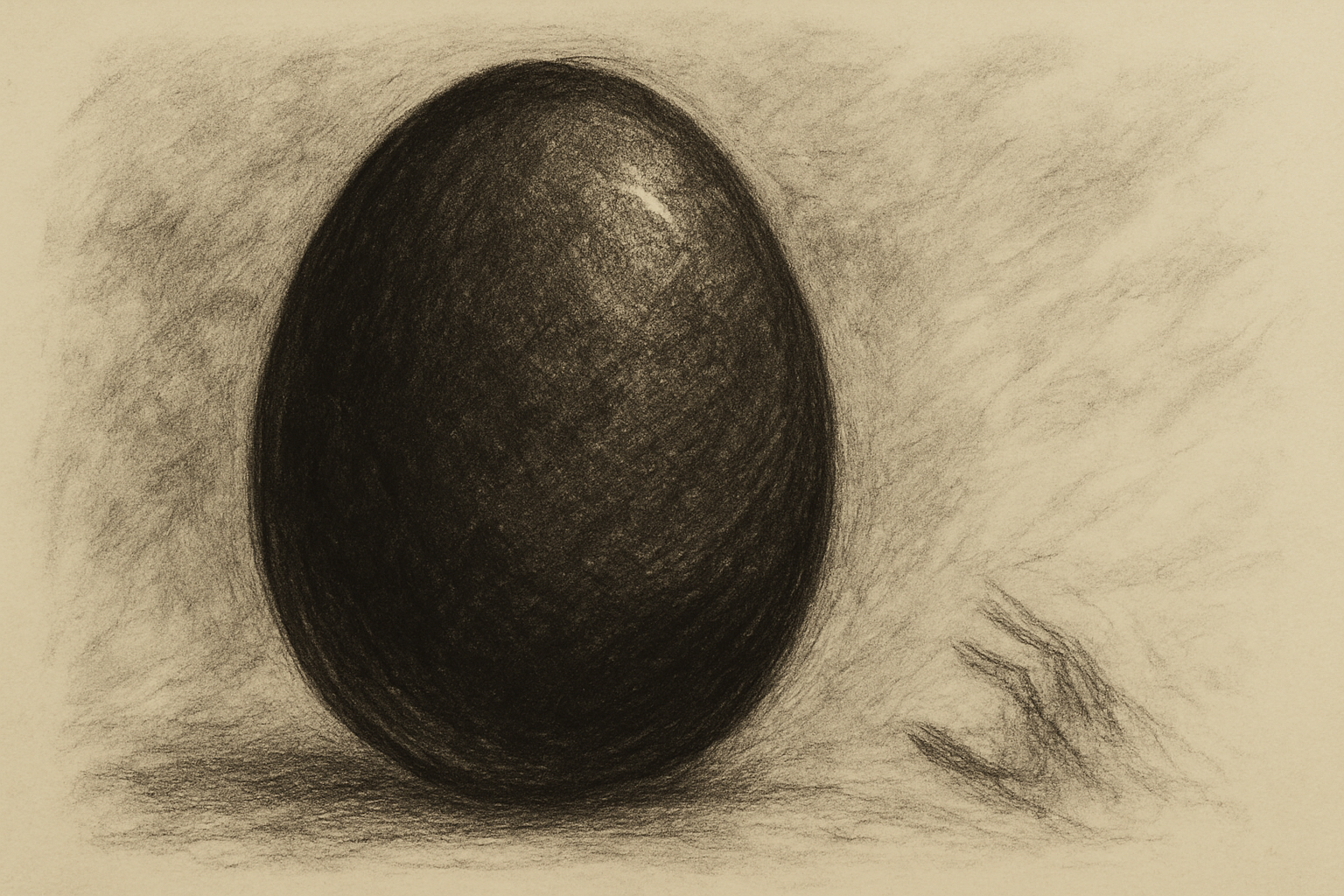
This topic of being stuck in the head kept coming up throughout the whole session. That's what this brings up. I've also had pressure in my head all day. It feels like there's such strong conditioning that it's like an eggshell three feet thick. Try cracking that egg. That's what it feels like.
So, sharing my frustration: what I did was my best to go back to the breath, feel sensations, and allow things to come up. One thing that arose was, instead of using the first person singular for whatever this experience is, to just see it as "this is what's happening." That seemed to put a small crack in the hermetic seal of it, because it's true. It's not me choosing. It's just what's being noticed now. I don't know if that helps, but it also feels kind of intellectual.
When I was doing the earlier exploration with the previous student, did you try to follow along in your own experience?
I felt very numb by then.
This eggshell you described, three feet thick. That's a powerful image, and I feel like it comes from an experience that you're representing with that image. What is that experience? Can you describe the sensations?
Numbness, mental and physical. And then...
Feeling into "numbness"
Let's pause. What does numbness feel like?
Not quite aware. Not quite alive. Not quite connected.
I'm going to ask you, as I did with the earlier student: look gently downwards. Keep your eyes open and look gently downwards. Bring awareness to your breath. The breath is happening. Don't make it happen. Don't change it. Just let the breath happen. Keep looking down gently, aware of the breath. Give yourself time and permission. Just make room, lots of room. Now, what's happening? Describe it in language that a very young child might be able to follow. Very simple, textural language.
I'm not sure what you mean by textural, but I went back very many years.
Don't go back. By textural I mean: cool, warm, scratchy, bubbly, electric, pulsing. Not fear and sadness and a story. Keep gently looking down. Connect to your breath and try to speak from this place, a gentle openness.
It's like cold, still water.
Sinking into the sensation
Beautiful. Just feel into this sense of cold, still water and make room for it. Keep gently looking down. I'm going to propose a modification to your breath. If possible, let it come down to your belly. Gently relax the diaphragm and sink deeper into the cool water. Just make room. Keep gently looking down and sinking into that sensation. From one to ten, how unpleasant and uncomfortable is this experience right now?
Maybe a three. I feel a little contraction.
Now, this contraction: completely sink into it and make room the same way. Stay with your breath, gently looking down. Make room for the contraction that amounts to the three. Describe in texture or language this contraction.
Like waves. Waves, the wind.
Waves in the water. Just make room for the waves and the contraction. Notice how you can touch it gently with your attention. Create a relationship to it directly. Breathe. Keep your attention down. Sink into it. Let all those sensations fully come forward. Trust that you can swim into it. How is it now?
Just a little bit of a contraction, less intense, a little bigger. And then all of a sudden a little contraction here, very light. There's a lot more flowing. It's not as solid a feeling of water.
That was just a very brief, quick exploration. The point of it is not to remove the contraction. It's just to be able to directly touch and feel into what's happening.
Three simple pointers
It's interesting. Sometimes I get a sudden sensation, like last time when I felt a contraction in my head. It was spontaneous, and then in speaking with you I made a connection. But I don't always make the connection on my own. With this in particular, this space of being stuck in the head and the thick wall, it was really unusual for me to get to sensations and feel a certain movement. That was amazing for me, actually. This was helpful.
I recommend remembering three basic pointers. First, keep your eyes gently open, looking downward, and pay attention to the direction of your vision. Second, connect with the sensations of the breath and let yourself sink into those sensations, down to the belly. Third, from there, bring your awareness to whatever sensations are uncomfortable. Don't try to understand or name them. You might describe the texture to yourself as if you were describing an abstract painting. That can help keep your mind engaged, but not in abstract storytelling. Just engage with the direct sensation.
You nailed it. There I was with this thick shell, saying, "Get to the sensations, get to the sensations," and that's all I could do. You saved me.
Working with the defense itself
A colleague here may have something to add.
Second voice: Numbing is a defense, like desensitization. Some people feel it as freezing or numbing. You want to be careful not to push against the defense, because it will just fortify. If you can catch yourself numbing and catch yourself actively doing it, then you can feel into the fact that you actually have a choice around it. You could practice what was just demonstrated, but I would say: be the numbing. Speak as the numbness. Give yourself some clues about how it operates. The other thing is to see if you can identify what triggered it. What are you defending against? What's the threat? Then you can evaluate: is this a threat I felt in the past that isn't actually going to hurt me right now, where the numbing is just a habit? Or did something trigger it, something that happened in the meditation that you reacted to?