The Other Way
El Otro Camino
A reflection on why we must first hear a new philosophy before we can practice it, and how directly touching difficult sensations reveals something untouched by pain.
The Other Way
A reflection on why we must first hear a new philosophy before we can practice it, and how directly touching difficult sensations reveals something untouched by pain.
It is helpful, first, to have a philosophy, an intellectual framework, so that when we think about a problem and look for a solution, we can try a different approach. From the time we grow up, everyone around us models the same strategy: control and avoid fear and pain. All of society feeds this way of functioning, so we would never know another way unless someone pointed it out.
Hearing the philosophy
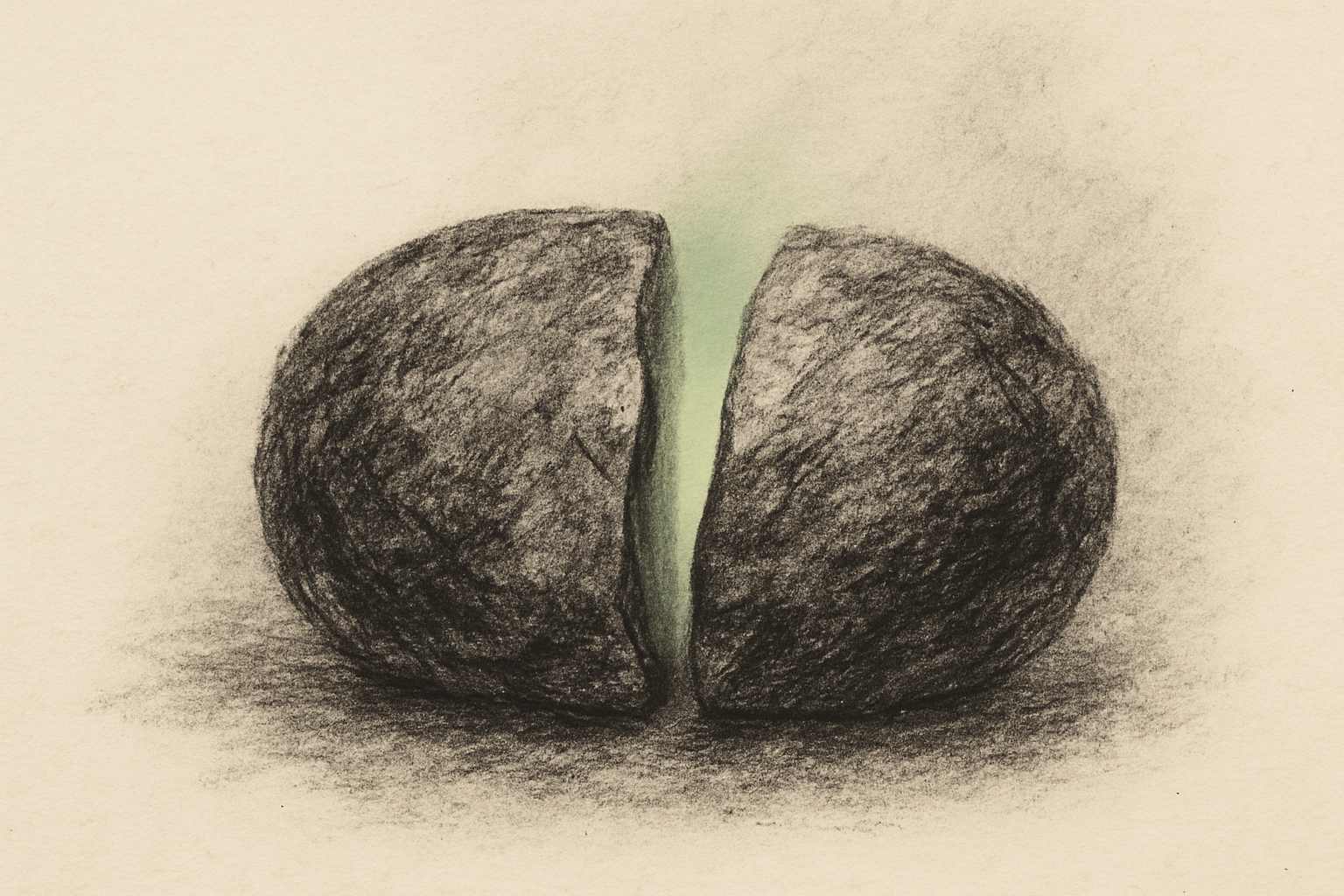
The other way begins with hearing the words, hearing the philosophy, which is essentially this: try the opposite. Try going into the feeling. Try going into the pain and notice that something, that which knows the pain, that which knows the fear, is not touched by it. That is the philosophy.
From philosophy to practice
Now you take that understanding. You remember it, and you practice. The practice is this: you face a situation where you have habitually been avoiding fear and pain. Life brings these situations constantly. You will find yourself somewhere that is difficult and challenging. Now is the time to practice. What am I feeling? What are the sensations? And instead of trying to manage them and control them, try to be completely immersed in them.
There is a philosophy, and there is a practice. What I am trying to do is express this in the most convincing way possible so that you trust there is value in that practice. First, it is up to me to communicate it in a way that is correct and helpful enough for you to develop even a small amount of trust that there is value in it, enough for you to then try it yourself.
Trying it once
What happens is that we try it once and we feel something we have not felt before. We explore going into the fear, and we feel it more deeply than we had before. Then the fear passes. We come out on the other side and realize: I am okay. Something was untouched. The more we do that, the more we develop a capacity to touch sensation. By "touch" I mean to be fully in contact, in intimacy, with the sensations. Because fear and pain are sensations. The mind turns them into a very dramatic narrative, but ultimately what is happening is just sensation.
Opening the mind to explore
The philosophy helps us open our mind, and the open mind helps us explore new things. More specifically, it invites us to try a different approach. If you are able to be fully in contact with whatever the feeling is, whether fear, pain, shame, or sadness, and you do that and come out on the other side, something will be released. When we can touch that sensation more deeply than before, all of our conditioning, all of our strategies to avoid it, will relax, even if only a bit. They relax because they are not needed anymore. They were only there to avoid touching difficult sensations.