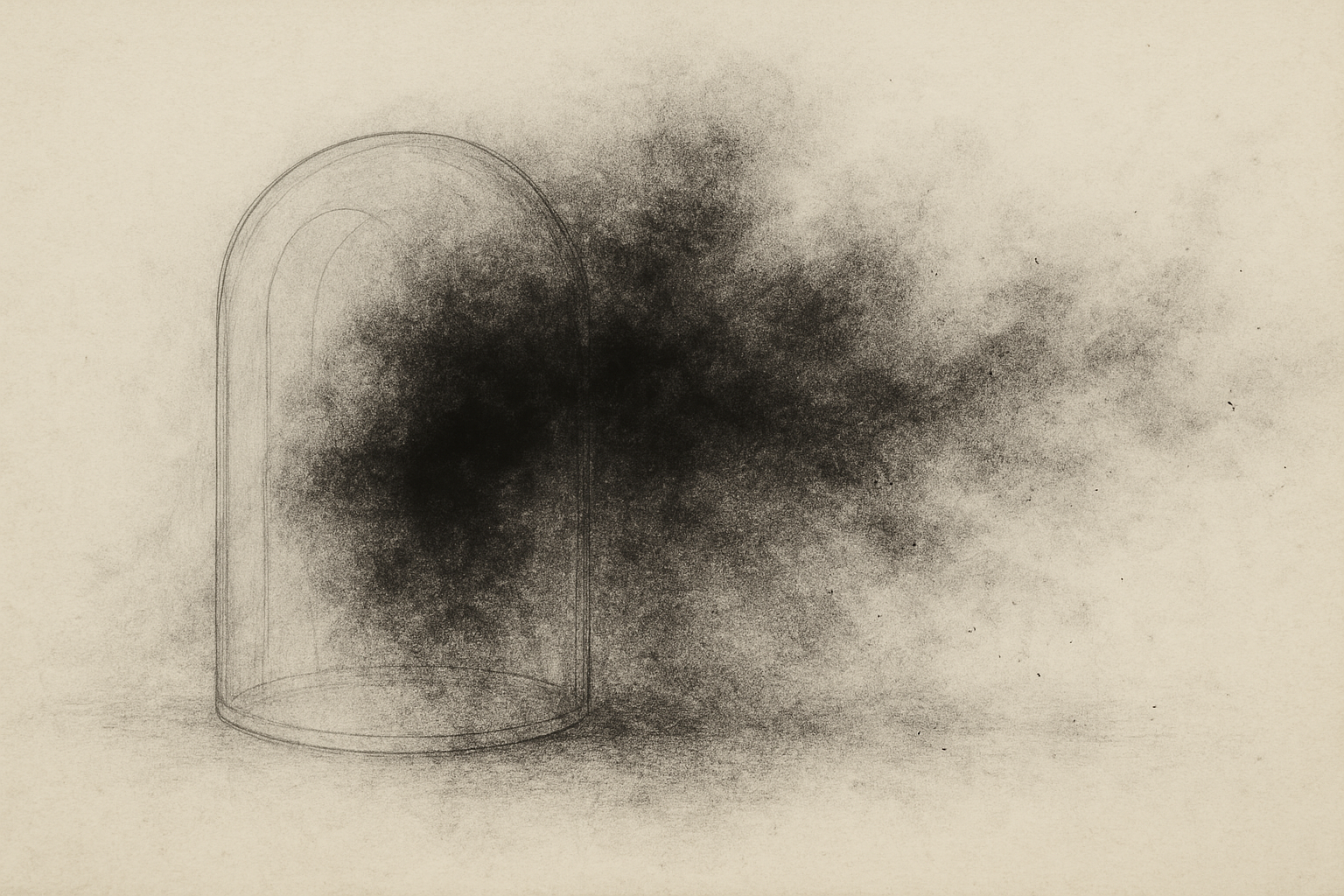
The Perceiver as a Subtle Construct
El Perceptor como una Construcción Sutil
A student describes a growing sense that everything experienced, including thoughts, feels "outside" of what they truly are, and the teacher explores how this process of dis-identification can crystallize into a subtle, thought-based perceiver.
The Perceiver as a Subtle Construct
A student describes a growing sense that everything experienced, including thoughts, feels "outside" of what they truly are, and the teacher explores how this process of dis-identification can crystallize into a subtle, thought-based perceiver.
You said "a rock and a hard place," and thinking about my experience, it feels like the rock is that which I am, which is in a way unknowable and impenetrable. And the hard place is everything that's happening outside of what I truly am, so to speak. That image came to me. I hope that makes sense.
It's a metaphor, the expression "a rock and a hard place." But what you are is not a rock. It's an interesting metaphor to relate to, but it doesn't quite point to it.
What I mean is that lately I've been having the experience that everything I experience, even thoughts, is outside, not inside. But I don't even know how to put this into words. It's as if everything I can experience is outside, so to speak, even thoughts, because I can observe them. They are not that which is observing them. And that's where words fail me. I don't know how to continue.
The classical process of dis-identification
You're describing a very traditional process of meditation: dis-identification. It's expressed as neti neti, "not this, not this." It has to do with the answer to the question: What am I? Who am I? Anything that I'm experiencing, I'm not that. If I experience a hand, I'm not the hand. I can lose the hand and still be here. The same goes for sensations, perceptions, thoughts, everything.
But when you carry this process far enough, you arrive at exactly what you're describing: everything is outside. And outside of what?
Exactly.
The witness as thought
There is a subtle construct, which is thought-based: the perceiver, that which is perceiving. The sense of being separate from what is experienced. This perceiver is a thought. For you, I would offer the exploration of looking into this. It is really subtle. We're talking about very subtle forms of thought.
You can call it awareness or consciousness, but that will also be a thought. There is a lot of talk about consciousness and awareness, and it becomes, first of all, a concept, a word. The mind makes an image of it. And then that image becomes a subtle point of reference that is the perceiver, the witness.