When the Darkness Compounds
Cuando la oscuridad se intensifica
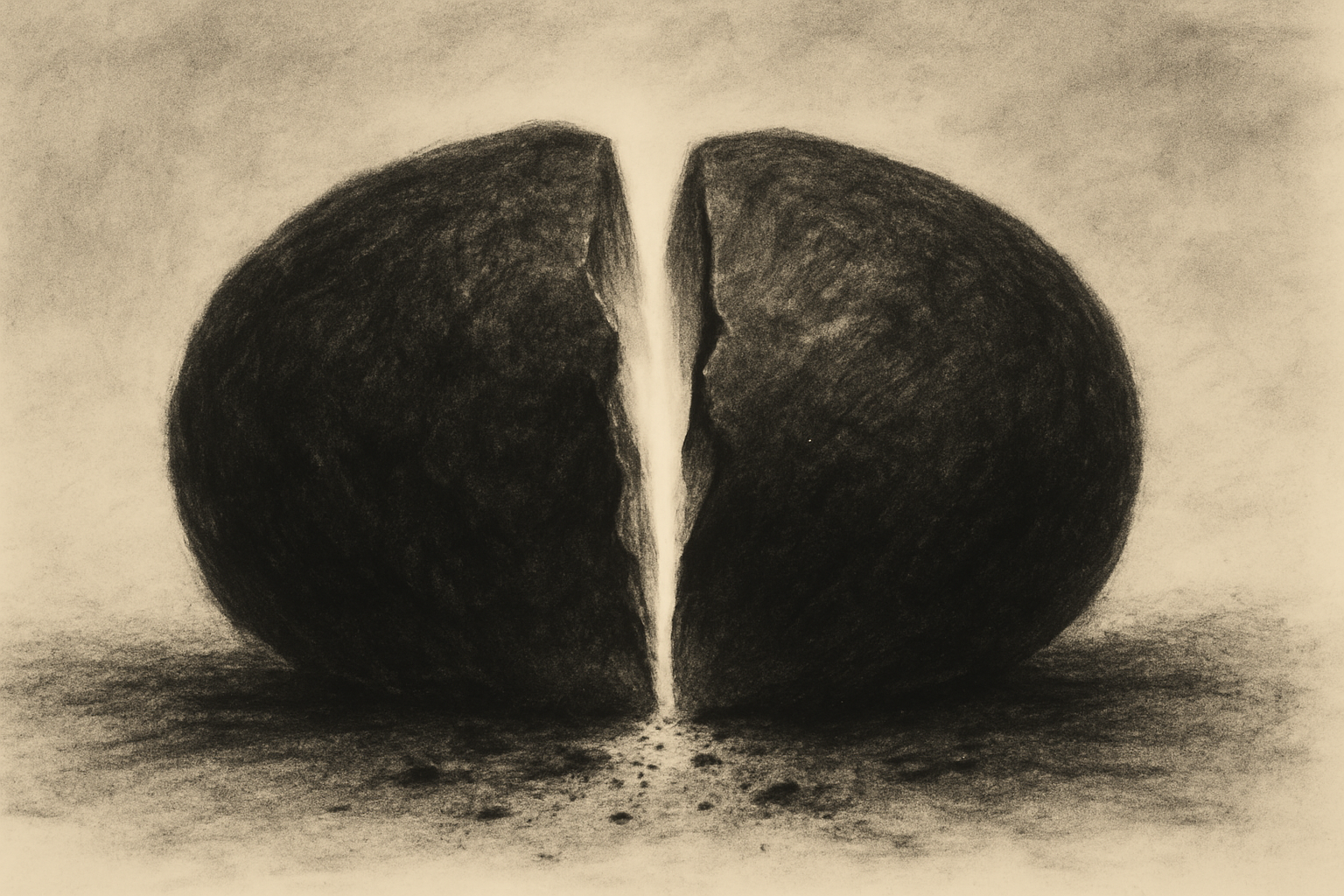
A student describes an intensely difficult meditation in which deep, unresolved fear and pain surfaced, blurring the lines between personal trauma and something far larger. The teacher speaks to what happens when old narratives of victim and perpetrator begin to dissolve.
When the Darkness Compounds
A student describes an intensely difficult meditation in which deep, unresolved fear and pain surfaced, blurring the lines between personal trauma and something far larger. The teacher speaks to what happens when old narratives of victim and perpetrator begin to dissolve.
I was going to stay quiet because I had a very difficult experience throughout this meditation, but it's entirely related to what you just described. I was wondering if you could speak a little more about it. I don't think this is the space to go into all the details, but basically my experience throughout the meditation was childhood trauma coming to the surface. It was so felt. Even trauma I feel like I've worked through for years. Suddenly it was just there: I'm terrified. It was right up here. It was really difficult for me. Can you say more about that?
Yes, it's very possible that that's what it is. To qualify it as childhood trauma isn't the most important thing, but that's the kind of thing that will come up. All of it, everything, will come up. I would even say past-life trauma. I'm not attached to that as a philosophy, but you might have worked on a lot of it, and it's really not resolved until you go through the core of the pain and the fear associated with it.
That's interesting.
You can work through it in layers, layers upon layers, and then it just gets more intense because you are more ready for the intensity.
I feel something so dark. Through the meditation I kept asking myself, "Why am I so scared of this?" And then there's the inability to differentiate: Is this my darkness? Someone else's darkness? Darkness in itself? It doesn't belong to me or to anybody specifically. It's just darkness. And I'm terrified. I'm terrified especially because it is easier for me to reach a kind of high ground, to work on this, and then suddenly it's just more intense than ever. So maybe it's not the same thing. Maybe it's another level of toxins. I don't know.
The shadow without a story
I think you're just more prepared to face things directly. It's just shadow. To not get too involved in what it specifically is: whether it's darkness, whether it's mine, whether it's collective, whether it's all of it. It's shadow. Let it all come up and be with it.
My one question is this, because this is the question I was posing to myself. In the past, when I looked at it, the identifications and separations of perpetrator versus victim had more specific roles. But right now it's as if I can see the collective history, generational trauma, violence, all of it. So it's harder for me to say, "It was this thing that somebody did to me." I can no longer just blame the perpetrator. And that's very difficult, because at the same time that I'm holding all the darkness, I'm trying not to blame anybody. How do I hold all of this? I'm scared of myself. I'm scared of still blaming them. It's a lot. It's a fucking lot.
Both victim and perpetrator
The more you go into it, the more you are both the victim and the perpetrator. The pain and the fear compound, because you also become responsible. Responsible in a way that cannot be easily communicated in language, because language will always divide into perpetrator and perpetrated. It's the responsibility of creation itself.
Very appropriate.
You're crossing into that threshold now. This is what happens when you break down the narrative of being only a victim. That narrative, in a sense, contains the pain in a manageable way. It's really hard to put more words to it, because they are so prone to misunderstanding. This aspect of the responsibility, when in a sense you are the creator and the created, the victim and the perpetrator: when that duality gets broken down, gets transcended, you enter another realm of shadow. But it doesn't exclude the personal. It doesn't exclude what happened to you as a victim.
That's where it gets really confusing, right? Because those lines are blurry. I know it doesn't exclude it, but at the same time it doesn't serve anything anymore either. To keep that separation. So it was just one of the darkest meditations I've had in a long time. It was very difficult.
Fear as recognition
I suspect the fear is the recognition of your responsibility.
Yeah. I may come back to you privately with more questions. I feel like there's so much of the psychology involved, if that makes sense.
Anything else?
It just felt very confusing to me, the psychological pain or trauma combined with trying to break out of it.
Stay with the present knowing
The way you get through this is: keep with the present knowing. Now there is fear. There's a knowing of fear. That's all it is. Now there is this. Now there is pain. And watch how the story, the narrative, gets created. Now there is a knowing of story and narrative being created. Keep knowing. Keep staying with the knowing.
In a sense, it's: "This is the most tremendous fear I have known." And that's all there is right now. Tremendous fear, nothing more. It does not mean anything. It does not signify anything. It does not say anything about you or the narrative. It does not inform anything. It's just: now there is the most tremendous fear I remember. Now there is the most deep pain. That's all there is. Nothing less, nothing more. Don't add any meaning to it.
Thank you. That's a good reminder. I understand where you're saying that from. But right now it feels like this is so horrible.
It's a breakthrough. It's a profound breakthrough. Into the untamed.