Attention, Thought, and What Is Prior to Both
La Atención, el Pensamiento y lo que es Anterior a Ambos
A question about the nature of attention: whether we control it, how it relates to thought, and what it means to notice something prior to attention itself.
Attention, Thought, and What Is Prior to Both
A question about the nature of attention: whether we control it, how it relates to thought, and what it means to notice something prior to attention itself.
I would like to ask you about this idea of attention. When I direct my attention to, say, a sensation in my feet, it feels as if there is an invisible movement. The attention goes to the feet. But when I want to withdraw my attention from the feet and go back to the original source of the attention, I'm not quite clear about how to do that, because I have no idea where the source of attention is. It's very easy for me to move my attention around to objects. That's a habit I can do easily. But when I want to call my attention back from all objects to, I don't know, its origin, I get confused, because I don't really know what attention is.
I can't speak specifically about moving attention to its source or bringing it back to the source. I don't think I've ever said that.
I think I picked that up somewhere else.
Right. But I can speak about what you're describing in general about attention. When you say, "I can bring my attention here and move it there," there is an aspect to that which makes sense to express it that way. But really, we don't control attention. There is an identification with a movement of attention. You could see that attention has its own movement. If you observe attention itself, it's going to do whatever it does.
For example, I can say, "Bring your attention to your feet," and then your attention might go to your feet. It might not, but most likely it will. In language it makes sense: I'm telling you to move your attention to your feet, you experience the attention going to your feet, and so you say, "I've moved my attention to my feet." But it's not really you doing that.
The warping of experience
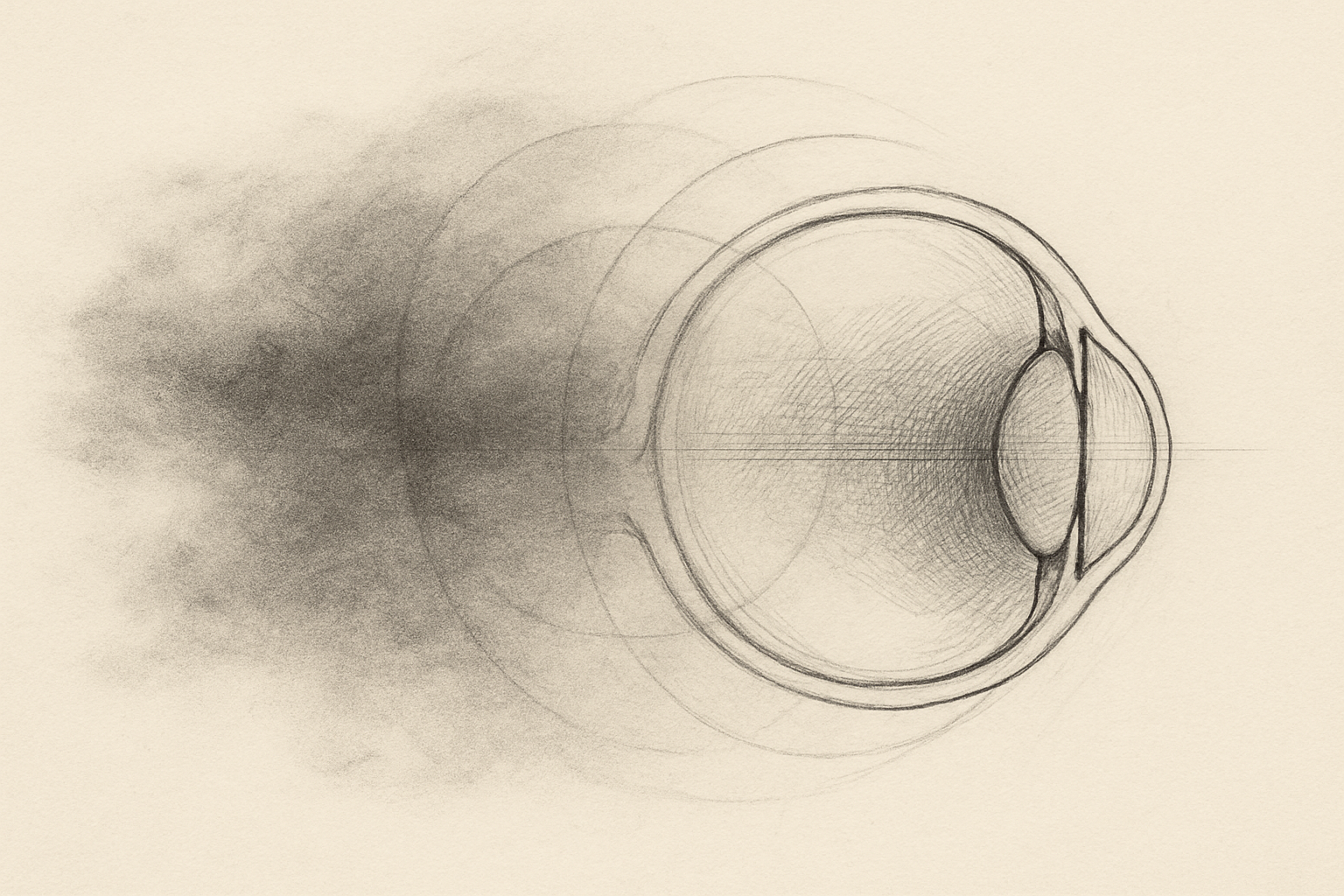
Attention can be seen as how the experience of phenomena (sensation, perception, sound, sight, thought, imagination) warps: what comes into the foreground, what goes into the background. It is a warping of experience, and it is done by the mind. It can be trained, and there is usefulness in training attention for many reasons. In a sense, you can consider it like a muscle that can be strengthened. With a more trained attention, there could be more focusing on different aspects of experience, which allows for deeper insight.
But there is something I prioritize, which has to do with noticing that there is something prior to attention. You can describe attention moving, so you are not attention.
No.
You can also notice that attention does what it does. There could be a bit of identification with it, a sense of "I'm doing it." But if you sit and observe your attention, it's just going to do what it does.
It is more important to notice that there is something prior to attention. In a sense, that might be what you heard somewhere else about bringing attention to its source. But this is hard to put into language, because what is prior to attention is actually nothing. It is emptiness. So you won't find anything prior to attention. But you can notice that the movement of attention is known. The sense of "I" moving it is known.
Neti neti and disidentification
Following the process of neti neti, which is self-inquiry: What am I? I'm not this, I'm not that. Not this, not this, not this. Nothing of what is known is what I am. So you are not the attention, and you are not the sense of you directing the attention. That, too, is known.
Yes. I can feel what you're saying. There is knowing of attention.
And there is also the knowing of the experience "I move the attention." At times the experience will be "I cannot control the attention; it's doing what it's doing and I can't control it." And sometimes it will be "I'm controlling the attention."
When you say in meditation, "If you go into your thought, let it be, just let it go into it," I presume the "you" doesn't mean attention. Sometimes I get it mixed up. I thought it was attention that keeps going into thought. But now you're saying the attention is not me. So when I go into thought, it's not the attention that goes into thought? I thought that part of me becomes the attention that goes into thought.
It's both. Attention goes into thought, and what happens is thought becomes foreground. It becomes the experience that is more in focus. And often what follows is a fighting with thought, a wanting to push thought away. There is a struggling with the activity of thought. Focus goes into thought, and it's a habit. This is why the training of attention matters. It is like a muscle: you could train the attention so that it habitually moves into sensation instead of thought. That is a valuable practice, training attention to notice when it is focusing on thought and to move into sensation instead.
Letting attention stay in thought
In the meditation, I did something a little different. The point you're describing is: if you notice attention, awareness, the focus going into thought, let it happen. Let the focus into thought happen. Don't train it out of thought. Just see what happens. Fully accept it and taste it. If you do that, in a sense that is one way of working with attention. It will deactivate the struggle with thought.
There is an experience of just allowing the focus to stay with thought and experiencing the content of thought. But when the content of thought is so ridiculous, it just causes trouble. The mind keeps interpreting reality through a distorted picture.
The mind is going to do that no matter what. If you say it's ridiculous and the interpretation is the problem, you are starting to fight with thought.
That's right. That's when it happens, when I allow the attention to stay in the thoughts.
But there is more here, because attention can go into thought, and if you let it do that, it means you are aware of that. There is a really important distinction, because there is a disidentification. If you are aware that attention is going into thought and you let it happen, there is a disidentification with the content of thought. You only really get what we would call "lost in thought" when you are identifying with objects of thought, with some part of the content, the narrative of thought. That is where the push-pull begins.
Yes.
Because you are trying not to identify, you could bring the attention onto the breath, for example, and that is a valid practice. But there is another option: to not try to stop the focus on thought. Let it happen, but notice it's happening. The moment you do that, you are noticing you are in thought.
Yes.
That implies you are, to some degree, disidentifying. When we are lost in thought, we don't know we are lost in thought. It is reality to us. Then there is a moment of "Oh, I'm thinking a lot," and then there is this fighting with it. Also, the content, when you say it's problematic, that it's causing problems: it is only causing problems because you are believing some of it.
Exactly. I understand the point. So just as we can train attention to a certain degree, by watching our thoughts and perhaps adding a label or description to them, that part can also be trained such that we ultimately drop the labeling. Or the labeling would reduce to a certain degree.
Labeling as a tool
Labeling what is happening can be a valid practice, but it has to be quite specific, quite technical. I recommend that when you do the labeling, you use just one label: "thought." Even the labeling of "thought" is itself thought. Just see it. Thought, thought, thought. Then you can have labels for what is not thought. Labeling a table is going to be a thought, but it is a tool, a tool of the mind. You notice thought, you label it, and then what do you do? You label something that is not thought: sound, bird, breath, foot. These are very powerful practices from the Southeast Asian branch of Buddhism.
I've read about that but haven't practiced it. So the process you were describing earlier is definitely not that. It's just to observe, to be a passive observer of thoughts, right?
Two kinds of practice
I am talking about two kinds of practice. The first is building the ability of the body and mind, especially the mind, to withdraw from thinking: to create a recognition of thinking and bring attention to something that is not thinking. Sensation, sight, sound. You could say these are all mind, but we create that category. We bring awareness out of the conceptual imagination, the thinking type.
That first practice is often a requirement for going any further. If we can't do that, it is hard to do any other practice. This is why sitting practice, vipassana, all the more traditional mindfulness practices, attention on the breath, are all very valuable. But their value lies in building strength so that we can then go up the mountain. The strength itself isn't the objective. The objective is to go up the mountain, which you could describe as going into the depth of the mind, or into the heights of the mind, metaphorically. Then comes the second type of practice, which is to be able to let mind happen, to see it and understand it more deeply.