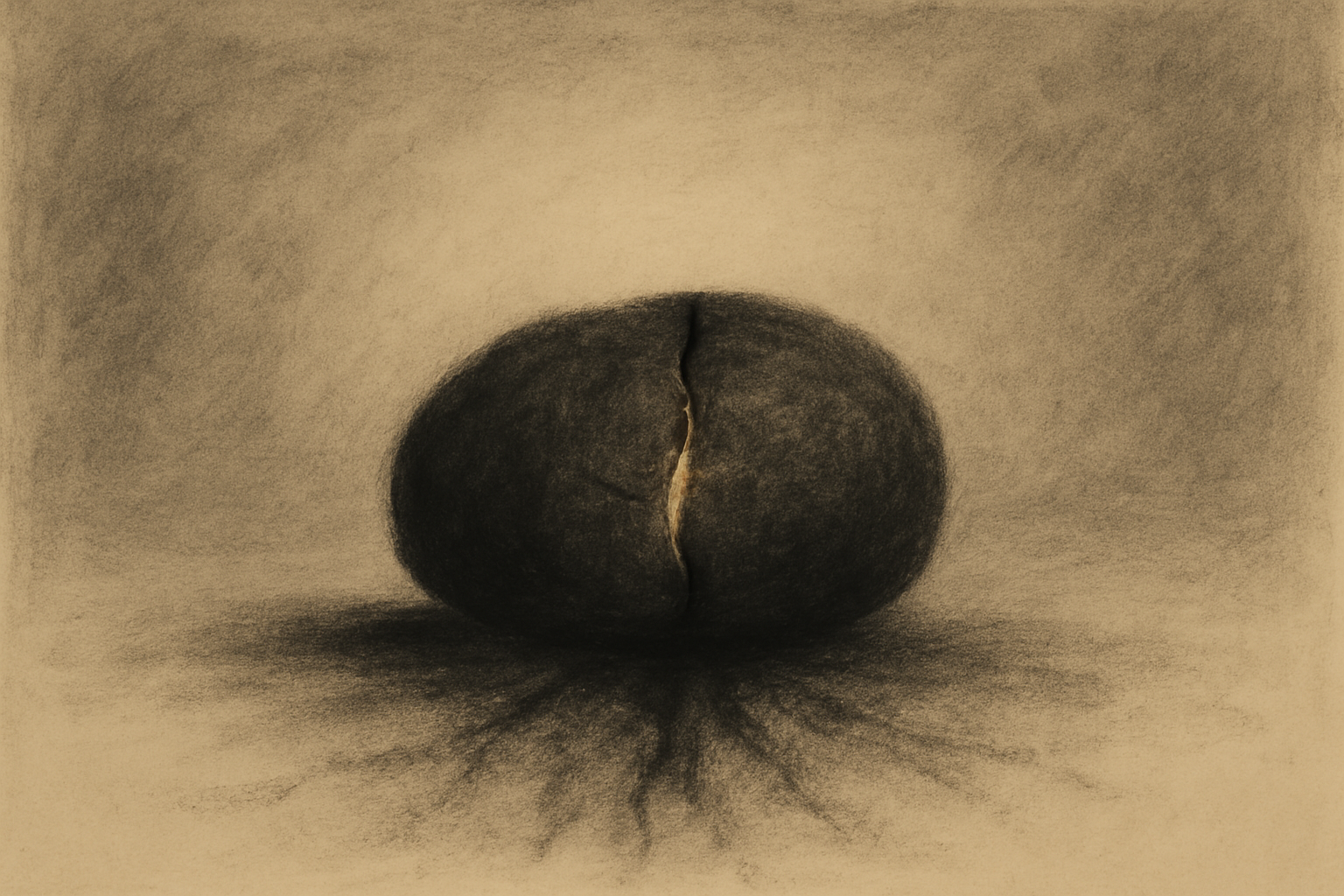
The Need Beneath the Reason
La necesidad debajo de la razón
A student reports feeling blank in self-inquiry, and the teacher guides them toward directly knowing the felt sense of a recurring "need" rather than rationalizing or immediately acting on it.
The Need Beneath the Reason
A student reports feeling blank in self-inquiry, and the teacher guides them toward directly knowing the felt sense of a recurring "need" rather than rationalizing or immediately acting on it.
There's nothing coming up. It feels like it doesn't work for me. I just don't have any response to the questioning about "who am I" or "where am I."
That's totally fine. What I'm pointing to is always about the now. For example, right now, as we're here together, at the level of feeling, of emotion. I'm not necessarily asking you to tell me. I'm just suggesting you include that in your experience, your awareness: not as a focus, but as an including and allowing. If it seems like nothing is happening, that's also a feeling experience. There's a sense of nothingness or emptiness. Just keep that including and openness for something to show itself, or not. What is the feeling?
The emotions and feelings will be more toward the body, toward where the breath goes down. For example, bringing the awareness to the breath as the exhale is ending, relaxing the exhale, and then that might give room for some feeling.
Everything else you've been describing is perfect. Just keep looking. It will be a bit like a battle between all of these activities of thought and impulses. But as you start seeing through that, it pulls you less and you recognize, "Oh, it's a narrative."
Yes. I have less resistance to thoughts and to where the attention goes. When I realize where it's gone, the attention just comes right back out. Attention arises naturally and goes where it goes. The sense of directing it into a certain thing, it doesn't feel so much like I'm doing the directing. But there still feels like there's a need to direct attention, like directing my attention to keep focusing on your talk.
The need beneath the explanation
That's exactly what I'm referring to. When you said there is a need to direct the attention, we are now talking about something emotional, something at a feeling level. That's where you can make space for the direct experience of that need.
Obviously, the need is triggered by being in the group, in the meeting, listening to you. So it has a logical explanation: the need to keep focusing on your talk rather than going to my story. This need is based on logical reasoning.
Yes, part of it, but not all. That's how it is known for you: as something clear and rational. But there's another part of it that is deeper, that you can, in a sense, uncover or reveal by that openness to feeling it directly.
So where this need comes up is totally unknown to me. It's not from the mind. The mind puts reasoning on the need later.
Exactly. It depends on how we define "mind," but yes, it's something deeper. That's what I'm suggesting: bring all of your energy of curiosity and inquiry in this work more toward that.
What you've been doing is working, and there's another layer to open up toward and inquire into. For example, you said there's a need, then you said the need is rational, there's a reason for it. Then I pointed to something else, and you immediately saw: yes, the rational part of it is added later. That's how quickly you saw the conditioning.
Conditioning and rationalization
The need is prior, and the rationalization happens after. It's the way we've learned to tell ourselves we would satisfy this need. And it doesn't work. It's a conditioning, a solution to a problem from another time, so it doesn't work.
The logical part is the way in which we tell ourselves something so that it feels honorable. We feel like we're doing the right thing by trying to listen and obey the direction and the instruction. Then we end up following a conditioning and a habit, but it seems like we're doing the right thing. That's a rationalization.
So what I'm saying is: look at all of that (this is very normal), and then see what's there before, what's there deeper. As you instantly noticed, all of that gets put on top after. It's the way in which you're telling yourself, "I will satisfy this need." But the need is prior to that. It's deeper. It's more irrational, or let's say illogical. It will have its own intelligence and logic, but at a deeper level.
Yes. For some reason I thought there is no way to know where the need comes from, no way to know its awakening place.
Direct knowing vs. analyzing
It doesn't matter where it comes from. What I'm suggesting is for you to go more directly into knowing it. Not analyzing or understanding rationally its creator, its origin, its direction. Just know it directly as it is now. By "knowing," I don't mean create a theory or a map or a narrative about it. Just the direct knowing of the feeling, the experience of it, now.
If you're trying to understand where it came from, you're not really directly knowing it. You're analyzing it.
As an image: we could look at something, let's say this feeling, this need, and we can start thinking about it. That could be the sense that we're knowing it: we're thinking about it, analyzing it. "Where did you come from? What do you want? How do I get rid of you? What's the origin of this problem?"
Tasting the experience
The other kind of knowing, the one I'm referring to, is very gently coming close to it and touching it. The direct tasting of it. Letting it reveal itself, letting it come up. It's like biting into a juicy fruit: all you want to do is quiet all of your thinking so that you're completely immersed in the taste of it.
As opposed to biting into it and then immediately talking about the experience, telling yourself how it is. Think of people who drink wine and start telling you all the things they detect in it. Versus the pure savoring of it. That's the kind of knowing I'm suggesting.
It might happen that as you taste it, it creates a bunch of thoughts. The thought could be, "Wow, this is really uncomfortable," or, "This is really something," and maybe some words come that are deeper. But put the tasting of it first.
With this need, for example, just become intimate with it. Know that part of your experience more intimately.
What I can tell about this need is that when it comes up, it comes up by itself and I cannot stop it. I just see the need and I go for it, because it's a need, a trigger, a driver for my action.
Refraining from the automatic response
I'm not suggesting you suppress the action. If you go for it, that's fine. But I'm saying: create some space where you don't go for it, because going for it means you're fully buying into the rational, logical reason why you should do whatever. What I'm suggesting is refraining from acting on it and getting to know it more directly.
Trust that you need time to get more intimate with it for it to help you deepen. Because if you immediately act on it, you will be acting from the more conditioned habit.
Yes, exactly. I can see that's how it's been operating.
And that's only going to keep creating what it's already been creating. Nothing new.
No, exactly. Thank you so much.
You're very welcome.