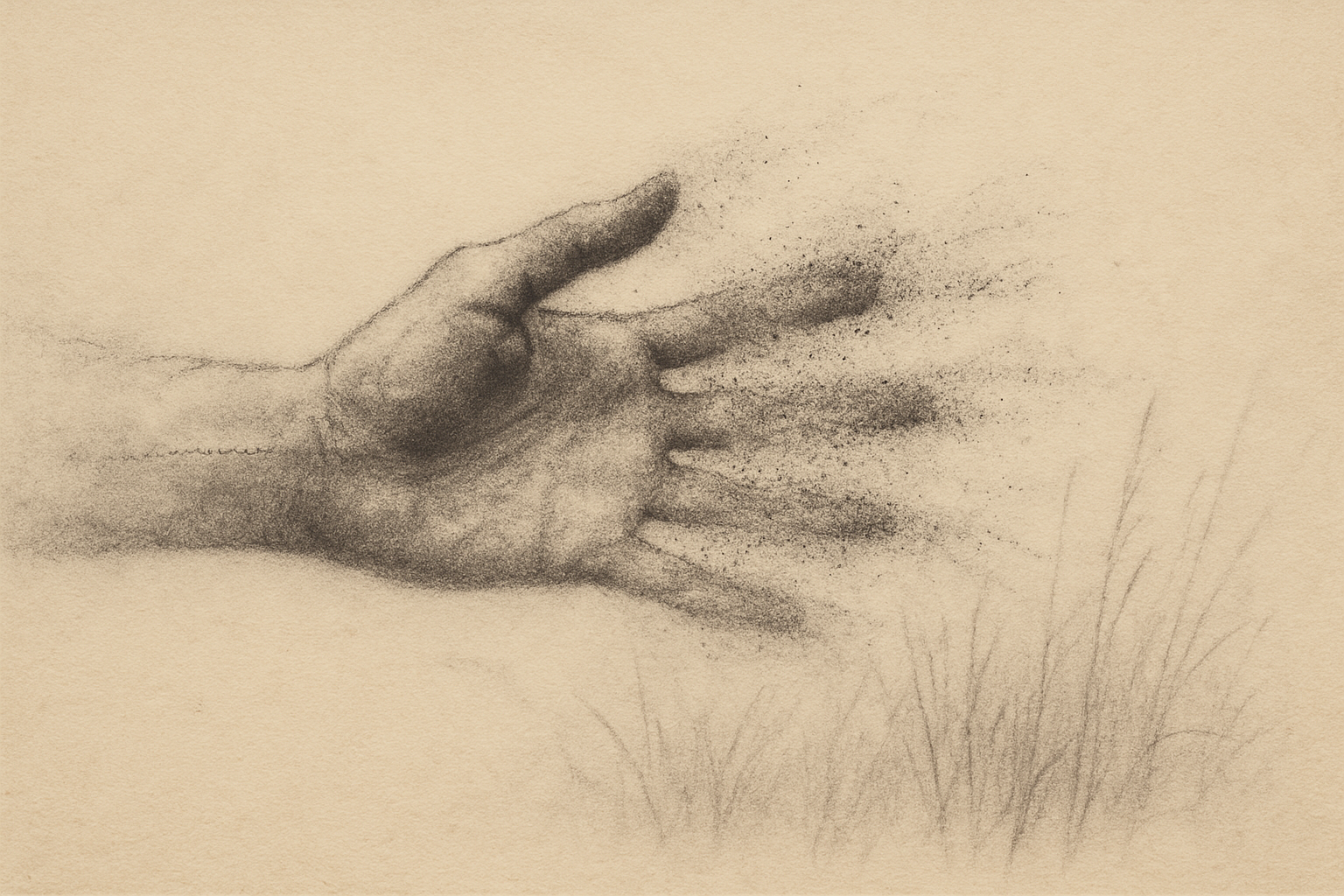
The Boundary That Exists Only in Thought
La Frontera Que Existe Sólo en el Pensamiento
A question about how to see through the felt sense of separation between self and world, when bodily sensation seems to confirm a clear boundary at the skin.
The Boundary That Exists Only in Thought
A question about how to see through the felt sense of separation between self and world, when bodily sensation seems to confirm a clear boundary at the skin.
You were having a discussion just now, and you mentioned that if I'm seated on this chair, I'm able to feel it, and that's why we have a sense of boundary. You suggested investigating whether that boundary is real. This is exactly what I've been thinking about, because it's these sensations that allow me to tell which is me and which is not me. So how do I really see that what I'm feeling is not limited by this skin sack, by this sensation? I can feel my palms sitting here. The separation seems so real. How do you see through it? How do you see that it's actually not separated, that it's not two things?
One way is to look for the boundary.
But if I define the boundary as being along my skin, where we have the most sensation...
The boundary in thought versus the boundary in experience
That's a thought. I'm saying look for the boundary in the experience. When you define the boundary as the skin sack, notice that that boundary exists in the image of the body. Now, if you bring your attention to a sensation, the boundary isn't there.
I'm levitating too.
Right. In the sensation, look at the sensation as you would bring your attention to a sound, and notice that the boundary you describe as the skin sack exists only in the thought of the body, the image of the body, the image in mind and imagination. The sensation itself is just this fuzzy, tingling quality. There's no better word for it.
Overlaying the image onto the sensation
Now, the sensation and the image of the skin sack both appear simultaneously when they are present. And we often, in our thinking, map them together. This is what I call map-making: we overlay the image of the skin sack onto the sensation. We put them together as if they were the same thing. But they are not. One is a sensation and the other is an image or a thought. They are different natures of experience, like sound and sight.