The Line on the Paper
La Línea en el Papel
A reflection on how conceptual boundaries overlay direct sensation, creating the illusion of real separation where none exists.
The Line on the Paper
A reflection on how conceptual boundaries overlay direct sensation, creating the illusion of real separation where none exists.
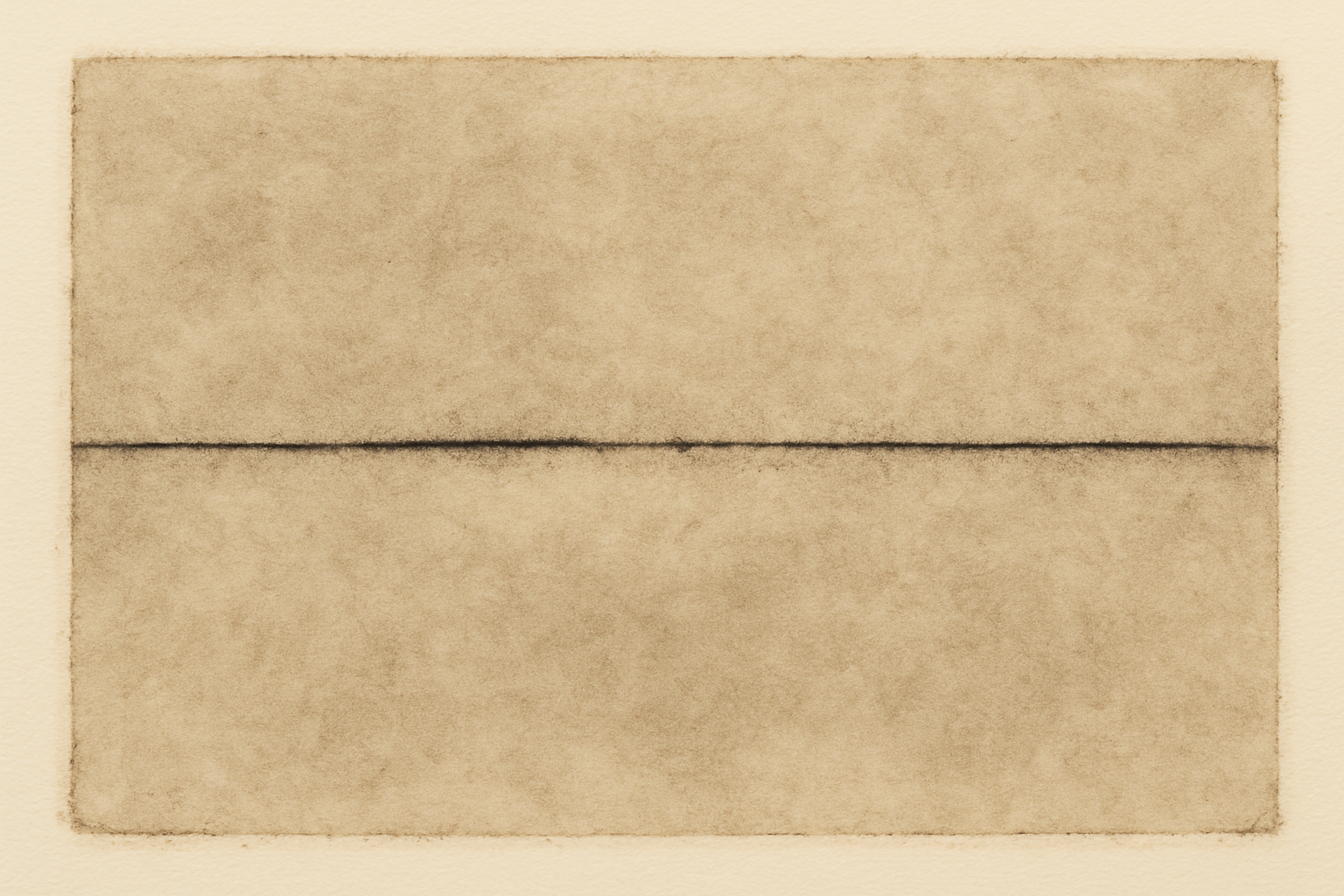
Consider a mind's imagination at work. If you draw a line on a piece of paper, there is a line, a boundary between two sides. But is there really two sides of a piece of paper?
Sensation versus concept
This is also a metaphor, because in that example there is an actual physical mark on a physical thing. But the deeper metaphor is this: the piece of paper is the sensation, and then we have an image of the sensation, which we call "skin." That word, "skin," is a complex thought construct describing what we are experiencing. The actual direct experience of it, however, is a sensation: a tingling, fuzzy, moving experience.
So there is the sensation itself, and then there is the conceptual construct of the skin, which has a boundary. Conceptually, we draw a line where the skin ends and the couch begins, or wherever. That concept gets overlaid onto the raw sensation, and then it feels completely real, as if it were one and the same thing.
It is not.
It is like sound and sight, like thought and sensation. These appear as distinct categories, but that distinction is itself a construct.
No boundary anywhere
You can go even further and realize there is actually no boundary between thought and sensation either. There is no boundary between sound and sight. There is no real division at all. It is literally like drawing a line on a piece of paper and believing there is a true separation between those two sides.