The Safety on the Other Side of Fear
La Seguridad al Otro Lado del Miedo
A student raises the pattern of pushing too hard in both life and spiritual practice, and the conversation opens into how the pursuit of what we truly want can become unhealthy when driven by avoidance, and how genuine safety is discovered not by invoking trust but by becoming intimate with fear itself.
The Safety on the Other Side of Fear
A student raises the pattern of pushing too hard in both life and spiritual practice, and the conversation opens into how the pursuit of what we truly want can become unhealthy when driven by avoidance, and how genuine safety is discovered not by invoking trust but by becoming intimate with fear itself.
Something that's coming up for me, to add to the conversation, is that it almost feels like more of a risk to approach what we want in a balanced way. My mind tends to find safety in extremes, and that's not healthy either. The pushing, and coming at things from that perspective, has always left me so depleted and confused, thinking I need to try harder after having already tried so hard. And this comes up not just in my ordinary human experience but also in my spiritual journey. I'm really noticing this common theme playing out on so many different levels of my reality.
Often, when we're putting a lot of energy into something and there's this weight of depletion, that's a sign that something we're listening to isn't the right thing. It's tricky, because the direction could be somewhat right. But if we end up depleted, it's likely because we're chasing something that isn't actually the thing.
We could, for example, really want some version of success, and if we don't get it, we push harder. But it's not about that success. It's not that if we lose, we should push harder to win the next one until we end up completely devastated or exhausted.
The pull of ideas vs. the deeper thing
There's a way to pursue what we really want that has been described by Buddhists as "unattached to the outcome." In that way, it's more natural and easy to move in a balanced way. I'm pointing to the possibility that there might be more subtle beliefs and ideas about what we're pursuing that end up producing what you're describing as unhealthy. It could be, for example, "Yes, I want to pursue a career in X," but the way I'm doing it is unhealthy because I'm following something that's not the deepest thing, or not at the right times, or not in the right ways. And that's going to be depleting.
There's a difference between being exhausted because we pushed and then we restore, with a vitality that at a deeper level is ignited, versus having our vitality drained. If the vitality is getting drained, most likely we're pursuing ideas. But this is something that's hard to tell quickly. It takes time and a lot of back-and-forth exploration to clear.
Yeah, for me it just feels frustrating. But that's just because I have expectations, right? When I make a decision, I want to go for it. I can just focus on it. That comes very naturally to me. But I feel like life doesn't want that. Life is constantly trying to pump the brakes on that expression and really slow me down.
When that kind of pushing is happening, it's possibly a way to avoid certain sensations, possibly of fear. There's going to be a contraction, and that's going to be an unnecessary expenditure of energy. And as you're saying, the expectation is an idea of how things need to end up. There's going to be an attachment to the outcome: "It has to end up this way, and if it doesn't, I'll just push harder." That usually ends up not being healthy.
But it's in that process of pursuing that we learn. You can't figure it out before going on the journey. Because you're putting energy out, you start to learn, "Oh, this is creating a lot of contraction and frustration." Then you can begin asking, "What's happening? How could this movement be more wise? How can I clear things here?"
Walking at the natural pace
You're describing it as a slowing down, and it's often that we are either going too fast or too slow. There's a way of moving, metaphorically but also literally, like how we walk in the street. If we're in our heads, we're going to be walking either too fast or too slow. If we walk at the most natural pace, our mind is going to be more calm. The same applies to pursuing what we want. There's a way to pursue it where there's an integration, where we're aligned. At the more attuned pace, we're going to know when to pause to eat, when to pause to rest, when to push harder and sprint. We're going to feel it.
Yeah, I'm definitely recognizing that more and more. It feels like a process of trusting that it's safe to move through life in a softer way, in a way that honors my own energy.
The trick there is to look into what feels unsafe. If you move differently, it's going to bring up a sense of not feeling safe. You're saying, "Well, if I trust that it's safe..." But another way is to become more intimate with the sense of unsafety. For example, if you're used to going fast and pushing and you start to slow down, you're going to feel a restlessness: "It's not safe because I need to keep pushing." Does that resonate?
Kind of, but it's also about not having the rules. I think it's coming from my conditioning. My parents were always, "These are the rules. Follow these rules and you'll be fine." But there was no emphasis on listening to what's right for you.
Similar challenge. If you follow a given set of directions, things are going to be safe and okay. But you've been doing that and it's not working out. So you start to feel, "I want to listen to what I feel is better for me." And if you start doing that, there's a sense of not feeling safe.
Meeting what feels unsafe
That sense of not feeling safe is what I was describing earlier about uncertainty and insecurity. At the deeper level, it's a fear. And we can't resolve fear by trying to wish it away. It's not a bad thing to explore trusting, but it's a way to initiate, a way to explore something that feels scary. Once you're in that movement and feeling this sense of insecurity and uncertainty, it's ultimately a fear, and we can become more intimate with it. By feeling it, sensing it, understanding it (not in an intellectual way, but through a touching of it, an intimacy with it), the safety can come through that process. But it comes through the fear, when we are able to be with the fear.
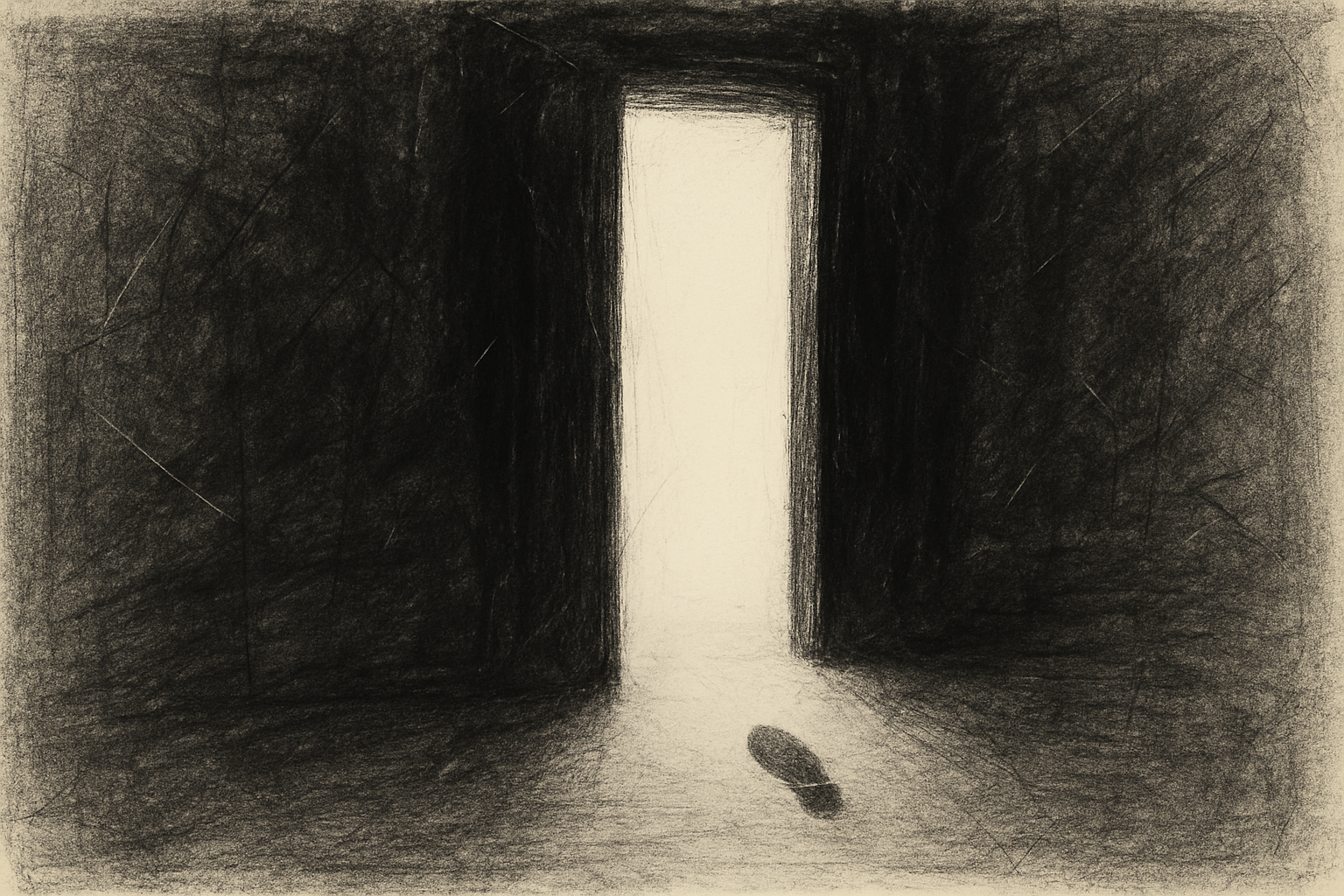
The safety starts to become the natural thing, but not through managing the fear or pushing it away or strategizing or trying to overlay it with trust. Trust is good for initiating a direction, but we can't wish the fear away through invoking trust. At some point, we need to meet the fear, and meet it in all ways, in a gentle way, to sit with it, to inquire into it. By "inquire," I don't mean think about it. Just touch it: "What is this?" And it's going to go deep. The deeper we can go, the more we can touch this really core sense of not feeling safe. That's the door to a true freedom.
The door to freedom
Once we're able to be in full intimacy with deep fears and deep pains, we have nothing to run away from. All of the mechanisms we have for avoiding fear and pain, which are mental constructs, are no longer necessary. All of the confusion, conditioning, and misdirection that comes from the ways in which we avoid fear and pain, all of those drop. It can drop gradually or quite fast, once we're able to meet and be intimate with the fear and the pain. And then it becomes easier to listen and know what feels right at every moment.
Thank you for pointing that out. I have a lot of experience feeling and going into fear. But I think for some reason this one thing has escaped that practice, because it's usually paired with some expansive feeling that feels chaotic, that in some way feels impossible to control. This creation energy. So I think it is something like a deep energy or pattern.
I appreciate that you have a lot of experience going into fear and pain. But it's a rabbit hole: there are deeper and deeper levels. Frustration, for example, is also a way in which we manage pain. There are all forms of pain, and we can be comfortable meeting pain in certain forms but not in others. For example, rejection versus shame: I could be totally fine with rejection, but shame is unbearable. The same is true with fears. I could be full of bravado with certain kinds of fears, and others are simply unbearable.
And those ones are the really important ones, I guess.
In a sense, yes. That's where the bigger potential for liberation is. Maybe five or ten years ago, there was another thing that was hard and you faced it. Now there's a deeper level that you start to uncover. Life naturally brings up the things that are challenging now, which is probably something that ten years ago was completely unbearable but today you can start to touch and face.
Tasting it all
What is called liberation, I would describe it this way: it is when pretty much all normal fears and pains that appear, we are able to have some form of intimacy and direct contact. One of my teachers offered this to me many years ago. He said the difference between a Buddha and a normal person is that life is a buffet of experiences and flavors, and a Buddha is able to taste it all. A normal person has some sections where the reaction is, "No, I'm not tasting that."
We start out, and as you will know, when we're children there are literally foods we will just not taste. Then over time it's, "Oh, I do like tomatoes now." As we develop and grow, it's the sensations, feelings, emotions, fears, and pains that we start to be able to taste, or potentially can learn to taste. Those are often an acquired taste. At first, you want nothing to do with it. Then you're able to taste it and be in complete contraction, but it's better than before. And over time, it can actually be enjoyed in certain ways.
So through that process of recognizing that a sensation is just a sensation, and the more we taste and allow ourselves, that's how we find safety? Or do we feel the safety after?
The safety is a realization, the true safety. To describe it more accurately, though in words it's hard: that which feels unsafe is seen to not be real. When that which feels unsafe is seen to not be real, and is seen to not be what you are, the whole problem around safety disappears. Obviously, there will always be aspects of safety around life, but I'm talking about that deeper sense of safety that is unrelated to circumstances.
Like we were safe all the time.
Two approaches that become one
One approach is self-inquiry: to see that you're not what you think you are. That can undo a lot of this. There's another approach, and these are complementary: turn towards what feels unsafe and be intimate with it. Ultimately, those two approaches become the same thing. As you turn toward something that feels very unsafe, the illusion of what you are burns away. You can't fully touch that fear without dissolving the illusion of what you are.
When you say "fully touch the fear," do you mean experience the fear?
Yes. To be in direct intimacy with it.
Right, because that fear is the energy of the separate self.
It's created by the belief in being something you're not. Its origin is believing you are something that's limited. A part of what we are, a part of consciousness, wants to be something. It's everything and nothing; it's infinite. But it wants to be something, and it has the ability to forget its natural state. This is a freedom. This is a beautiful thing: the ability to become something limited.
The thrill and the cost of identification
When it does that, when we do that, something is lost, but it's intentional, it's forgotten. You can't fully experience the thrill of feeling that you're something that will come and go while you know that's not true. So when we identify, we identify with something that's transient. Everything that appears will disappear. Everything comes and goes: matter, objects, the body, all thoughts, all concepts. Everything that is formed will change.
We say we identify with a body, but we actually identify with a mental image of the body. We identify with mental representations of sensations. To simplify: we identify with something that comes and goes. That has an aspect which is a true freedom, the beauty of, "Oh, I am this." There's a huge rush in that. But there's also a contraction, and there's also inevitably, because now "I am this" and I know this comes and goes, a deep sense of unsafety, because that which I think I am will end.
Yeah, I hear you. Thank you. I definitely recognize the pattern that wants to be something.
And often you can't fight that. We can hear these teachings and then have that experience of wanting to be something, and we think, "Well, I just need to fight that off so I can be nothing and be free and be this awakened thing I'm imagining." But often the healthiest path is to fully live that. An apple tree wants to give fruit. If the fruit is just starting to come out, you can't pull it all out. It will be unripe. But when the fruit is ripe, it will fall, and the apple tree will have given fruit.
So the ego has to be developed first before it can be let go of.
Well, it doesn't get let go of. It gets transcended. The identification with ego ends. But if the ego itself ends, you are a vegetable.
Transcending the identification with ego, dropping the identification with ego, is easier to do with a healthy, mature ego. It's more risky to deal with an immature, undeveloped ego, because the ego might not do well. That's exactly why I balance the waking up with the growing up. By "growing up," I mean exactly this: the development of a healthy ego, a healthy body-mind.
So I guess that would involve developing confidence, listening to your inner guidance, your creative, special part of you.
There are infinite tools. Some things work, some don't. But that's why it's important to do what you really want. If not, it's not a healthy ego. If the body-mind is in aversion to what its true desire is, it's going to be in an unhealthy state.
Right, because the fear is controlling it and stopping it from actually shining in its way.
Functioning in a state of aversion to what it wants. It's like wanting to drink water and being afraid of water, so you don't drink it. That's not a healthy thing.
Spiritual bypass and psychological bypass
Yeah. I think that's what tripped me up so much in the beginning. I just went totally into this search: meditating intensely, living in India, ashrams and gurus and books and retreats. It helped me with unhealthy patterns I had operating in my human life, but I didn't really get any glimpses. And then I thought, okay, well, the two paths have to be aligned.
There's been a lot of awareness recently in humanity around something described as "spiritual bypass." That's most likely what you're describing. In hindsight, you were probably avoiding something deeper, more important, probably even a bigger challenge, probably something you want more.
There's also something I describe as the "psychological bypass," which is to avoid everything that is self-inquiry and the truth of awakening through a process of constant growing via psychological personal development. That's also an avoidance.
What's in the balanced middle? When nothing is avoided, the thing that aligns us is what I describe as "what I, or the universe, wants as me or through me right now." What's the deepest thing that I want? That's what brings alignment.
There are all different levels. Right now, I could really want to drink water, and I might be in some subtle conflict around that because I'm trying to focus, I need to be eating, I'm working. There's always subtle, subtle not-listening. But there's also, at a deeper, bigger level, what I want in life. I might be in a relationship I don't really want to be in, or I want to be in a relationship with somebody I'm afraid to approach, or I want to pursue a hobby or exploration that I'm afraid of, or I'm pursuing something that's not what I really want to be doing.
This takes time for us to learn how to listen, and for what we listen to, to be the deepest. It's an infinite process. We never get to 100%. It's a dance. But when you see somebody whose whole life you experience and there is wisdom, that's what you're seeing: somebody who's listening deeply in all of the different areas. Not avoiding.
Yeah. I feel like I've definitely done the spiritual bypassing without realizing I was doing it at the time. Then I discovered the feminine healing that needed to take place in my body and did a lot of that. I'm getting more comfortable with listening, noticing the signs, practicing trusting, and finding the balance.
Trust as initiation, not destination
When you say "practicing trusting," I would recommend you refine that in the way we spoke about earlier. See what it is that you're trusting. Once you've initiated a movement, trust can be helpful in that process. But then it's about meeting that which we distrust. It's going to be an experience, a sensation, forms of fear and pain. Yes, you need to trust to some degree that doing this has any usefulness. But it's less of a blind trust and more like a curiosity. It's 51% trust: "What if it's okay if I go towards this?" It doesn't need to be 100%. Just 51%, enough to say, "What if I go in and taste this fear, taste this pain?" And yes, I'm in complete utter distrust. That's fine.
What I'm pointing to is that we can't create trust through a mental process by invoking it. It can help in a way, but we can discover what the danger is and what is not, and then trust will emerge naturally, not through a process of trying to talk ourselves into it.
The monster under the bed
It's like this: "I think there's a ghost under the bed." "Well, just trust that there isn't. Trust that there isn't." "But I hear it. I'm sure of it." "No, just trust that there isn't." That process could take millions of years and never end.
Now, trust that there isn't one enough to look under the bed, because the mind is going to say, "If you look under the bed, it's going to bite your head off and it's going to be the end of you." But you have to trust enough to take the risk to find out. Then you look under the bed, and it's going to be terrifying. All of your fears are going to hit maximum intensity, your pains are going to be blowing up. And then you look all the way under, which metaphorically is like being fully with those deeper fears and pains. And then you realize: "Oh, it's not that there wasn't any fear or pain. There was. But it's not a monster. It's not a ghost. I'm totally fine." But you're totally fine after going through the fear and the pain. You find out you are safe. Not because someone told you, "There is fear and pain there, but you're safe." Without going through it, that doubt would always be at the back of your mind.
Yeah, so it's not really about the trust. It's about feeling the mistrust, using that as the portal into trust.
Let the trust come naturally. Look into that which seems so scary and dangerous. Look into it, meaning: touch it.
Something else you said that I wanted to ask about. You said that there's something else I want more, basically, than liberation. I kind of resonate with that, and I don't want that to be the case. I recognize that liberation is the ultimate thing, the ultimate happiness secret. But if I'm honest, there's something else that at least my ego wants more. How do I rectify that?
What you really want vs. the idea of liberation
What if it's not your ego? What if it's you that wants that? And what if all of what you call liberation and the happiness of that are all ideas? You can't know what it is. There is something, but you can only imagine what it is, and that's going to be an idea. If you pursue that idea, or call that desire "what your ego wants," you might be dismissing what you really want.
And that could be my spiritual path somehow.
That is your spiritual path, because ultimately, spirituality is just a tool. It's a tool for how to live freely and deeply. When you're living freely and deeply, spirituality is meaningless. Everything is spiritual, or nothing is spiritual. Spirituality is a toolbox. But if we're using the spirituality to avoid living fully and deeply because it's scary, it's not a good one.
Yeah. I guess all the glamorization of the renunciates and the yoga path, that was kind of my thing. Just live in a cave and...
I would say that's what your ego wants. The spiritual thing is what's appealing to your ego. What your ego wants is the whole liberation thing, the idea and fantasy about what that is. But only the idea and fantasy, not what it really is. What liberation really is, you can't want it, because it's the last thing the mind wants.
The glamour of the renunciates and the spiritual path, the idea of that, we can want. All of the fantasies around it and the showmanship of it. But that's the ego. The spiritual ego.
I think it's more about just lasting happiness.
We can't imagine what that is. Trust me. It's not conceivable. And that's the risk and the danger of describing it in such a way, because a mind will hear it and say, "Oh, I want that," and it's going to be an idea of what that is, and it's going to be running toward an illusion.
Yes, it's a peace that I can't even put words to. And a level of well-being that's unimaginable. But it's not what you can imagine until you know it, and it's not conditioned on life in any way. If there's anything in life we're avoiding, that avoidance is always going to be moving away from true freedom, from true liberation, from true happiness, peace, joy.
So you can't find it in the external, but you do need to pursue and engage with life as part of disidentifying and waking up.
Because otherwise you're avoiding life. You're avoiding what you want. And if you're doing that, by definition you're identified, because it's all about avoidance.
Avoidance and expectation.
Before and after: carry water, chop wood
It's like the Zen saying: before, carry water, chop wood. After, carry water, chop wood. It's not: first meditate, chop wood, carry water, then go sit on the mountaintop and be happy forever after.
So what changes? It can't be described. That's what the saying means. The only way you could say it is, "Nothing really changes." But something is implied to change. What changes? Nothing changes. To the mind, it's a paradox. But it's definitely not "not living." It's not "not chopping wood and carrying water." And it's not through avoiding what we really want that we get any closer to our freedom.
Sometimes we're so afraid of what we really want that we don't even know we want it. We tell ourselves stories of wanting something else. If any of this resonates with you, there's probably something you're already touching, some pain. And if you are, at any time, that's it. That's a good thing.
Yeah. I've noticed progress. My mind is so different. I've transformed in many ways. I guess I just need to be patient and continue learning and meeting life where it wants to meet me.
And the freedom you're looking for is already here. None of what's happening needs to change. And that's why there's no need to avoid what you want.
Thank you. Thank you for your wisdom. I'm feeling really vulnerable right now. I'm actually usually really shy in conversations like this. But something about this conversation brought up a lot. It feels like vulnerability. It feels like being exposed.
The heart underneath vulnerability
What you're touching right now is your heart. I feel it. You're moving through difficult feelings and sensations. Vulnerability is like a mix between fear and pain. It's an open heart. It's a knowing of the uncertainty of it all. That's what is really good to sit with.
I think there's just a part of me that doesn't want to be seen, doesn't want to show itself, is afraid, wants to hide. And then feels the pain of that, but also feels the pain that hiding doesn't work either, that it's not the answer.
I think you're talking about a pain that's a contraction, a habit, and then there's something deeper.
Yeah, like an emotion about an emotion.
Coping emotions vs. deeper, untasted pain
There are emotions we've learned to create as a way to cope with what we can't cope with. We wrap the unbearable into known emotions. We don't like them; they could be really uncomfortable. But they're a different level of uncomfortable. It's, "I really don't like this, but it's safe because I know it. It's familiar. I'm creating it." Whereas there's a deeper level of fear and pain that we want nothing to do with. There's a big aversion to it. These are more unknown, untasted. We haven't really made friends with them.
When you describe not wanting to be seen, and then you get close to that place and become vulnerable, you're moving from the known emotional level to the deeper one. You can probably feel it. It also shifts the energy. It's almost like you move out of a more mental-emotional place and into a heart place.
Yeah, it feels very real. It feels more real.
Thank you for sharing.
Thank you. Thanks for listening.