The Baseball Bat Behind Your Back
El Bate de Béisbol Detrás de tu Espalda
A student describes morning struggles with poor sleep, difficult thoughts, and bad moods, and asks about truly welcoming difficult sensations rather than using spiritual practice as a strategy to make them go away.
The Baseball Bat Behind Your Back
A student describes morning struggles with poor sleep, difficult thoughts, and bad moods, and asks about truly welcoming difficult sensations rather than using spiritual practice as a strategy to make them go away.
What gets triggered in the morning when I haven't slept well enough is like an onslaught of thoughts and bad moods. Total meltdown mode.
What I'm saying is: address it from every angle. Medical, dental, healers. I've done all kinds of things: acupuncture, Alexander technique, and many more. There are so many modalities being invented every day. I haven't done them all, but I've done a lot, and everything helped a bit. The thing that really helped was this work that I'm proposing here. That is what got to the core of it. But it's not an exclusion of everything else. It's an inclusion of everything, a "yes" to it all, an exploration of it all. The core of it, only this kind of work reaches. I have my flavor, and I can recommend a whole bunch of others that get to the core of it with different flavors and approaches.
I have several things to say, but what I did this morning when I woke up was: it gives me peace of mind that I'm doing these things to get better. I'm doing everything that can help me, and most importantly, coming to this group. I felt a lot of support last week from being here, and I feel committed. When the difficult thoughts came, I went to my body and felt what was there, just to try to cut the cycle. If there's something in the body to be felt, then I need to feel it. But it is with the goal of trying to make it stop. It's not playful. It's not "wow, let's explore the wonder of the world."
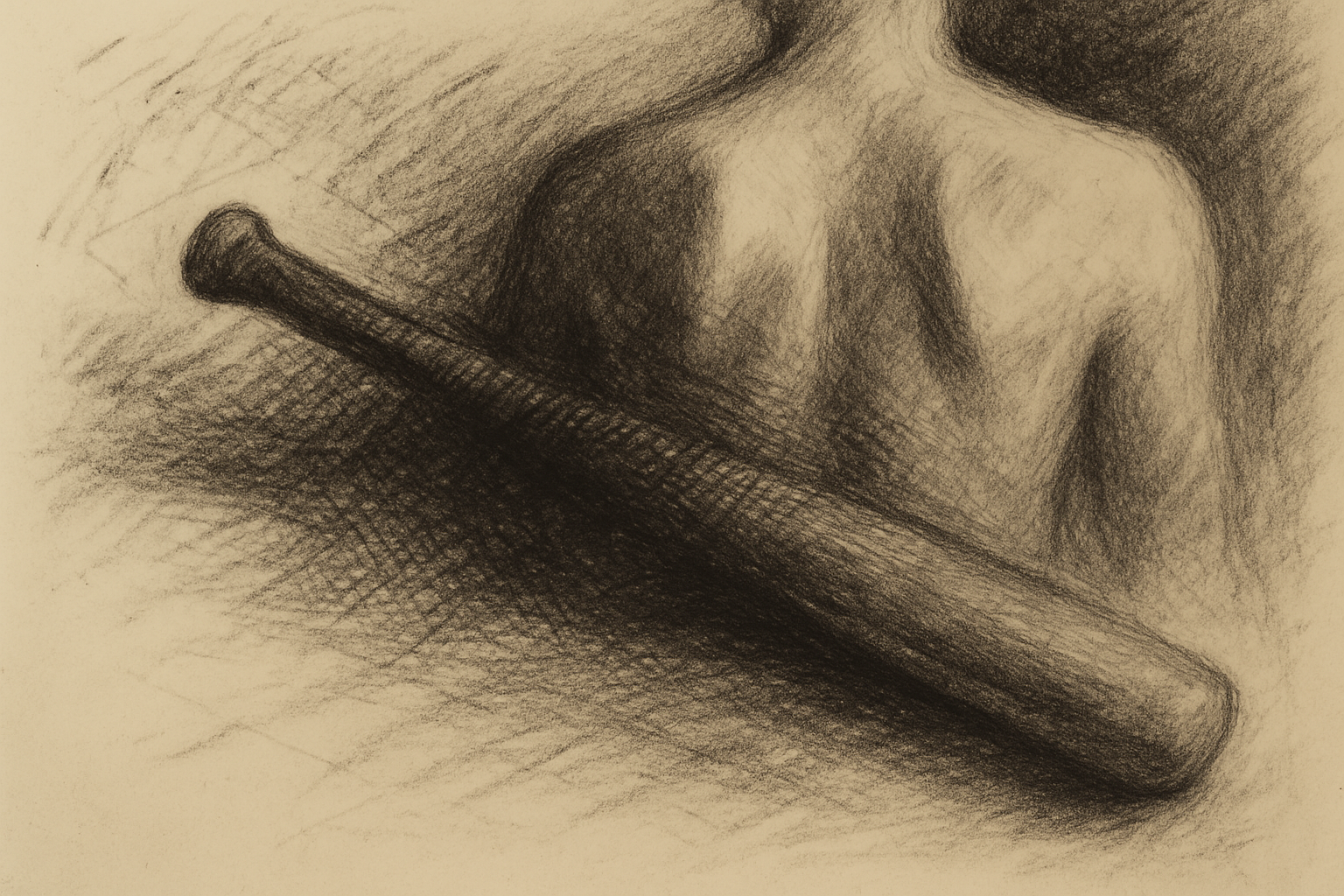
Yes. It's a practice to learn how to truly welcome sensation. Francis Lucille has a nice way to joke about it. He says: you invite someone to your home, you open the door with a big smile, but you have a baseball bat behind your back, waiting for the moment you can take them out and push them out the door. So welcoming.
You offer them a cup of tea, they take a sip, you yank it out of their hand. "Thank you for coming!"
What if it never goes away
One of the ways that helped me the most with this was something Richard Moss said to me. He said: just approach it, whatever you're experiencing, with this framework, this paradigm, this conviction. If this was never to go away and you had to be with this for the rest of your life. If you knew for certain this would never get fixed, that it's just going to be like this for the rest of your life. Can you be with it now, knowing it's never going to go away? That's a welcoming. It's not wanting it.
That makes it worse for me. That makes me hate it more.
Yes, but try it, because it activates your resistance. The hating it more is activating, it's bringing up the true resistance. It's showing you that you have a bat behind your back.
It's the opposite of "this too shall pass," which can itself be a way to push things away a lot of the time.
Exactly. Just go: what if this is never going to go away? This is how I'm going to feel for the rest of my life. Can I make friends with it? Can I be with this? I am allowing this to be like this for the rest of my life. And then a big "no" comes up. That's the thing: it's bringing up the true resistance.
But the point is to feel it, not necessarily to think about it, right? It's a way to open the door to that feeling.
Welcoming is not a strategy
Yes, to be with it, be with it, be with it. And instead, you might think, "Well, if I approach it this way, it's actually going to go away." No. That's the bat again. If it's a strategy to fix it, to get rid of it, it's again not a true welcoming, not a true feeling of it, not true openness to it. What happens is that at one point you simply arrive at: "I'm totally fine if this is how I feel for the rest of my life. If this is the condition, the situation, the experience, the feeling, I'm totally fine with that." That's often when it goes away. When that being fine with it is very true and very real and authentic.
Is it that you get tougher? Is that what's happening?
Vulnerability, not toughness
No. You get more vulnerable, more open. It appears tough to others. It appears strong and powerful to others, but it's not subjectively. My partner saw a very big change, almost overnight, and she was amazed. For me, I don't know if I have the words. It's not what it appears. It's very gentle, open, vulnerable.
Before, I would have the tiniest issue and I would be kicking and screaming. Now my body could be literally falling apart and I'm fine. I've had to learn to do the reverse: I have to be careful, go slower, be gentle, honor the body's tempo, take more appropriate rests. Before, if I didn't rest, I was a mess. Now I can go without sleeping and feel fine. I can work overnight. I can run up 180 steps to the beach until my body is breaking. But I've learned not to.
Before, I was tough in certain ways. If I committed to push, I could push and not complain. But the things I wanted, when I wanted them to be a certain way: kicking and screaming, daily, multiple times a day. It was my favorite hobby, and my partner was the victim of my condition. That slowed down and then just stopped, from one day to the next. I even forgot it was the case, and she would remind me. Now it's basically a distant memory of somebody else's life.
I have to learn to complain, to practice saying no to some things, to some people. I have very healthy boundaries. But I do have to adjust in the other direction now. Mostly it's with business partners doing things where I have to say, "No, maybe don't do that in relation to me." I don't really care, but it's wiser and more appropriate to push things in a healthier direction.
So you don't feel triggered? You don't feel taken advantage of, or any of the stuff around somebody crossing a line?
Using emotion as a tool
When things get really bad, I do experience frustration, but it's very mild. I used to have such intensity around work situations. That was my second hell. The first was relationship issues; the second was work situations. Now I have to be careful and pay attention, because it's wise that I get a bit frustrated, that I express it. I have to act it out a bit. It's a kind of poker move: I'm playing a game, and I have to bluff. "I'm frustrated." It's a bluff, because I'm playing the business game.
I was just talking about that last night. I remember someone saying they would have to act out anger even if they didn't feel it, to send a message, to get people to listen. They would have an explosion of anger, but they weren't really angry. Which is actually realizing that you are playing a character.
One hundred percent. That's exactly how it is. And then you're using anger when it's appropriate. It's the same thing that applies to decisions: you don't know if it's right or wrong, but it feels appropriate to communicate something with anger, though you're not actually angry. You're invoking a way of expression. Especially in business situations, that's sometimes the language needed.
It's also happened for me in relationships. With my mother, a few situations where I felt it was important to express anger. And in broader family situations: I was asked to get involved, so I got involved. Then the person who asked me regretted it, because they didn't really want the truth. They could feel that I might do something helpful, and it was a correct intuition. But they didn't really want what was coming. It helped the situation, but it required people hearing things they didn't want to hear.
For me, if you open the door, if you ask the question, at most I can say: on a scale from one to ten, how direct or honest do you want me to be? If they say five, I can soften the blow. But if you ask, and I feel it's a sincere ask, I'm going to speak truthfully.