The Wave and the Bat Behind Your Back
La ola y el bate detrás de tu espalda
A student asks about the best way to process fear and emotional energy during meditation, and the teacher challenges the assumption that fear is a problem to be solved.
The Wave and the Bat Behind Your Back
A student asks about the best way to process fear and emotional energy during meditation, and the teacher challenges the assumption that fear is a problem to be solved.
When emotional energy comes up, like fear, would you recommend experiencing that energy while at the same time straddling that experience with the awareness of your own being? Being present and aware of yourself at the same time as going into the imprints that are coming up in the sensorial field? I experimented with that in the meditation today and it felt like I was going a little bit back and forth.
I'm not sure I fully understand the second option you're describing. With fear, it really depends on the fear, because there are different levels and different kinds of fear. The approach will be quite different depending on which it is.
Some fears are just consequences of beliefs, attachments to certain ideas. Going into the energy of that kind of fear might just feed into a loop. But there are other fears where that approach is appropriate, where it is the better way. That kind of fear has less of a narrative around it. It's going to be less of an emotion and more of an energy, a deeper energy versus an emotional energy.
Discerning the type of fear
Learning to discern what is activating matters more than applying a general approach to fear. So the first step is to see: what is this fear? What are the narratives around it? If it starts to feel like there isn't much of a narrative, then that's the deeper fear.
So today, for instance, in the meditation, my mind thought of engaging with you on the call and I felt a little nervous. I sat with that and recognized it. I didn't ask "why am I feeling this?" The energy just came up and I thought, okay, that's obviously a fear. I don't need to think about it, I just feel it. I recognize that it's some shadow side of me that feels nervous. So I just experienced the sensation, but then I was also trying to be aware of my sense of being at the same time. I wondered: should I just go fully into the emotional energy? Am I seeing this in the wrong way? Or is there actually no separation, and I'm already straddling the two in some sense?
If you turn that into a problem, if the fear is interpreted as something wrong, then what you describe, going into the being or awareness, is that to remove the fear?
Yes.
The fear is not the problem
So why is the fear a problem?
Well, it's a problem because it's like false evidence appearing real. It's an uncomfortable sensation that's trying to stop me from doing something.
Let's go step by step. False evidence. You said it's trying to stop you from doing something. But that's all interpretation. That is how you're interpreting it.
I guess because there's this uncomfortable sensation that appears. I could look at it as something trying to control me in a certain way, but I guess it also has to do with how I relate to it.
Yes, that's an interpretation. "It's trying to control me" or "get me to not do something" is an interpretation.
So there's a fear. The fear is saying: this direction, possible pain. That's what fear is saying. It's some sense of self-preservation, to avoid pain or to avoid an ending of some sort. That's basically the mechanism of fear: this direction, possible pain, possible something you don't want. In your case, it was speaking in the group. That's all it's saying, in a sense.
Same signal, opposite responses
But you could interpret that as, "Oh, great, I have a sensor that's telling me where to go." If you look at that same signal and it's happening because there's a bus coming and you're about to cross the road, you interpret it as: don't step in front of the bus. But if you look at it in the context of speaking in this group, you might interpret it as: I should speak. The response is opposite. In one case, you obey what the fear suggests. In the other case, you do exactly what the fear suggests you avoid.
I understand what you're saying. I recognize that fear does influence me. It definitely influences my mind, and I can get into spirals about it. But this was more subtle. It's not that I spoke or didn't speak because of the fear. I just noticed the energy appearing in me and wanted to understand: what's the best way to process it while still being aware?
That's the problem. "The best way to process it" means: the best way to remove the fear. Unless you mean: what's the best way to interpret or respond to it?
Okay, so that's a better way of saying it.
The habitual urge to fix
Yes, but it's important to notice how immediately the habitual response arises: there's a fear, it would be better if this wasn't here, how do I get rid of it?
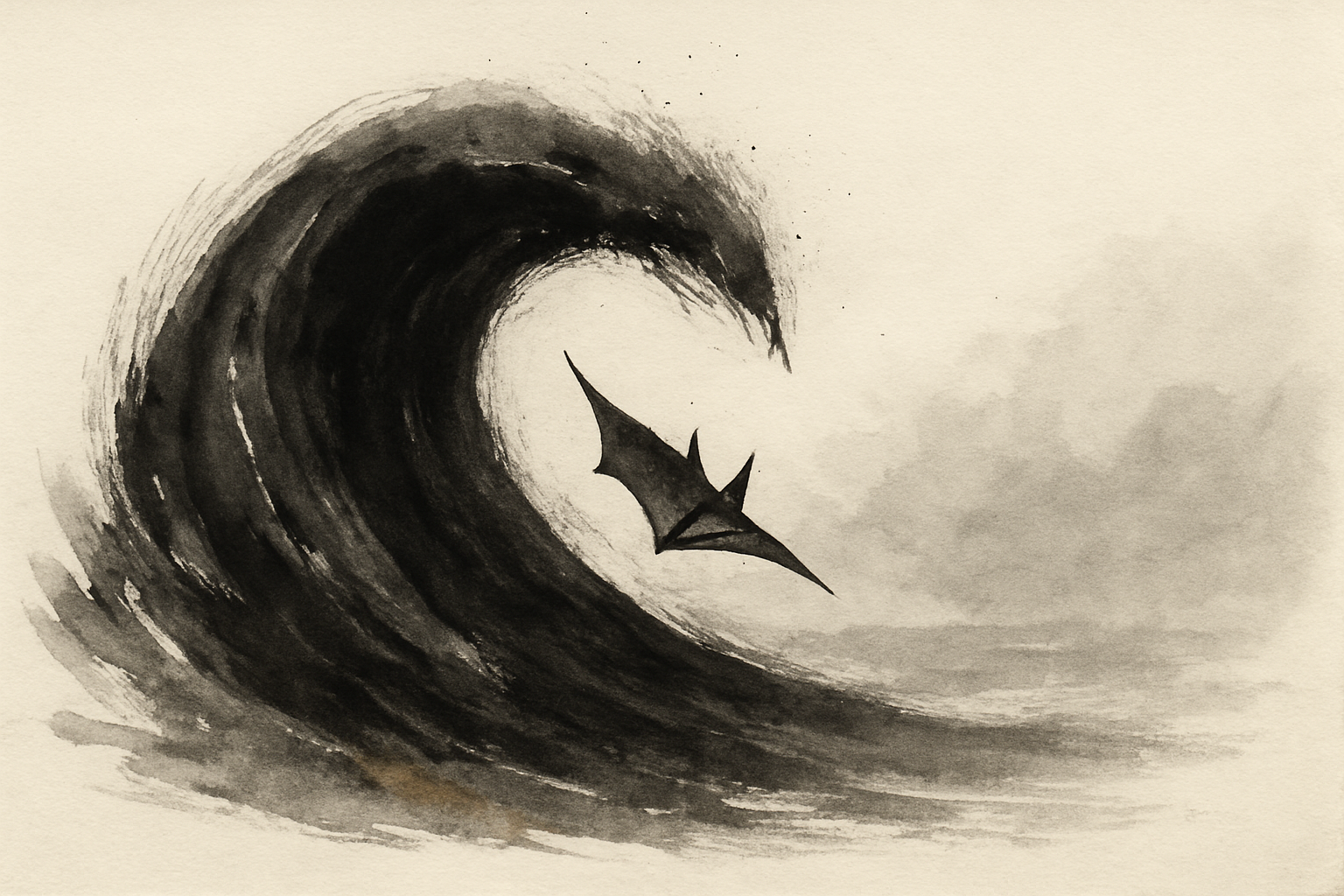
That's the problem. That's the problematic interpretation. Fear is a wave appearing in the experience of the present moment. You can take the position of someone on a surfboard: there's a wave coming, and I'm trying to stop the wave, trying to get rid of it. Or you can ask: how do I surf this wave? In one position, you interpret the wave as something that should not be here.
This is interesting. I know what you mean, but doesn't it make sense to actively work with the emotional body, to let whatever stored-up energy from the past, imprints and such, be released from the nervous system? So that we're less influenced by emotional energy and it's easier to move through life and to be present and aware of the truth all around us, because there's less stimulation?
I understand that. But you do have an assumption that there is some past stored-up response that needs to be released or changed. And that's not always the case. There's an interpretation at work: "This fear is coming up, there's something that needs to be processed, so that in the future this fear will come up less or won't be so strong." There's a strategy built on the idea that there is some problem that needs to be processed.
A different way to relate
I am describing a different way to relate to it, one that can also, in a sense, achieve what you're describing. If you're talking about living more freely: if whatever comes up, including fear, you are able to freely surf with it, live with it, move with it, respond to it in a wise way, then you are living freely, not requiring fear to not be there.
Your strategy is: I need to process something so that I will have less and less fear. I'm saying: if you're able to be with the fear in a different way, relating to it differently, the fear will come and go and there won't be a problem when it's here or when it's not. Then, actually, it will come up less and less. Sometimes something does need to be processed, but not always in the sense of deeper work that needs to be done.
Yeah, because when I feel something and notice it, my mind just wants to go to work on it.
Exactly. That's what I've been trying to point out since the beginning. And that is going to keep you in a never-ending avoidance, always trying to reach a state where you've finally fixed this. The "go to work on it" strategy, as the way to resolve and remove, has some value. But I'm trying to point to a different way, something complementary. The approach you have is one that will not go as deep.
Right. So it's an option that serves me and can serve other people, but ultimately there's a deeper way of relating to it that you're pointing to.
The conditioned response
Yes, because that option is useful and valuable at certain times. But when it's not useful, you're still using it. So it's a conditioned response.
The conditioned response is the part of me that wants to purge it, that wants to work on it?
Engage, solve it, fix it, remove it, process it. The trap here is that in spiritual work, we can put so many things in that bag. A lot of strategies that are avoidant can fall into the bag and be called honorable spiritual practice. Emotional and psychological work can become an avoidance mechanism.
Because you're trying to get somewhere else, and what you're pointing to is right here.
What I'm describing is more complex than that, because it's about how not to fall to either side. Fear is the wave appearing. One approach is: how do we make sure this ocean has no waves? How do I push down on these waves? How do I flatten this all out so that finally tomorrow I will be at peace because there will be no waves?
Said that way, it obviously shows how ridiculous it is. It does work at times, in the sense that some waves can be calmed because we are creating them. The waves we create through our inner storminess, those we can settle. But then there are the waves of life. Those just come up. And the more you try to flatten them out, the more it's going to storm them up, or create this perpetual, never-ending attempt to settle things.
Surfing the wave
The freedom that is possible is: there's a wave coming up, and you surf it. You ride it, you savor it, and you also respond in the wisest, deepest way, because there isn't a prior interpretation that the wave should not be there.
Right. Because I have this story that I have a fear imprint from my past, and there's a process I need to follow to get rid of it. Instead, that's the judgmental side of me that can't accept that maybe there's no need to reason about anything. It just happened, and I should just accept it.
Well, you're presenting two sides again. The first thing, yes, that's not it. But then you describe what it is, and that's not it either. This is what happens. I'm pointing out a belief system around you, what you are and how you are. As soon as that starts to get shaken a little, the mind starts to create some other alternative: "Well, it's this other way; this is the true way." And that's not it either.
But isn't it important to just accept whatever wave comes up, not analyze it, not try to do something about it, just accept that it's part of my present moment?
Welcoming with a weapon
Yes, but then you said "and not think about it," and that's already a strategy. Because it could be appropriate to have some thoughts about it. You could contemplate: my body and mind are reacting as though I'm about to die, and I'm only thinking about speaking in the group. Does this add up? And then thoughts will say: no, it doesn't. It feels like I'm stepping in front of a bus, but I'm not. I'm just contemplating speaking.
I know that experience. When I would contemplate speaking with my teacher, there was just terror coming up. And at first I was trying to control the fear, or see it as some kind of problem. Or seeing the origin of the fear as something wrong, an imprint or a wounding from the past, and so on. That's already too much.
But in the moment, there's this fear. It feels like I'm stepping in front of a bus. Is the reality like that? No, it's not. Therefore, why don't I explore moving into that which feels so scary? That is a form of thought process.
So if I can go through that process while being aware of my sense of being, that's ideal?
I lose you there, because I'm not sure what you mean by being aware of your sense of being. When we put these things in words, it's hard to communicate.
In guided meditations I've been doing, the teacher is always saying: settle into knowing, put your focus on the one who is existing beyond thought. When I go for walks or do things around the house, I try to be in that knowing state, and it feels non-personal, very open. So when I'm meditating and I notice the energy come up, I wondered: can I experience both at the same time? But that was when I was still operating from the idea that I had to process it.
So the idea is that for there to be a knowing of your true nature, there needs to not be fear?
No, not like that. I recognize that the fear is appearing in this open space of awareness. I don't judge it. I don't go to war with it or resist it, at least in this moment.
We're saying that you do have this strategy. That is going to war with it.
But I do it in a way where I'm accepting it and giving it love and such.
This reminds me of a way Francis Lucille talks about welcoming emotions. It's like you're at home. The emotion comes to the door, you welcome it, "come on in," and you have a bat behind your back.
I don't know if that's exactly what I'm doing. Maybe a little bit. Maybe just five percent. A small bat.
There's a strategy. It's: I will welcome it so that it leaves. I will welcome it because once I welcome it fully, it will leave and never come back. It's still a strategy.
This feels like a big jump for me, to really embrace this way of relating to emotions. It feels like it's going to take years.
The ceiling of processing
It feels like that, and it can, but it doesn't have to. It feels that way because what you're currently doing is helping you cope with something.
Yeah, it's helping me feel like I'm making progress. And it is helping me feel better. The last seven months I've been through some real deep emotional initiations, and I have moved a lot of energy. It's been good, it's been positive.
I'm pointing to something like this: what you're doing will have a kind of ceiling where you won't be able to move past. You'll be chipping away at something forever with diminishing returns. The techniques you're using work for some of what's happening, but not all. They work for an aspect that is more on the surface. It is valuable and valid, but there is a trap. It can become an avoidance.
Yeah. I feel like I'm hearing this at the right time. There's been other things coming up this week around a similar theme. I even listened to an interview a couple of days ago where they were talking about how what makes someone more likely to advance psychologically is not the ability to change their thoughts and emotions, but the ability to change how they relate to them. And this is exactly what you're saying.
Interpretation creates the person
Yes. It's seeing how the way you relate to them comes from an interpretation, and seeing how that interpretation can become conditioned, so that you always interpret something in a certain way and then relate to it according to that interpretation.
If you interpret fear as: fear should not be here, fear is coming from something wrong that happened in the past, it needs to be fixed so that I don't feel fear anymore, and the way to fix it is A, B, C, D, that whole thing is an interpretation. Sometimes fear is God speaking. And you should listen, meaning: don't push it away. There's nothing wrong with it. It doesn't need to leave. It's actually intelligent.
Then how would you interpret it? You have to listen and interpret. But if you do it from a map you wrote last week on how to interpret fear, that's conditioned. The way you interpret is by listening now. That's the metaphor of surfing: you can't grab the map from last week and then surf this wave appropriately. This wave is unique, and you have to respond to it in the moment, listen to it in the moment.
When you say listening, I guess there can be some space for an assessment, whether this is actually God speaking or whether this is just some stagnant energy. Inquiring into it, and then just being aware of its presence and allowing it.
Ultimately, all of what is happening now is God speaking. So in a sense, I'm pointing to the fact that even fears that are there because of woundings and conditionings can be explored this way. Through the art of exploring without a pre-cooked interpretation, you start to attune to things and sense: this feels more like this, that feels more like that. It's less of an analytical process and more of a felt sense. That's where the intelligence starts to come up.
Fear as the energy of openness
For example, what I was describing: this feels like a very disproportionate fear, as if I'm about to die, and I'm only thinking of going to talk to someone. The felt sense, if you put it in words, might say: "Oh, I actually really want to talk, and I'm afraid because my heart is invested. There's a bit of shyness there." That starts to connect you with an openness and a vulnerability. The fear is just the energy of that excitement and openness happening.
It's like going on stage to perform. At first it could feel horrible and terrible and scary, but it's actually the invigoration of an energy. This openness is bringing down barriers, and there's an excitement and a vulnerability. Then there's nothing wrong with that fear. It's: "Wow, I'm excited and feeling vulnerable and nervous, and it's sweet."
And this idea that I need to process the fear, that's all just coming from the person, creating a loop.
It's simpler than that. It's coming from a belief, an interpretation, a strategy. But it is what creates the identification. It's not coming from the person; in a sense, it's creating the person. Because it creates a sense of time: there was a past where there's a wounding, there's a future where you can resolve it and it won't be there anymore, and there's a person in the middle who can do this.
Yes. Okay. This feels pretty radical. I'm glad we got to explore this.
I'm glad too. It's when you get into the details of things that all the real substance comes up.
I do work with people for emotional processing and transformation. I have these deep conversations and offer coaching to bring people more into emotional awareness and feeling. That's been a big part of my practice. But it surely has its merit, as you said.
Yes. There are some teachers who are quite against that work, but I understand it's coming from trying to prevent it from becoming the path to ultimate freedom, because it's not. So they really push back on it. I take a more intricate approach: that work is really valuable, but it's not going to get you to the ultimate freedom and peace that you're looking for. And at some point, it might just keep you further and further away from it.
Understood. Thank you. I'm going to listen to this again, definitely.
You're welcome. Thank you.