The Whirlpool and the River
El remolino y el río
A student describes a profound shift during meditation when experiencing sensations as coming from herself rather than at her, and asks how to work with the overwhelming nature of sensory experience.
The Whirlpool and the River
A student describes a profound shift during meditation when experiencing sensations as coming from herself rather than at her, and asks how to work with the overwhelming nature of sensory experience.
During the meditation, some things really stuck out for me when you were speaking of the sounds, the visions, and the kaleidoscope. How it wasn't coming at me but coming from me. That really shifted my experience. Once I felt it was more coming from me, I could feel myself expand rather than contract. For the first time in meditation, I actually felt like I was reaching out to all the people in my life. It was so different.
It's such a huge shift: coming from me rather than at me. I feel like all my life I've been trying to avoid, avoid, avoid. I get so overwhelmed by the noise, by the images, by the conversations. Just watching people is a lot. It feels like it's coming at me. And when you said it was coming from me, it was just like: it was all me.
It feels so overwhelming all the time, just the senses. Maybe that's why I avoid. How should I relate to that?
You should look at what is overwhelmed.
There's no sense to it. I feel like I can't contain all of it. It's so much.
The construct that can't contain it
I understand. I've been there, and I think everybody can relate to some degree with your words.
The key is this: you had a shift with those words, "everything is coming from you." That points to a paradigm. There's one paradigm where everything is coming at me and I'm trying to manage it. That's a false perspective. Now, "everything is coming from me" is truer, but then what that "me" is needs to be investigated, needs to be experientially explored.
You said you can't take it all in. The "me" that is a mental construct can't. But what you really are can.
We can approach it with a series of "what ifs." What if everything is coming from you? What if what you are is infinite, already containing everything that is appearing? What if you are the source of everything that is appearing right now?
Right now, everything that's appearing is being absolutely, completely, effortlessly welcomed by you. And if we had a dialogue where I asked you to debunk what I just said with your experience, you could say, "Well, no, because it's not effortless. I feel this rejection, this 'no,' this pushing away." But that, too, is all being effortlessly welcomed. All of your psychological and emotional struggles are being fully known, experienced, and welcomed by the emptiness of the seeing.
The mental construct "I" that's trying to manage and control it is struggling. But that's not what you really are. It's a construction.
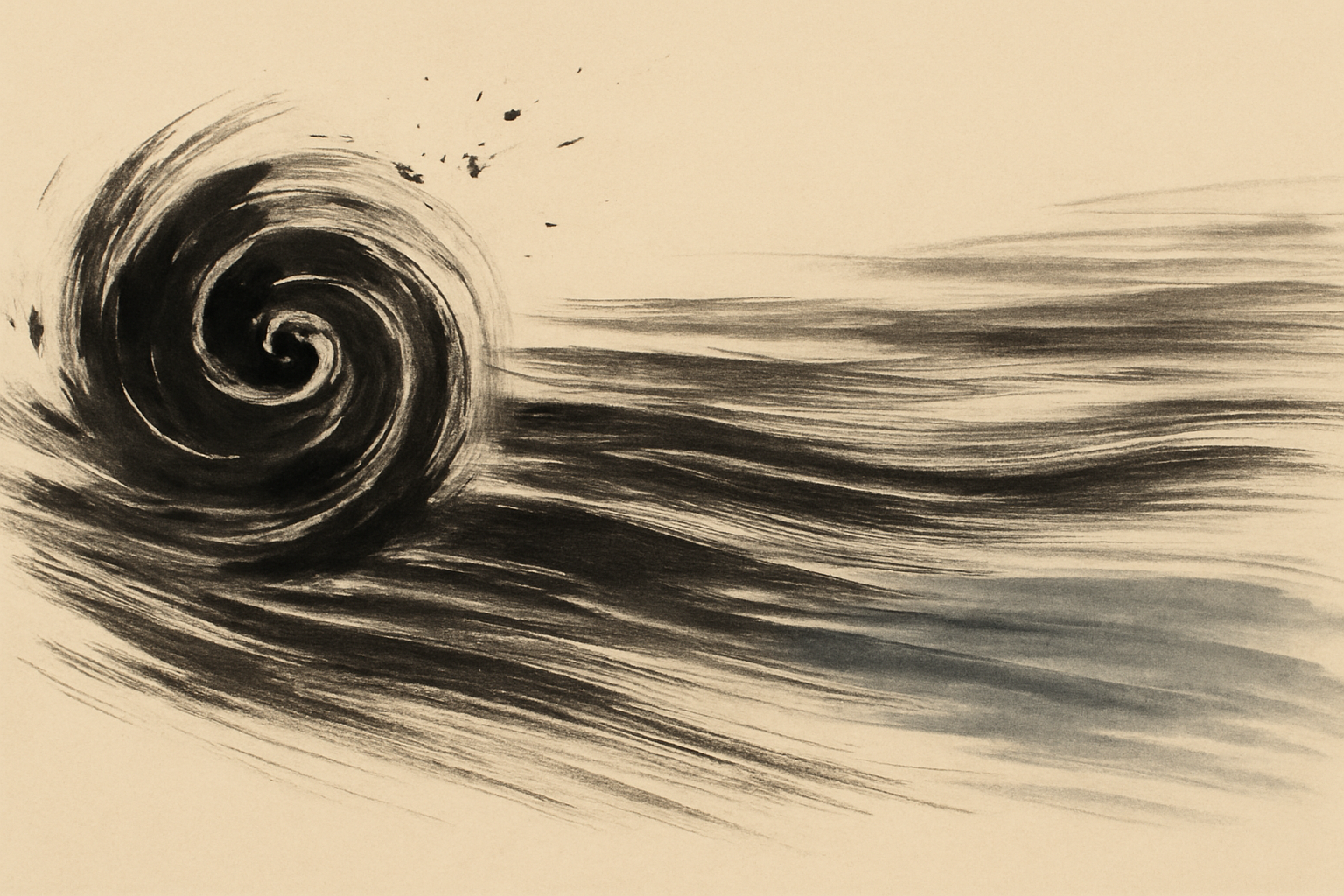
The whirlpool in the river
So imagine a river. Your life, your experience, what you are: that is the river. You are both the source and the river. But you want to be something more specific, so you create a little whirlpool in the river. Now you're this little spinning whirlpool, and you can finally call that "I." But anytime there's a rock or a fish or another current threatening that whirlpool, you're struggling to keep it going. To that whirlpool, everything is overwhelming. It's a huge effort; you're stirring and stirring and stirring.
But you can recognize that you're actually the river. If where you are is the river, then the whirlpool can come and go. It can appear when it's useful.
What the metaphor points to is this: the river is everything appearing at any moment, the kaleidoscope of experience that is just appearing effortlessly right now. You're doing absolutely nothing for all of it to appear.
So is it the sense of "I," the belief of "I," trying to make connections, trying to make logic of all these experiences, that makes it feel like it's too much?
Thought is the whirlpool
It's all trying to keep those habitual sensations and thoughts that you call "I" going, to keep them activated. It's like a cognitive system running. The mind is activating certain parts that keep certain images and sensations ongoing. That's the whirlpool. Keep it going, keep it going. And its only interest is to keep the whirlpool going.
There's a path that is to become more and more proficient at whirlpooling. And there's another, which is to see through the illusion that you're the whirlpool. This is not something you can explore only through thought, because thought is the whirlpool.
So my thoughts are trying to make sense of my experiences and keeping me in the whirlpool, and thus my identity: the thoughts, the doing, the avoidance.
Something like that. You're so attached to the sense of being the whirlpool that you can't even conceive of something else. You will be standing from that perspective, looking at the rest of your experience, and everything then is something to manage, something to fight, something to understand.
Then there are types of habits. Some people tend to do that through more emotional means, and others through more intellectual means, through a rational thought process of understanding the world.
That's me. I'm trying to intellectualize everything: study, learn, categorize.
There's a value and a usefulness to that, but it becomes a crutch when it's done in service of an illusion.
Keeping me in the whirlpool.
Keeping you as the whirlpool.
Finding beauty as a doorway
Just notice. Go back and take that phrase as a koan: everything is coming from you. The love you're looking for is coming from you. It's not out there to find.
One way to explore that is to ask, "What is it right now that I find beautiful?" It could be just a little reflection, anything. And if you find yourself thinking, "Nothing's beautiful right now, everything is terrible" (which used to be a lot of my habit), see that as part of the illusion. Investigate it. Be curious. Really, is that so?
You might come up against some really strong resistance. You are finding something beautiful right now, at any moment. And that resistance is the attachment to the illusion. You don't want to let go, because if you find beauty, it's going to crack the illusion. The whirlpool can only be sustained if there's a "no" to what's happening in some form: a denial of the love and beauty that is here now.
What if, at any moment, every single instant of life, you could find something absolutely, gloriously beautiful, loving? What if? What does that do to life? How does that change everything? No matter what's happening, no matter how tragic things are circumstantially, how painful.
I don't propose this as a truth. I propose it as a "what if." Consider the possibility. It is my experience, and to me it feels universal. I know it was so even when I didn't see it. It's not something that was absent and then appeared. It was always so. And I can understand now how I was intentionally not seeing it.
Two starting points
I'll say one more thing. There are two paths, two forms. One always starts from the perspective that something is missing and I need to get it, find it. The other always starts from: there is nothing missing. What is here now is beautiful. It's free. It's loving.
As an experiment, if you adopt the second perspective, what can happen is that the first one is seen to be based on illusion and the second on reality. But that has to be discovered through exploration; it cannot be belief-based. And because of all the habits of the mind, there often needs to be a process. The exploration needs to become a way of living for a little while, until all the muddiness settles.
What I'm trying to say is: it might take time. Whenever there's a contraction and something feels overwhelming, and it's not okay, and something's missing, and you're striving, look for that which is right now truly beautiful and loving, coming from you.
That's going to take some time.
You can start with really small things. Right now, you could look at something in your home. It doesn't have to be a Da Vinci.
I understand what you're saying. It's like a habit, or changing the perspective of this habit.
It's like taking a step back. When you look out the window, you can look from the perspective of "I'm really struggling with life, there's all of this stuff." Then you step back: I'm alive. There's this miracle. There's a tree, which I can see through your window, and it's beautiful. That's it.
Then you can fight with that. You can have that noticing for a millisecond and fight with it. But keep piercing through. It's an addiction to contract, to complain, to say no, no, no. And the antidote is: there is something beautiful here. It starts to allow an energy to move from you, a lovingness from you toward what is now, which actually is you as well. So it's a lovingness toward yourself.