The Heart That Cannot Be Damaged
El Corazón Que No Puede Ser Dañado
A student shares her experience of intense energetic openings, fear of losing her mind, and the challenge of being vulnerable in relationships after returning to her home country. The teacher explores how true strength arises through vulnerability, and how identity naturally shifts through this process.
The Heart That Cannot Be Damaged
A student shares her experience of intense energetic openings, fear of losing her mind, and the challenge of being vulnerable in relationships after returning to her home country. The teacher explores how true strength arises through vulnerability, and how identity naturally shifts through this process.
I came because I wanted to share a little bit about my process and some fear that I have in it. It's difficult to explain, but a lot of what you spoke about in the earlier conversation answered my questions. I feel like it's a good thing to come. I am in a lot of change, and I feel a little bit alone in this. Sometimes I go through really intense experiences: changes in perception, feelings of energy that I associate with something like kundalini. In some of the more intense moments, I have a fear of being crazy or becoming crazy. I feel a necessity to share something of this, and I've used painting a lot to express emotions or sensations. It also happens when I am meditating or painting or just with myself. When it gets stronger, I have some fear, and also something like a feeling of possession. I contract, and I start to feel physical pain. But I can see that it's just a process because it disappears; it doesn't stay all the time. It comes and goes. I did two paintings where certain symbols appeared. I didn't search for them; I let them come. Afterward I started to look a little more into kundalini, and I recognized some of the sensations in the descriptions. I came to meditate together and to listen to you, and also to bring this and maybe get some advice. What do you think about this, and how can I deal with it?
It wouldn't be very surprising if you have some kind of energy openings, a kundalini type of experience. What you describe sounds like, subjectively, the experience can be very overwhelming and scary: the sense of going crazy. If that is happening, it's a good thing. And there isn't much to do. It has an energy and a direction of its own. In my experience, the more you try to direct it or control it, the more challenging it can become. In a sense, it's teaching you to let go. It will bring up the deepest fears, the deepest pains.
Being vulnerable in the world
Today you spoke a lot about fear and vulnerability. What I was thinking while you talked about this is that it gives me a lot of fear. The fear of vulnerability has to do with how to be in the world while being vulnerable. I can identify two different feelings when being vulnerable with other people, especially people who may not be in this kind of inquiry. Either a kind of deeper connection happens, where they respond to the vulnerability and I trust in that and can just be vulnerable with trust. Or there is a rejection, a sensation of loneliness, of being alone or exposed. You said earlier to be selective about who to trust and with whom to share. But if vulnerability is a state to be in, how is it possible to be selective, to choose?
You regulate who you spend time with, to the degree that you can. You don't invest time and energy in relationships that are not responding well to vulnerability, or that are to some degree more toxic or unhealthy. You spend more time and energy in relationships where you feel you are truly authentic and vulnerable, and there is more of a harmony, even if pain and conflict arises, because you can sense that underneath there is a connection, a love and respect.
In that sense, vulnerability is always the way, because without it you will never connect deeply. The definition of not having vulnerability is a superficial relationship.
But there is a lot in daily life that doesn't fit that.
I don't think you're talking about expressing yourself in a deeply vulnerable way with everybody you meet, or with people where that's not the right context. You can still be vulnerable in your being without needing to express or share personal things that would invite a different form of relating. You can be completely open and vulnerable in your being, and at the same time you can energetically set a distance with somebody if you feel you need to.
This is what you call choosing who to spend time with.
It depends, because I don't know if you're talking very generally. It could be someone you work with, a friend; there are different relationships. Some relationships you choose because they are the work you've chosen, and you have those exchanges because that's the work environment. Some are family, some are friendships, some are romantic. There are different ways of being in each of those relationships, but you can be vulnerable in yourself at all times. That doesn't mean you expose yourself to toxic behavior. In fact, by being vulnerable, you can recognize more deeply what is not right for you.
What seems fragile cannot be damaged
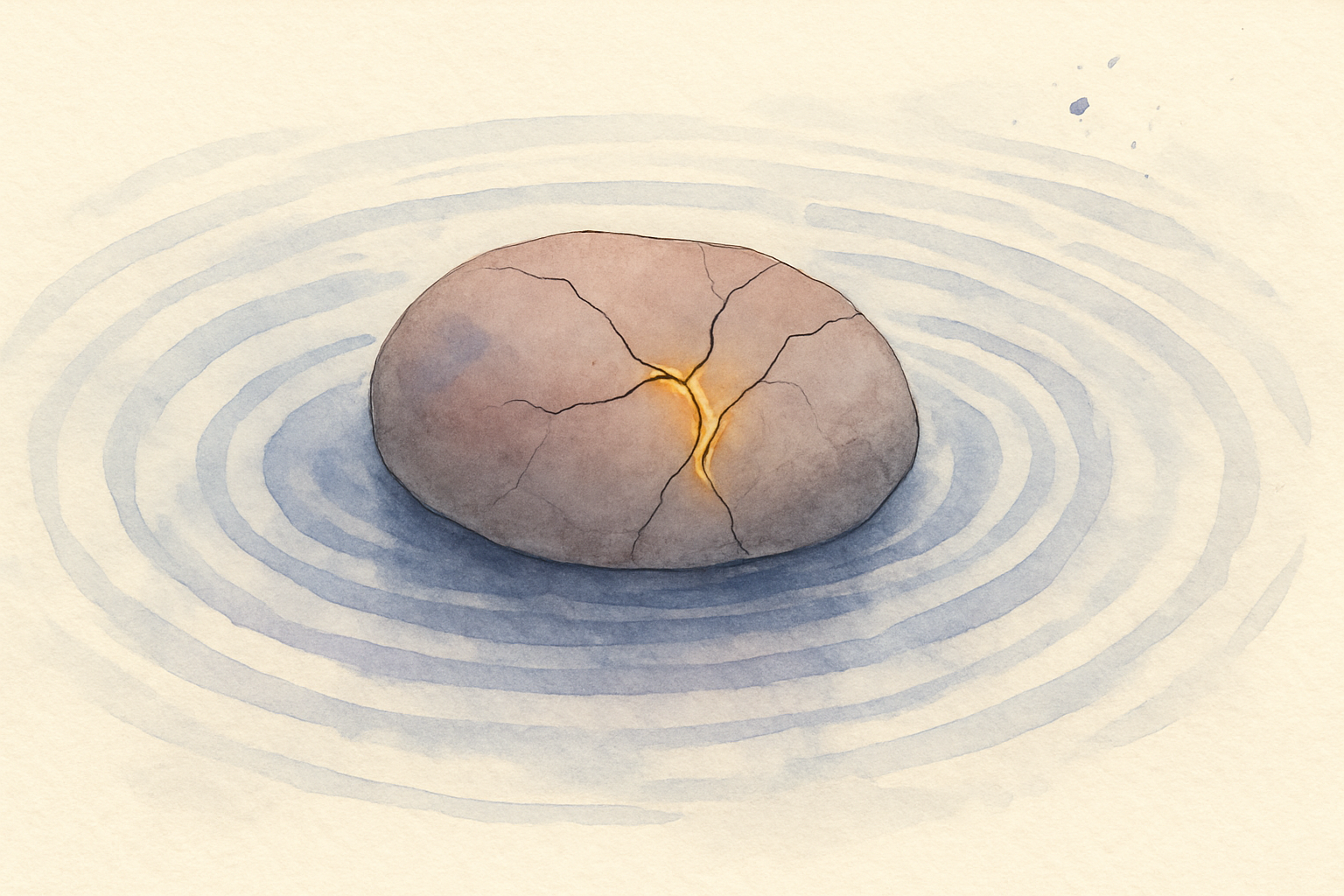
What can happen as this process moves and opens you up, bringing up fears and pains, is that more and more you recognize that what seemed fragile and could be damaged is not fragile and cannot be damaged. That recognition invites and makes possible a deeper vulnerability.
Today, for some reason, I keep getting images of Christ. Since you're a painter: there's the image of the Sacred Heart of Christ, where he has opened his chest with his hands and brought his heart out. It has splinters. It's been hurt. But he's offering it. That's vulnerability. It's not literal. It's actually the realization: I can offer this. You can hurt it as much as you want, but at a deep level, there is no damage. It's actually very powerful. It's the true power. It's the power where there is surrender and offering and openness, because it comes from a realization that can grow gradually over time: this pain does not kill me, this fear does not kill me, it does not damage me. The belief in my fragility starts to dissolve.
It seems like a contradiction, but what happens is more and more vulnerability and openness, while you still decide which relationships you spend more time with, when to say no, when to address what you feel to be improper behavior. What people normally call setting boundaries.
The center is the heart
What you say about the bleeding heart, and also about using the mind to listen to the heart, has been very present for me.
There's a teaching from Richard Moss that I find helpful. He says: you can be the mind listening to the heart, with the heart open to the mind, integrated with the mind. But what's the center? What's the core? It's different if you are from the mind coming to the heart, or from the heart informed by the mind.
And what is the center?
I like what he proposes: the center is the heart. He is proposing that you can choose. But I think that is what he's saying, and I like it.
It seems very, how do I say it in English, very risky.
Yes, high risk. Very courageous. But this freedom is an endeavor of risk and courage.
Also, it looks like it's the only way.
The more you wake up, the more you see there's really no other good option.
The risk of becoming uncrazy
And what about the fear of becoming crazy? Is it a risk?
I think so, but that's the risk to take. There's also the risk that you will become uncrazy: the risk of losing and giving up your craziness.
Yes, and in a way I really like this, because it happens, and over time it seems like the only way.
And that could be terrifying. The question is: there's a risk you become more or less crazy. But the way I'm proposing it is: let's just bet on it becoming more free and less crazy, because you're always going to be wrestling with that choice. You can't freeze it and keep it where you are. It's going to move one way or the other. By addressing this consciously, you're helping it move in the direction of health and well-being and freedom. Taking the risk, it may sometimes go the other way, but that is often temporary.
It seems like a lot of risk, but I think I've already made my choice. It's not that things are going as I expected. In my own mind and perception, everything is really different from what I would have imagined.
That choice you said you seem to have already made: if you look at it more directly, you can probably see it happened to you. It came. It's grace, to love truth and freedom. Where does that come from? It's like preferring chocolate instead of vanilla ice cream. Why? Where did that come from? You prefer, you choose love, freedom, truth. Why? I don't know. Grace. What I'm trying to say is that something happens that's not in your hands. Then at some point it can come full circle, and you can realize: yes, I chose that, but I also chose suffering.
When the drama falls away
Sometimes the drama just falls away, and it can appear like I'm not feeling anything, or something like that.
If you're used to the emotionality of drama, it can feel really strange. It can feel like a part of you is gone. But it's a passage. It takes time. It's like a cup emptying, and then something else can fill it. But what fills it is not the same. In the old story it's old wine and new wine, but in my experience what fills it is completely unrelated to what was there before.
I don't know if I understand. When I see drama now, it seems to me totally absurd, like it was a theater game.
That's going to affect you and how you see yourself and your relationships. You talked about loneliness. It's probably related to this, because you're shifting very deeply in your way of being. That can change a lot of things: your relationships, your friendships, your relationship with your family. It will bring all different kinds of challenges.
Yes, the most difficulty is with old relationships, family. I can perceive something like incomprehension. I don't know how to explain it, but it's strange. I see them looking at me like a stranger: some are excited, others seem shocked. But I also came back after ten years in other cities, so there's that too.
It takes time for things to clear. For you to also have a sense of who you want to spend time with, how to be, how to relate. Just updating your ways of being.
Updating?
Shifting. Changing. Finding creatively different ways to relate, different ways to be. More and more, instead of conditioned reactions, it becomes creative.
Yes, it's like discovering many different ways of being or responding to situations.
It becomes more possible for you to be creative, versus "this is the way I am," reacting from a narrow set of options. You can find yourself not feeling what you thought you would feel. Someone says something, and you notice: usually I would feel or react in this way, but now that's not happening. Something else happened.
Identity crisis as the path
For a while I had a kind of identity crisis. The idea of one identity doesn't even make sense now.
Ultimately this work is all about identity crisis: to see what you believed you were, and that it's not truly what you are. Then we construct a different identity, and there's a crisis there too, and then another. What we identify with becomes more and more unknown, unknowable, mysterious, and free. Open. Loving.
Thank you. Thank you very much.
Thank you. Nice to see you. Have a beautiful day.