The Fire That Doesn't Burn
El Fuego Que No Quema
A student describes the exhausting experience of constantly wanting to escape unpleasant feelings, and the teacher explains the spiral nature of awakening and how suffering itself becomes the catalyst for learning to be with what is.
The Fire That Doesn't Burn
A student describes the exhausting experience of constantly wanting to escape unpleasant feelings, and the teacher explains the spiral nature of awakening and how suffering itself becomes the catalyst for learning to be with what is.
I've been having really unpleasant feelings, and I notice the mind wants to skip to anywhere other than now. It keeps thinking about when things are going to be better. I was imagining it like being in a fire and wanting to be out of the fire. Then I remembered you once said something like, "What if you had to feel this feeling for the rest of your life?" And it was like, "Oh, okay, so if I'm in the fire forever, can I be there?" It really feels exhausting, and it feels like I can't. But in a way, it's almost easier to feel that than to always be trying to get out of what is happening. The constant effort of escaping is really hard, and I feel really tired. I keep noticing this pull toward "next week" or whatever. So how do you stop yourself from trying to pop out of it? It's almost like I'm trying to feel it more and trying to let it in more.
The spiral of awakening
What you're describing is a really good thing. It's very healthy and it's a sign of waking up. One of the metaphors for awakening is a spiral. If you look at a spiral from one angle, it's a circle. If you look at it from another angle, it's a zigzag going down, going in some direction. If you think of "down" as deeper and more awake, one zigzags into more and more depth and awakening. But from the other angle, one is going around in circles, going nowhere. What this reflects is that we come back to the same place over and over again (that's the circle), but if we are waking up, every time we come back to the same place, it's from a deeper and deeper seeing.
What you're describing happens multiple times in the process of awakening. We are stuck, identified. Then things become unbearable, and that pushes us to go one way or another. If we go in the way of awakening, we shift to a new level. But then we plateau, we stabilize there, until things become a little bit unbearable at that level again. Then there's another shift. This can be seen as deeper and deeper disidentifications, deeper letting go of attachments.
Suffering as signal
There's a process of suffering on one side and the engagement of fear and pain on the other. Suffering is the sign that there's identification. But what happens is that suffering can become so unbearable that we shift to engaging and feeling the pain and fear that is present.
What you're describing happens when we've been avoiding difficult sensation, which I call fear and pain, though it could have many other names. The way we push that away is by going into thought and mind, and that's the future. That's what the constant trying to escape the present moment feels like, which is exactly what you described.
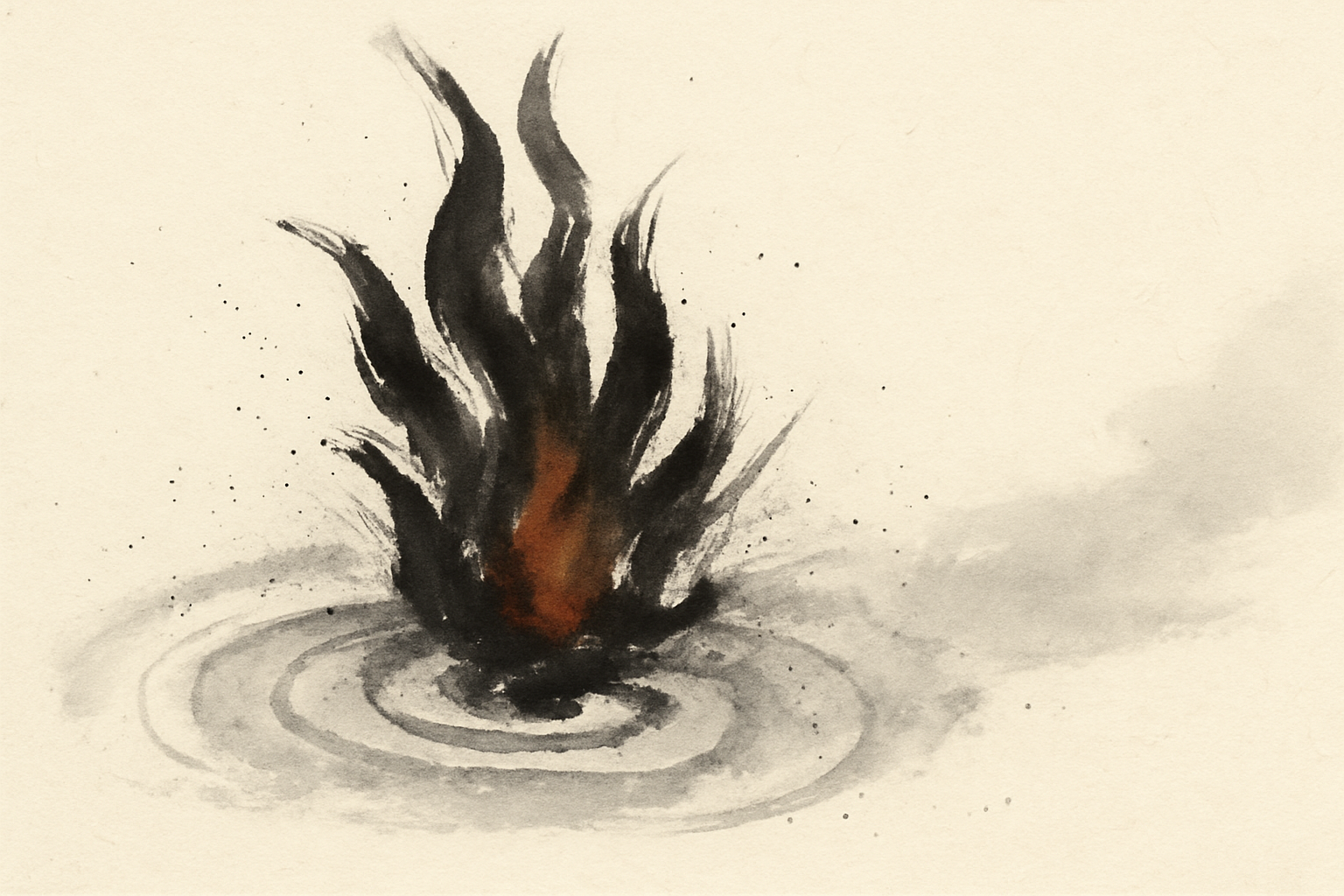
There's a fire constantly. I'm in a burning house. The burning house is fear and pain. I'm trying to get out of it, but it's present here. The present moment is the house, so there's always a fire. How do I try to avoid it? By going into the mind: "next week, next week, next week." But when next week comes, it's still going to be the present moment, and there's still going to be a fire, because it's the fear and pain I'm still avoiding. It's not going anywhere.
Dukkha: the cost of avoidance
This process of "next week, tomorrow, next week" is dukkha. Dukkha is basically the suffering that is the avoidance of the present moment. It can be experienced as a deep contraction, a deep despair. It is often translated as "dissatisfaction." It could also be described as restlessness and anxiety, which is a form of fear. The avoidance of sensation is something we are very used to; we've made it comfortable.
But it comes to a point where it gets so intense. The more I avoid the fire, the more it just sits there and builds. The more I need to go into the mind to avoid it, the more effort I need to put into my strategies of tomorrow. And this effort increases. This effort is dukkha, is dissatisfaction.
That dukkha becomes so intense that at one point I'm like, "Fuck that, I'm just going to let the fire burn me." And that's a process of waking up. This is usually what happens. We don't wake up because it's all nice and pretty and beautiful and life is extraordinary and we're in bliss all the time. If that were reality, there would have already been some awakening. But if there isn't, there's going to be dissatisfaction, dissatisfaction, dissatisfaction.
The oscillation
The dissatisfaction, the dukkha, becomes unbearable, it's exhausting, and then I learn how to be with what is. I learn to sit with the fire and realize it doesn't burn. It's uncomfortable. And once I'm with that and it processes through the body and through the mind, it can happen to a certain degree. Then: "Okay, that's enough. I've released the pressure. The fire has calmed down." And I'm back with "tomorrow, tomorrow, tomorrow."
This is the oscillation, the back and forth: into the mind, into dukkha, and then back into the work of being with reality and presence. This back and forth can seem like going around in circles, but in reality it goes deeper and deeper and deeper, until very rarely is there something in the present moment that I resist, because it's so much more pleasant, there's so much more well-being in accepting than in rejecting.
Seeing the futility
You asked how to be with what is. What really helps is to see what I'm describing. If it resonates and you see it in yourself, if you recognize, "Yes, that's what's happening here," that seeing will open the natural process of being with what is. It's not something you need to do. Your body and mind will naturally process the discomfort of what is. All you need to do is see the futility and the unnecessary effort of trying to escape it and avoid it. It gets you nowhere. It's just exhausting. It doesn't resolve the fire.
The more you see that, the more there's going to be a natural, healthy process of being with the discomfort of the moment. There are also practices and techniques. If things are really intense and stuck, if there's a lot of trauma, then there are practices that help. But it really begins with seeing that avoiding and escaping is futile, that it's more exhausting than learning to be with what is. And knowing that usually what is, is some form of fear and pain.
It doesn't feel like a natural place to be with it. It feels almost forced, like there's an awareness that it would be a good idea to not go projecting outward, but since I'm already in my head, I can't really rationalize it or have a conversation about it or ask it stuff.
Learning to walk
Think of it like a baby learning to walk. When the baby is starting to walk, it doesn't look or feel natural. It's clumsy. It's falling over, going backwards. There's a lot of apparent unnaturalness. But once you learn to walk, it's very natural. The baby isn't doing something very calculated. It isn't reading a book to figure it out. It isn't doing a technique. It's instinctual; it's already in the system. That's what I'm referring to. But when it's new and you've been avoiding it, it will feel unnatural, clumsy, awkward, like it's not going right.
Don't give it too much thought or look for a very specific technique. As soon as you start saying no to the escaping and avoiding and stop engaging with it, something naturally is going to start happening. You can sit. You can breathe with the sensations. You can notice: "Is this more like fear, or is it more like pain? It's more like fear. How is it? It's a kind of anxiety, a restlessness. What about? What am I afraid of?" And then you can suddenly feel a very intense sensation in the body, and it's like, "Whoa, yes, there is a fear, and I'm afraid of this."
Then you can start to really see what is there through simple curiosity. Or vice versa: you can realize there's an anguish, a sadness, a pain. "What is this about?" Just staying with it, letting that fire burn. Then suddenly you find yourself sobbing and wondering, "What is that about?" Just let it happen. Those energies start to move, and it doesn't matter so much what they're about. There's just the processing. And then the avoiding of it, the going into thought all day long, starts to become completely unnecessary and so exhausting and pointless that you don't engage with it anymore. It really is about just avoiding deep feeling, difficult sensations of fear and pain.
The body already knows
When you're talking, I'm thinking that what actually helps is more physical: breathing or moving or whatever. It's almost like I can't rationalize it or have a conversation about it, because I'm already in my head. So it's more about doing something physical.
Totally. Follow that instinct. If you feel like going for a walk, or whatever feels like the right thing, trust that. For me it was going for a run. I would do a sprint, and at the end of the sprint I would just stop and stand and let everything I felt come up. Then I would lie down in the grass and let everything come up. I needed that intensity first to bring up all the body sensations and let all of that surface. Then there were different forms of breathing, but it was very instinctual. It's really about going into the body, going into sensation, going into the deep feelings. Ultimately, for simplicity, I'm always calling it fear and pain, and it's going to be an energetic sensation in the body.
Hearing this, I found it very interesting how you described the spiral and this oscillation from dukkha to feeling. It's falling into place. I look at the past year, where I had a lot of grief, and I'm seeing it more as if you're just a witness observing this oscillation. There's not much you do. It just happens naturally. I didn't see that so clearly before. Especially in the first months, I clearly saw that I chose the dukkha. I didn't want to feel what was coming up, and I was deciding to find an escape.