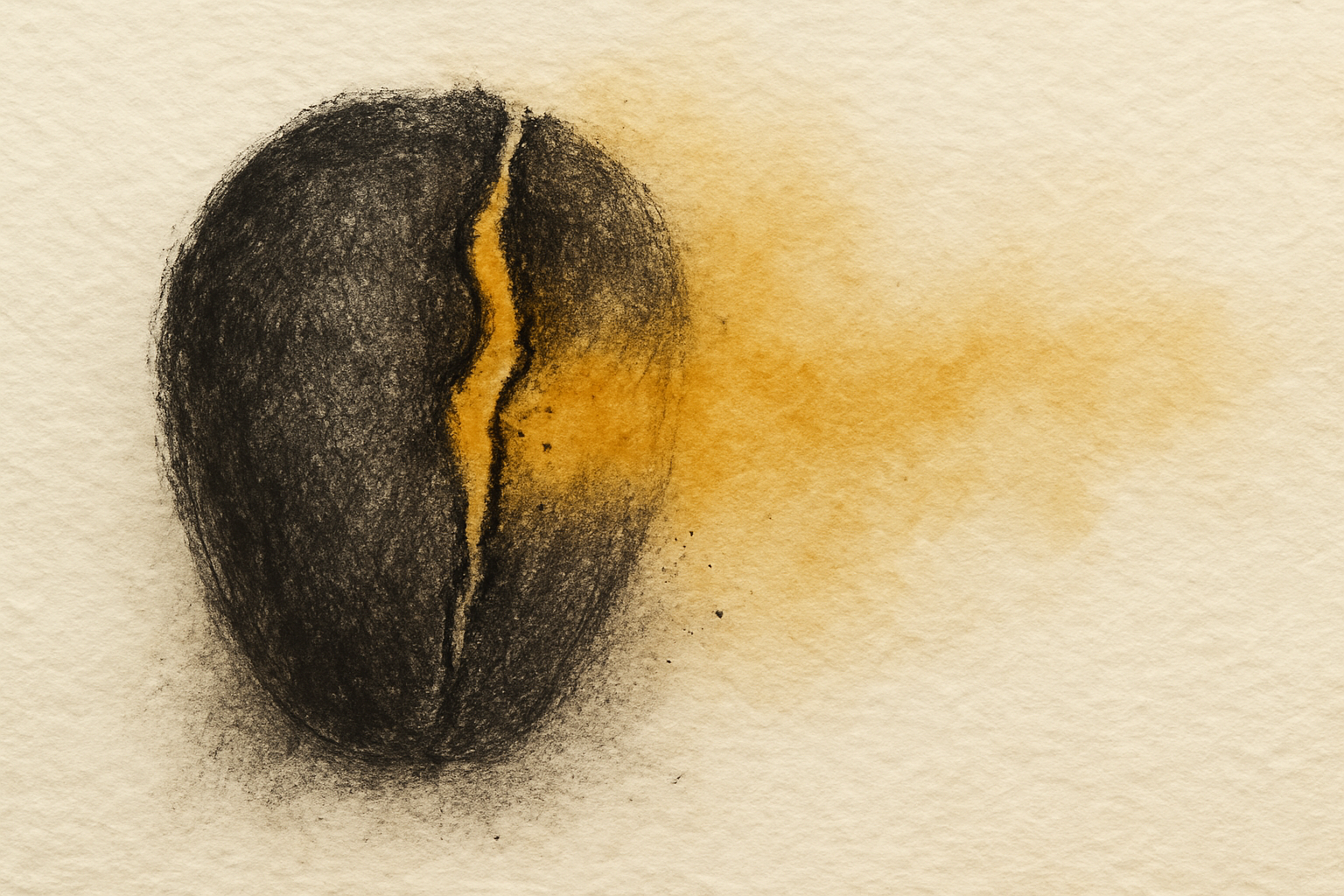
The Sweetness Inside the Wound
La dulzura dentro de la herida
A student describes touching into primal feelings of abandonment and grief as familiar defenses fall away. The teacher explores the relationship between "waking up" and "growing up," and how full immersion in painful experience, without knowing where it leads, can become a doorway to deeper trust and surrender.
The Sweetness Inside the Wound
A student describes touching into primal feelings of abandonment and grief as familiar defenses fall away. The teacher explores the relationship between "waking up" and "growing up," and how full immersion in painful experience, without knowing where it leads, can become a doorway to deeper trust and surrender.
The last few days have been really intense. I'm touching into something very primal, something really basic: a sense of abandonment and loneliness, an utter fear of not being loved and not being seen. Throughout my life, anger has been my predominant emotion. I used anger to help me feel safe, to not feel sad, to not grieve. There's a lot of sadness in the heart, and the anger would keep me from going there because it hurts so much. But in the last few days, even anger hasn't been able to screen it. It's become very raw and really painful. I'm traveling right now without my usual support systems around me, and I'm not able to cling to anything for safety.
Congratulations. That's good work.
Let's go into safety. There are different levels or aspects of safety. There's the practical level: you're traveling, you may or may not have a support network, and it's important to see what can be done at that level. But we need to separate that from a more subjective, more psychological experience of safety. They're not completely separate; they're related. But what can happen at the deepest level is that we inherently carry, for various reasons, an internal sense of lack of safety. That sense then gets transferred onto the external context, and we try to manipulate the context to accommodate it, to create a feeling of safety. But the root of it hasn't been addressed. I think that's where you're going.
The child that refuses comfort
Yes, exactly. The sense of love and safety and security that the parent in me can offer is there, but the child part of me is really vulnerable. This make-believe net of safety that the child has relied on isn't there when I'm traveling, so it constantly has to be reassured: "You are safe, you're okay." But in the last couple of days there's been absolute chaos, psychologically and emotionally. At one level, my close ones, my sister, my mom, my wife, don't seem to be giving the support that child needs. And that child is refusing to listen to the parent that is here. It's very strongly insistent on getting love from outside.
And that's failing. And your other support mechanisms that are more psychological, for example the anger, are also failing.
I said "congratulations" and you laughed.
I energetically know where this whole thing is going. And the child doesn't want to go on that journey. That's the resistance.
The resistance is fine. The child is an appearance in thought, and I won't minimize it as "only thought." There are parts of the human psyche that are important and valuable. To refer to that part of you as the child is appropriate and can be useful, but it's also important to find a balance in how much absolute reality we grant it. In a sense, there is no child. There is only you. But there is also the experience of that young, vulnerable, afraid, insecure part.
When we go through this process, which you are very well underway in, you don't decide it, in a sense. A process is happening, and some degree of understanding may help with allowing it. So to understand that this is a very healthy thing, that it carries great transformational potential, is useful. But also understand that it won't seem like it while it's happening.
It doesn't.
It seems like unnecessary torture. Or something that, if only it could happen differently, would be bearable. But it carries really high potential.
Waking up and growing up
One thing that can help is first understanding that understanding itself won't change the felt experience. It's like a teenager going through adolescence: the teenager will hate the process, but everyone knows there is a shift toward adulthood happening. The process is not fun and not pleasant, but it brings forth a new stage, a new phase of development.
I often speak about two complementary types of work: waking up and growing up. The waking up work does not require time. It does not require process. It has to do with the realization of a reality where there is no time and no process, the truth of that as absolute now. The growing up is what happens to the nature of the human being: the evolution toward greater stages of depth and wisdom, which ultimately means more well-being and more ethics. If there is only well-being and no ethics, that's not growing up. If there is ethics and no well-being, something is also missing.
The process you're going through is, I think, this combination of waking up and growing up. We have glimpses, we have realizations, we have awakenings. Awakenings can happen partially or totally. Normally they are glimpses that deepen, though for some individuals there is one glimpse and it is total. But even then, there is still the process of growing up. And much of that has to do with how much trust there is in a natural process, how much resistance gives way to allowing.
That's why, immediately as you described what you're going through, I could tell it was positive. I know how it is: it doesn't feel good. It feels terrible. You don't know where it's going. Everything that felt safe is going the wrong way. You don't have your support. You don't have a sense of safety. Your toolbox of "if I use anger, then I'm okay" starts to fail. Maybe you don't even believe the anger when it's happening. You start to see through the emotion, through the mechanism, and you start to see that it doesn't actually help.
Metaphorically, you sprained a knee and have been walking on crutches. Then you realize the crutches are just slowing you down and not helping your knee get better. So you drop the crutches and start putting weight on the knee because you're ready. That's a painful process. It's nicer to walk with crutches if your knee hurts. Anger is a way to avoid pain. There is appropriate anger, used consciously and spontaneously to address a specific situation. But when anger is a habit, it is always about avoiding pain.
When old material resurfaces
At this stage of the process, most of it is energetic, at the emotional and feeling level. But this particular wave that came in the last two days, all the grief and abandonment, came up with some story attached. That surprised me, because stories and concepts have been constantly falling away. I was really caught off guard that this much has surfaced after such a long time. A lot of identity has kicked up because of it.
That will keep happening. There is an aspect of being embodied where there cannot be a functioning psyche without this. Only if you entered samadhi permanently would no personal psychological material arise. But until the end of life in this body, there will be a deepening in which triggers bring up personal material that had been dormant or unactivated for a while. There's nothing wrong with that. It is the deepening.
Full intimacy and neti neti
What I would suggest with the energetics is that we want two things. One is to be in full intimacy with it: not pulling away from the energetics, not dissociating from the actual direct sensation. To be fully intimate, as when one enters a hot tub and it burns the feet, so you go in slowly until you can fully immerse yourself and the heat starts to feel good. It takes time for us to be able to fully immerse in the intensity without pulling back.
And at the same time, simultaneously, notice that all of this is happening and constantly moving and changing. It does not affect or touch you in a deeper place. The experience comes and goes. The content comes and goes. These are not two things but two aspects of reality. The absolute, total intimacy with what is happening and, simultaneously, the non-intellectual knowing: neti neti. What's happening isn't what I am. It's coming and going, the intensity. I am fully in the intensity, and at the same time it is not absolutely real. The forms and the sensations are not absolutely real, in the Eastern sense of reality, which asks: is it permanent? Everything is real, but what is the source?
This is where the process of waking up and growing up can become very much one thing. There is an awake experiencing of what is happening, fully immersed, not dissociated, not withdrawn from the intensity. Fully in trust. Fully in surrender with what's happening. Knowing that you cannot know where it's going. Only there is there a deep trust. Only there is there a deep surrender. If you know where it's going, if you know it's the right thing, that is a condition, a contraction. In that full immersion, that full trust, the only way it can really happen is when we deepen and realize "I am." This is where waking up and growing up are not separate. I'm speaking to you in this language because I think you know exactly what I'm talking about.
Not knowing as the ground of truth
I totally hear you. Among what you said, the one thing that really hit home was this: not knowing where this is going is okay. And not only is it okay, the path is truth. The path is also the heart, and they're not separate. Heart and truth are one. But if we look from the perspective of truth, and you know where things are going, you start to convert an interpretation, a projection of a future, imagination, into a reality. That moves us into a territory of illusion, ignorance, and identification. And at the same time, it's a rejection of what is, and therefore not loving. I really appreciate that response. Thank you so much.
You're very welcome.
This is more of a sharing. I was very moved during the meditation. Already today I felt a particular kind of tenderness. I live in Maine, in the northeast, and it's just now starting to shift, flirting between winter and spring. Seeing the spring, the ground just after the melted snow. I love winter too, but that shift broke something open in me where I could really feel the childlikeness we were talking about. Just seeing the rain on the windowpane or seeing the earth feels so precious.
In that openness, all this grief came up too, during the meditation. I lost my dad in late September. There's something about the changing of the seasons, that tenderness and openness, spring and life, and then feeling that loss at the same time. A lot was coming up: memories of childhood, memories of being with him. It's very beautiful, and very raw.
I think it's interesting to notice how that rawness is always here, but we try to pretend it's not.
And it doesn't do much good, does it?
The wound that becomes sweetness
I'm really sorry about your loss. I really feel your sadness.
That rawness: there's also such sweetness in it. There's a part of us that has been spoken about as a wound. But not a wound in the sense that something went wrong and something is broken. It's just this soreness, this rawness. And everything we do is an attempt to fix that, to create an okayness, a distance from it.
What can happen is that the rawness, the woundedness, is fully allowed, and then it becomes this never-ending sweetness and aliveness with life. It's almost like an infinite falling into something both sweet and sour.
Bittersweet.
Bittersweet. There's a pain, but it's sweet. The mind can no longer grasp it as wrong, because it has this vast quality that can't be pinned to one side. So it becomes this aliveness. You see a weather change and something ending, something beginning, life coming, life ending, life beginning, all happening at the same time.
My teacher used to speak a lot about Narnia, the stories of a land where things could be terrible and wonderful at the same time. He said that for him it was a perfect metaphor of reality: life where things are terrible and wonderful at the same time. I think that speaks to this deep wound which is simultaneously a heartful sweetness, where deep caring and compassion come from. The surrendering into it hurts, but it's so beautiful. You can't fight the hurt because at the same time you can sense how beautiful it is. It's a miracle, but it's hard, painful, and scary, and yet so beautiful. The mind can't settle on one side. It's this infinite falling into.
The mind has no place, because the heart is too open, with the paradox of what you're describing.
"The son of man has nowhere to rest his head." There's no real place of rest other than illusion. And when it is seen as illusion, the resting ends because it is also seen that resting is not needed. There's just this falling into, falling into, falling into. That is the movement of presence: falling into this appearing, divinely mysterious, beautiful, bittersweet reality. It's also very linked to our humanity, to the nature of being human beings. Things might have a different flavor if known through a different perspective, a different makeup.
Thank you. It resonates. Grief is a journey, and as we were saying, it is really beautiful to experience it too. The "yes, and."
Thank you for sharing.