The Camera Is Also the Experience
La cámara también es la experiencia
A question about whether the narrowing of attention that accompanies thought is itself part of raw experience, and why it remains important to distinguish thought from other experience.
The Camera Is Also the Experience
A question about whether the narrowing of attention that accompanies thought is itself part of raw experience, and why it remains important to distinguish thought from other experience.
I was looking at something toward the end of the meditation, and I want to describe it before I find the question.
Basically, I was looking at what thought material is within raw experience. So many things appear, and I loved how you guided us into the sounds and sensations that are already here, that everything is here. Thought also appears here. Thought material, in that sense, as an object of mind, is part of the raw current experience.
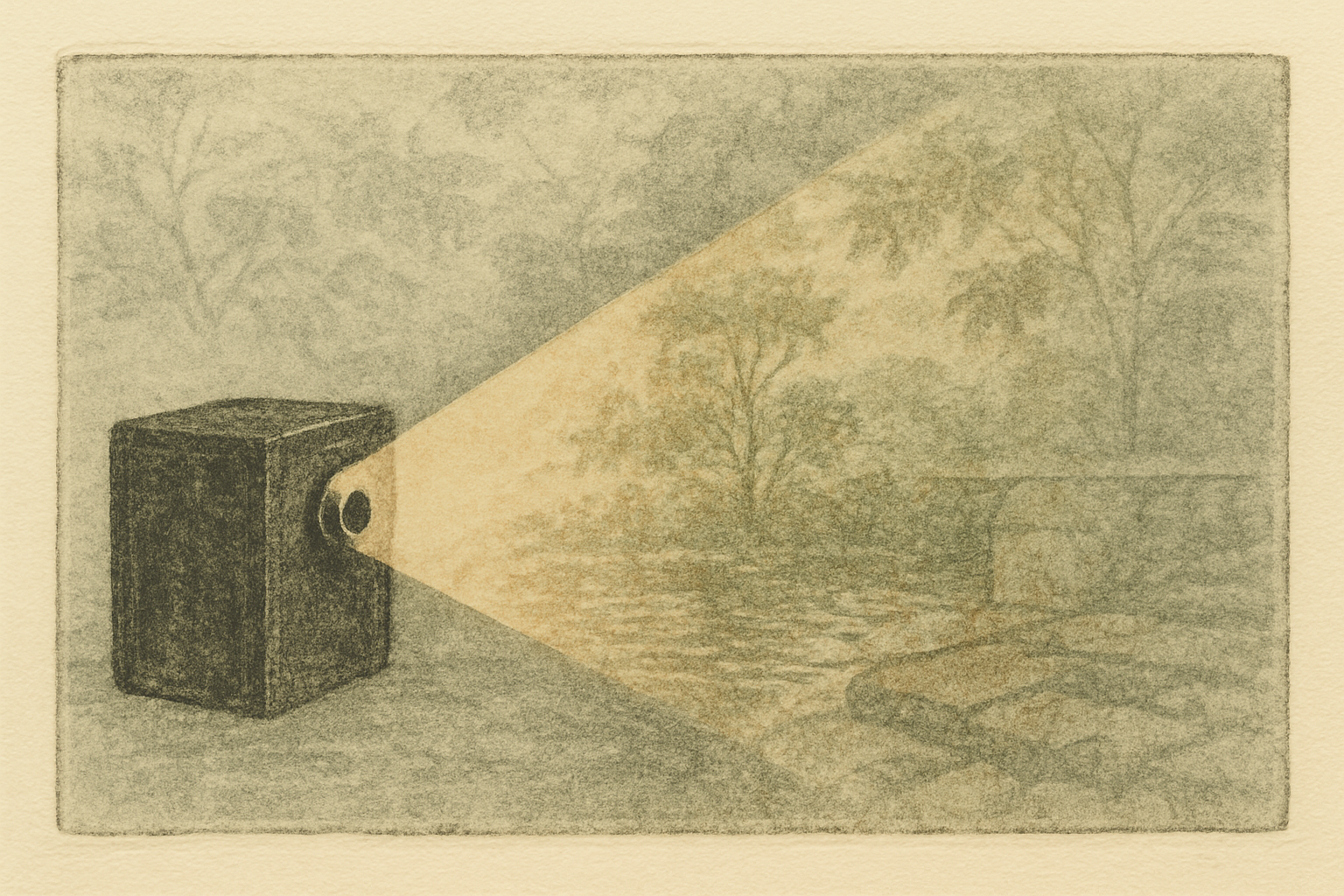
Toward the end of the meditation, I realized there is one more thing in relationship to thought: the hyper-focusing. The experience of going into the tunnel of thought. That is itself an experience, but it seems to go hand in hand with the appearance of thought material. I suddenly realized it is like a camera. For sensations, sounds, and perceptions, the lens is like a fish-eye. But for thought, the lens narrows. And yet the camera itself is part of the experience. The camera is also the raw experience. Does that make any sense?
Yes, it makes sense, and it is exactly like that. Thought is also part of raw experience. In past meditations I have pointed to that, because you can have the same kind of attention to thought as to sound. The distinction I made today is because it is important to have a really binary understanding of the difference between thought and the rest.
The emphasis on distinguishing thought
So that was where my question was heading toward the end. You are making an emphasis on that distinction. Okay.
We tend to confuse those two, and that is the big problem.