The Practice of Noting and the Illusion of the Chooser
La Práctica de Notar y la Ilusión del que Elige
A question about combining meditation techniques in sequence, followed by a deeper inquiry into whether practices can truly cause transformation and where the act of choosing really comes from.
The Practice of Noting and the Illusion of the Chooser
A question about combining meditation techniques in sequence, followed by a deeper inquiry into whether practices can truly cause transformation and where the act of choosing really comes from.
I realized that you introduced these meditations together just so that we could get a taste of them, but the truth is I've never done them together before. I always did them separately. I really liked doing them one after the other, but I wonder if that makes it a little bit superficial, doing them in succession.
I don't think so. There's something really valuable in creativity and meditation as well. On one end, it's important to have a practice, to have a discipline. But there's too much of a sense that everything has to be effort, that it has to be extreme discipline, and that's the only way anything good or waking up can happen. It's actually a balance. Otherwise it becomes all about achievement and ego.
There's a practice, also Buddhist, that I was taught: it's called the Heart of Compassion. You stand up with your arms fully extended, open, for as long as you can, sometimes for an hour or an hour and a half. The teacher who introduced it would warn that if you do it too much, it strengthens the ego. That points to the balance. If you become an expert in noting and you do it all day, it can become a thing in itself that you identify with.
So I'm reflecting that this more playful exploration, doing things with more flexibility, has value. I also put these meditations together in a specific sequence because they build on one another. If your mind is very active, you can fall back to a more breath-based counting or vipassana practice, which is closer to traditional mindfulness. But mindfulness itself doesn't go very far or very deep, because it doesn't address identity or the beliefs that we have. The point of it is calming the mind, which it does, but then it stops there. You need mindfulness, though. You need a certain degree of presence in order to observe thinking, to see what's going on and what you're identified with.
I think it's the third meditation, the noting of sensations, and then saying to yourself whatever it is, wherever it is, however it comes up. So the point was body sensations? I wasn't sure exactly.
It's about noticing everything in experience. It's about giving the mind an activity that, in a sense, takes it out of itself, because it directs it toward experience that is outside of mind, depending on how you define mind.
The scope of noting
Let's say sensation, perception, what you see, what you hear, and body sensation are outside of the mind, just as a working definition for this conversation. You give the mind an activity and direct it as a tool to take on something that pulls it out of itself. Now it's pointing to anything: it could be sound, it could be anything you're hearing, a bird, the hum of your fridge, some electrical device. Or sensation: the breath, any sensation in your body, the feeling of the chair or the couch. You can also do it with your eyes open and note what you're observing.
Then every time the mind takes over and you become pulled in, you'll notice it, because you stopped noting. And then you note that: "Thinking," or "Distraction." You can go "thinking, thinking, thinking, thinking," and you sort of shut that down and go back to the breath. Whenever you notice you've stopped noting, you return to it. It's a pulling away, again and again.
When I first did this, I was much younger, and it was excruciatingly painful. We were doing it for about two hours, and I found it quite unbearable, because it would bring up a lot of anxiety. But if you do it over time, it can create a lot of settling. The noting can become very light. The experience, at least for me personally, became very easeful. It's a very powerful practice. The noting and the self-inquiry, when I say "powerful," can go much further than just calming or settling the mind.
So just to recap: the idea is to note body sensations and perception, those two things?
Yes. Body sensations, perceptions of sounds, sight if your eyes are open, and thought. It's very important to notice thought and note it: thought, thinking, distraction, wandering. It can be quite fast as well. You go "thought, thought, thought, thought, breath, breath, breath." Or you can do it more slowly, one every second or two, depending on how busy your mind is.
You can do it for three minutes, or twenty minutes, or an hour. You can actually start by writing it down, with paper, doing everything written. Then you stop writing and do it internally, or even speak it aloud first and then shift to doing it silently. Then you stop the noting altogether and just be open and present. You can also do it while walking. Walking is actually very powerful. In Southeast Asia, many retreats do this all day as the only practice, while sitting, while walking, all the time.
Why noting feels exhausting
I haven't done the noting practice in a long time. I wanted to ask you: why does it feel as if you were doing a physical effort? You end up tired. Can't it be the same meditation done in an effortless way?
I don't really know the physiology of it, but I would suspect it involves a very strong kind of rewiring in the mind. You're using your neurons in an unusual way, a way we're not used to. We're used to thinking in narrative, story after story, none of it about what's actually happening, none of it about reality. Now you're asking the mind to go the other way, and you're using the mind to do that. It requires a lot of willpower and effort.
If you think of it as a muscle, it can become very easeful with practice. It becomes easeful partly because of habit formation, but also because you create a bit of a withdrawal from this mind addiction. Once you go through the withdrawal, you arrive at a more peaceful nature. If I'm going for a walk and I do a bit of noting, I find it very peaceful. But that's twenty years later.
I'm not saying it's going to take twenty years. I'm just comparing the two extremes in my case. When I started that practice twenty years ago and wasn't doing it regularly, it was excruciatingly effortful, painful, stressful, and it would bring up a lot of anxiety. That itself you can note: "Anxiety, anxiety, anxiety." Or "discomfort, discomfort," "frustration," "tiredness, tiredness." "Sleepiness, sleepiness, sleepiness."
Do practices cause transformation?
Can you say something more about this: all these techniques can lead to an illusion that you are in control of your transformation. In a sense you're in control because you can decide to do it, but the actual outcome, what happens or doesn't happen, is something else. My sense is that they're all maybe helpful in some way, but they ultimately don't work for what I used to think they worked for, which is causing transformation.
I would suggest you take everything only halfway, because everything has another side. You're seeing the other side of something, but don't throw the baby out with the bathwater.
The sense that all these practices don't guarantee or produce a transformation: I would say that's correct. But you do your part, and you let mystery do its part. This is where people talk about grace. In Zen they say you make yourself accident-prone, because waking up is an accident, and by doing this work you make yourself accident-prone. There are many ways to point to this.
You do your part, because if you don't, you fall on the other side: "If it's just grace, I'll just wait for grace." But grace doesn't do anything unless you do something. So I recommend doing practices and doing your part.
The illusion of the known chooser
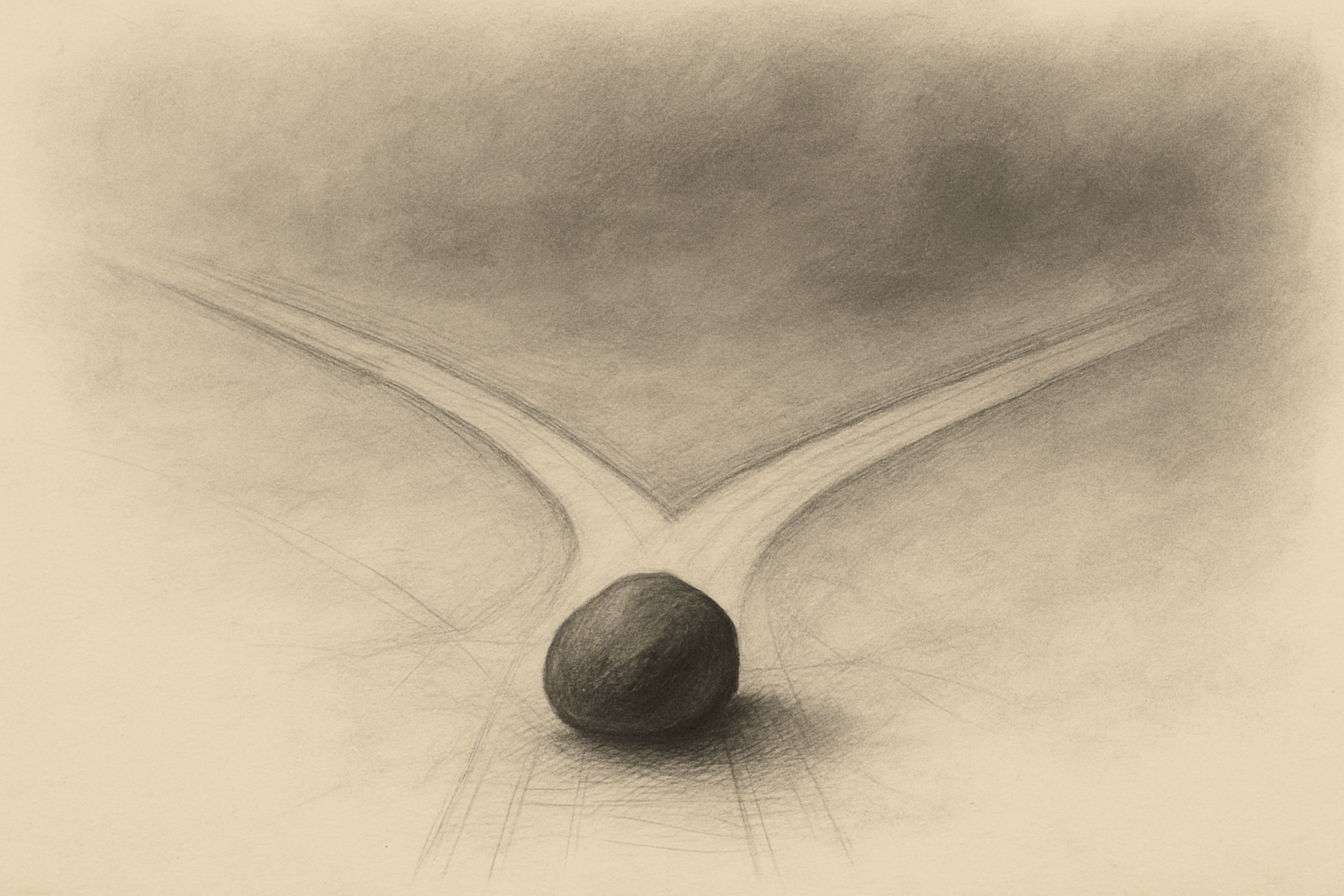
What you're pointing to is something more subtle, which has to do with the illusion that you are choosing, that you are doing something. The illusion is not in the choosing itself. Choosing happens, and choosing comes from us. The confusion is when we think we know what "I" am.
If you operate from the belief that you are only a person, only a body, only a mind, then the choosing is going to be limited to that capacity. It will be limited to what your body-mind can conceive of and operate from. The choosing is experienced as "I am choosing this," but it's going to be very conditioned: conditioned by the body, by DNA, by the entire past history of the universe, and by the mind, conditioned partly by DNA and partly by this life.
Now, if what you conceive of as the "I" that chooses becomes more unknowable, if it comes from a sense of "I don't know what I am," then the choosing comes from a deeper place. If I were to put names to it (though you can't, really), I would say it comes from mystery, consciousness, freedom, love. But this is only possible through non-identification with mind. Only when mind is seen as mind, separate from that which is here, that which is choosing.
Otherwise, mind doesn't truly choose, but it contracts the options and possibilities down to only what the mind knows, understands, and wants. That is not freedom. That is where suffering is, because there is a contraction and a limitation in movement.
So what's the point of choosing if it doesn't lead me to where I want to get?
Do the work of seeing what you are and what you're not. Then the choosing will come from that freer place. What you are, you cannot see. You can realize what you are, but it's not going to be conceptual, not mental, not knowable. The more you realize that, the more the choosing will come from a deeper place.
Freedom as paradox
There are many ways to point to how this is experienced. One teacher expressed it as a paradox: ultimate freedom is when you only do, at any moment, what God wants. You have no freedom; you're obeying all the time. That's the paradox. The freest form of choosing is when you only do, at any moment, what God wants.
It all depends on what you conceive of as that which chooses. If you conceive of that which chooses as a known entity, as body and mind, then that choosing is going to be conditioned. To observe where choice actually comes from can be very disorienting, because you start to see that there is a lot less freedom in the choosing than you think you have. And the more you see that, the more the choosing becomes free. But it's in that seeing, in observing the habit and where choosing originates from, that the freedom lies.