Goals, Desire, and the Contracted Self
Metas, Deseo y el Yo Contraído
A question about whether the dissolution of a fixed sense of self leads to apathy, and how goals and motivation function when identification loosens.
Goals, Desire, and the Contracted Self
A question about whether the dissolution of a fixed sense of self leads to apathy, and how goals and motivation function when identification loosens.
I'm interested in what you're saying about all of this, and how it relates to goals. Do you still have goals in the same way? If you want to make something happen, change something, and there's no one there, how does that work? Do you still have goals, or has your relationship to goals changed? Is there less motivation? I've seen people go through this and end up almost in apathy, like there's no point doing anything.
That's actually a misunderstanding, or a form of unskillful teaching and interpretation of the teaching.
Constructing an empty self
When you still have a sense, a thought, and an identity, there is still a mental construct. If that construct is given attributes of emptiness, then "I" becomes something that has nothing in it. But that's not real. That's just another construct. It's simply a form of construct that is negative, or empty, or lacking in qualities.
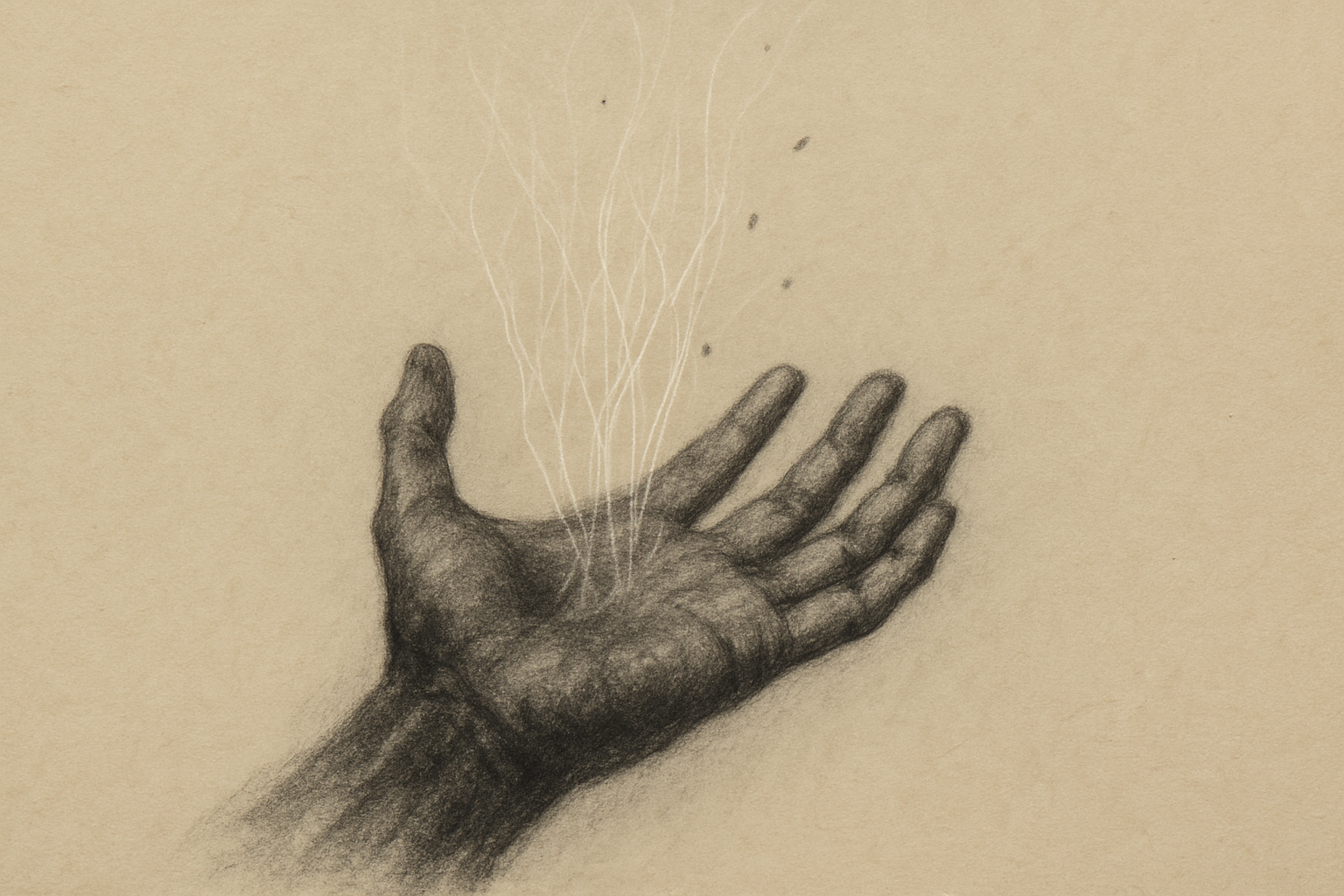
I understand the misunderstanding, but the challenge is more subtle. There is being. There is life. The mental construct is practical and useful, just as the hand is. But we don't go around believing "I am my hand and only my hand," making the hand the totality of what I am. Yet that's exactly what happens with the mental construct. It's a practical, useful, wonderful, miraculous thing. But then we go around believing that's all of what we are, rather than, in a sense, a part of us. If I'm not the thing I'm building this mental construct out of, then what I am is a lot more mysterious.
Pointing vs. reifying emptiness
When the teaching says "there's no one there" or "there's emptiness," it's a form of pointing: pointing to the belief that there's someone localized who has a specific form. But then we can turn "no one there" into a new identity, an "I" that is "no one." There is still a construct, and there is still identification with it. I know teachers who are realized and do use this language, and I might as well at times, but it's a matter of how it's interpreted, and it's hard to communicate. The problem you're describing has to do with making this idea of what I am into a thing that is empty, and therefore without any direction.
Natural direction and passion
What we are naturally has life, naturally has passion, naturally has love, naturally has direction. As a bird has direction flying across the sky. As a baby has direction before it has developed this identification. The identification and the construct, which we can call ego, is a miraculous thing. The problem is when we believe that's all we are.
How goals change
To your original question about motives and goals: yes, there are goals, there are motivations, but they are very different. It did happen to me that a lot of things stopped interesting me. Many of the goals and motives that were based on preserving this narrow sense of self, the ones that were foundational to that construct, stopped having energy. But a lot of things that I was interested in, I still am. A lot of what was fear-driven stopped having energy.
A more helpful image than thinking of ourselves as a body-mind is to use the image of the universe. This body is not separate from the universe, so what we are is not limited to the body. It's vast. Then the question becomes: what do I want as the universe? Or, what does the universe want as me? I'm all in favor of desires and passions. The problem is when they're driven and distorted by this contracted sense of self. When that happens, what we're looking for is not very profound. It's more on the shallow level, more fear-based.
So it's more like liberated action, or free action, than some construct of what it should be or look like.
Yes, exactly.