The Toy Soldier and What Is Real
El soldadito de juguete y lo que es real
A student describes the pattern of comparing himself to others and projecting a sense of "something's not right" onto external circumstances, leading to a wide-ranging exploration of how thought creates the illusion of a future self and how to see through it.
The Toy Soldier and What Is Real
A student describes the pattern of comparing himself to others and projecting a sense of "something's not right" onto external circumstances, leading to a wide-ranging exploration of how thought creates the illusion of a future self and how to see through it.
I'm trying to understand the mechanism better. I feel identified with some of what the previous student was saying, particularly around money issues. I'm in a low season, and I recently got together with a friend who is also a musician. He's doing really well and likes to talk about it. I start comparing myself, and I go into this negative spiral of feeling afraid, suffering, and telling myself how incompetent I am. But I'm trying to connect this with what you were saying at the beginning, because I can identify that there is this sense of "something's not right, something needs to change," and it constantly gets projected onto different things. Sometimes it's this, sometimes it's that. And I really make an effort to believe: "All I need is this one thing. If only I get that, I will be okay." I do believe it, because I suffer from it.
The confusion between living well and waking up
You believe that getting that thing is going to resolve what I would call suffering. You do need to do your best, and there is a place for life advice on how to function better and live better in every way. There is also the question of what we truly want, what our deepest desires really are. And then there is waking up.
The confusion happens when we believe that if we live better, if we function better, if we get better at something, we arrive somewhere that gets us closer to waking up. In a way it can, but it is not a good strategy. It can in the sense that if we get everything we want, we will likely get more frustrated and suffer more. That is actually one of Osho's suggestions: the apple falls from the tree when it is ripe. But it is still a tricky strategy. He was balancing out the traditions of spirituality, especially in India and Buddhism, that are all about abandoning desire. For him, and I agree, that simply does not work. You cannot starve desires. So he was advocating for a contrasting path where you develop the ego to its end and then it falls naturally. But that is a good teaching for when somebody is collapsed on the other side.
Working with full energy, knowing it won't deliver what you truly seek
One way to look at it is: work on both, or find the middle path. What that leaves you with is the question of what to do with your life, how to live, what to work on, where to put your energy. The answer is excellence: do as much as you can in the best way possible, but know that it is not going to get you what you want, not in the deepest sense of what we are talking about here. Then it is no longer a strategy to satisfy a deep sense of unrest. You have completely separated the two.
Put all of your energy in life toward what you really want: money, music, ambitions. But hold the working hypothesis that it is never going to get you what you really want. You could ask me, "Well, why would I do it then?" If you are doing it to arrive somewhere, then it is not the right motive, and it is not really what you want. What we really want, we want for its own sake, because of the love of it. If it is a strategy to arrive at some idea of what waking up is, it is not going to work.
Separating where your energy goes will also slow down time, the idea of going somewhere, getting somewhere, because obviously we are not going anywhere. There is never anything but this.
It sounds good, because it is as if I could decide to be more alert to the idea, to not believe that doing certain things or getting certain things will give me what I am looking for.
Yes. But it does not mean stop doing those things either. In fact, you can put more energy into them.
And I usually feel better when I do that. Thank you.
Noticing the textures that thought creates
Generally, notice the experience of what this process elicits. For example, if you imagine, "If I do this and develop in this way, where am I going to get to?" you are creating an image of a future. You are creating time. You are creating a path, a process that you are imagining. It is all mind, but it is also going to create sensations.
I could use the word "textures." When I am moving my hand, it has a certain texture. When I leave the hand still, it has a different texture. In the feeling body, the emotional body, when I am imagining, "If I do this thing and develop in this way and achieve getting to this image," it is creating not just images. It is creating textures and sensations in the body and the emotional body.
So when you are doing that, do not just stop doing it. Look more closely at what is being created. Look closely at the textures, because usually what happens is we imagine something and then forget that it is an imagination. It starts to become real, this subtle real thing I can get to, really over there in the future. It starts to become energized by something. And that something is the textures of sensation, emotion, and feeling that the imagining is creating.
To do this consciously is to expand your awareness to everything you are doing, because you are doing all of that. Then look more closely at the reality of it, which is fully imagination, fully images, fully mind-stuff, emotional stuff, and textured sensations in the body. You will be able to notice: "Oh, when I imagine this, I am creating a sensation of anxiety or fear. When I imagine that, I am creating a mix of anxiety, fear, and excitement, and it is actually pushing away a sense of loneliness or voidness." I am describing a somewhat random example, but the point is: when you go into thought, you can start to notice everything it is doing, everything you are doing, and what is energizing it. It is going to be a form of manipulating your current experience, creating sensations you are more comfortable with to cover up sensations you are less comfortable with. Ultimately it is about filling a space that will create a sense of a center, a sense of a stable "I" here.
The instability underneath
If you start to see that whole thing fully, you will start to notice that there is an instability there, a kind of quicksand. There is just spaciousness, or voidness, an emptiness. That is the direction to explore.
This process does not stop in the sense that you still envision, imagine, and plan. But what does stop is the hypnosis: the belief that what you are imagining is really a thing in the future, really time, and that the image of "I" there is really what I am. Then it becomes just a way of operating, and there is a real relationship with mind, with thoughts. I look at the coffee cup and decide to grab it. I can imagine what might happen tomorrow. But before, there used to be this real sense that something in it was real: "I" in time, "I" tomorrow, "I" in the past. Now there is only what we can call the present moment, though for me that phrase is a bit absurd, because before it seemed like there were many moments (past ones, future ones) and we were in this tiny little one in the middle. I would say there is reality, and then there are thoughts about time, past and future, happening in thought. Then you start to see there is nowhere to go, because you cannot go anywhere. Not as a bad thing. It is just freeing. Where are you going to go? It is always present, always right now.
There is something really relieving about that fact.
You are present with something very profound. It is that which you are in touch with, which called you to this work. If it resonates, that is a really good thing. Then it is this dance with presence. It is intimate, infinite, mysterious, constantly moving and changing. As traffic flows outside, thoughts also flow here. There is this dance, and because of thoughts flowing, actions happen, choices are made.
How to tell what is real
If ever you feel stuck or confused about what is real, it is always about what is happening in thought that you believe to be something other than thought.
What do you mean, as a way of differentiating?
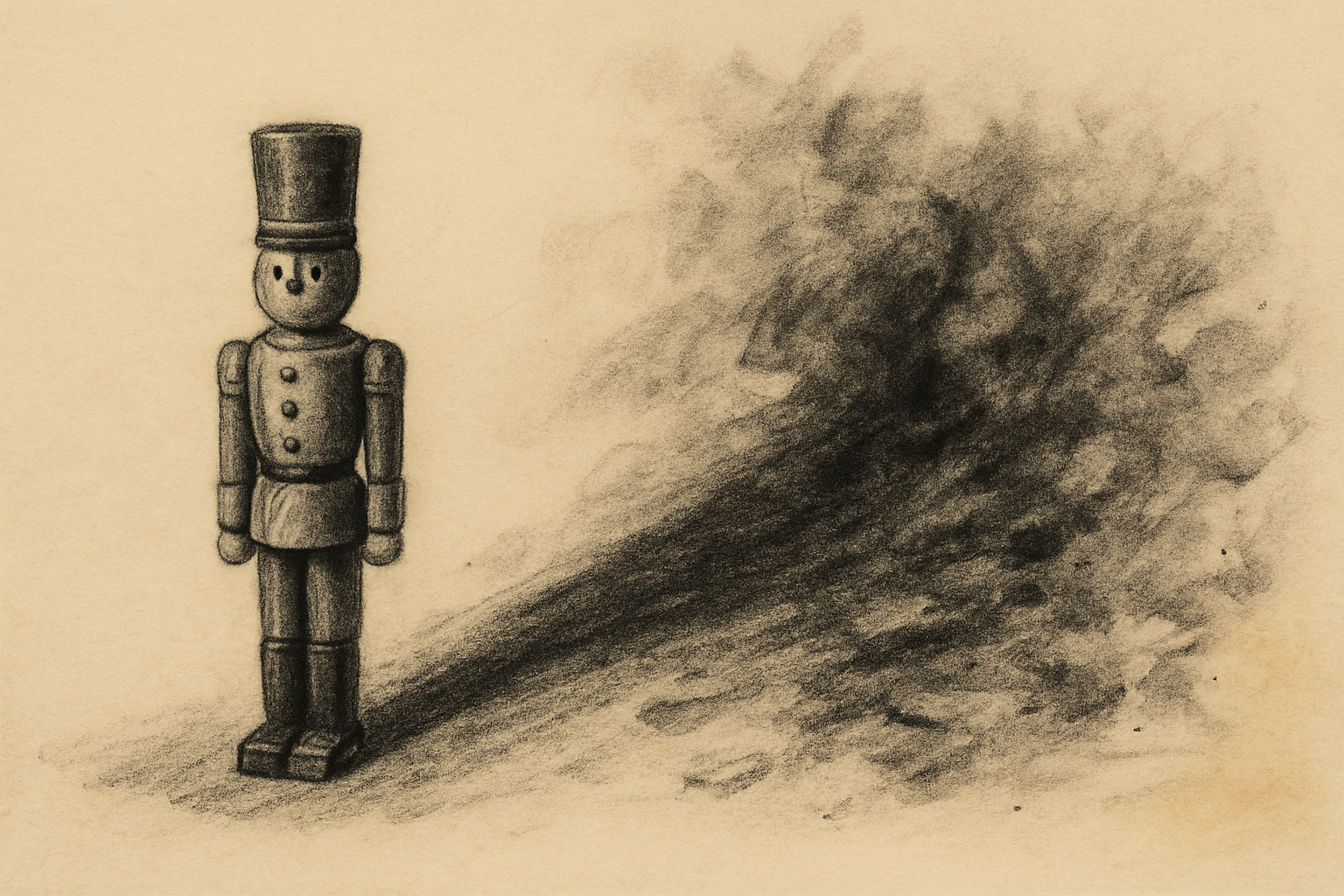
It is a way of relating to what is. What happens is that we relate to thought and then start to believe, more or less, that those thoughts are reality. As a metaphor: if I have a toy car and I start to believe it is a real car, like children do, I am attributing reality to it. You get a doll or toy soldiers and you start to imagine the reality of it. You think those toy soldiers are real soldiers, the cars are real cars. That is a great faculty we have. But then we lose the ability to see that it is imagination.
It is a good thing to be able to do this consciously. When we watch a movie, we do exactly that. If we are not able to do it, we cannot enjoy the movie. But there is something about watching a movie that is done consciously: we do not fully forget we are sitting in a theater or on a couch. This is called the suspension of disbelief. We suspend it, but we know it is not real. So we can experience the movie as fully as possible, and it is a conscious choice to go into the movie. Same with a child playing with a toy: it is a conscious choice, and the child can fully play with the fantasy.
What happens is that we grow up and there are aspects of that imagination where we forget we performed a suspension of disbelief. We now constantly believe it is real.
The substance of thought
How can you tell what is real and what is not? The challenge is to see the nature of something. If I look at a toy soldier, to see what is real is to know that it is a toy, not a real soldier. With thoughts and imagination, it is to see that they are thoughts, to see that it is imagination, to see that it is emotion, which is sensations and textures in the space of the feeling body. It is not an actual real thing in the sense that it is real only as emotion, real only as thought.
I understand, but do we have control over that? Because if we are believing a thought to be real, we are there, unless we have an "aha" moment and see that it is not real.
You have control of that through practice. You trained yourself to believe it, and you can untrain yourself. You did that all on your own, with the help of your parents, while growing up. Now you can undo it. The practice, which is what I am pointing to, is: see it for what it is, the world of thoughts.
Thoughts have three components. The world of thought is basically a reflection of reality, and it is composed of sounds (imagined sounds, sounds only in the mind), images (imagined images, only in the mind), and sensations that are imagined only in the mind. Those sensations we call emotions. That is it. The images are based on concepts like a chair, a circle, a person, a planet. But it is basically images, sounds, and sensations.
What is needed is to see the true nature of what thought is. It is images, sounds, and sensations, imagined. They have a certain quality, and you learn to identify that quality: "Okay, yes, this is thought," and you stop confusing it with reality.
The image of I
When we are growing up, our mind develops the ability to imagine. It is fascinating, miraculously fascinating. It is this universe that is all your own making. But what happens is that we forget we are imagining. We forget that its nature, its essence, is made of the substance of thought. That substance is different from direct experience. We can say it is all consciousness, all one field, but if we are trying to discern, there is the experience of direct raw sensation (sound, sight) and then the aspect of mind, which I call a mirror, because it is also sound, also sight, also sensation, but imagined. It is all happening in one space, one field, but just as you can distinguish sound from sight (you do not confuse sound with sight), you can distinguish images of the mind from images of sight.
Some people have synesthesia, where the pathways in the brain mix so that hearing a sound might trigger visuals. For some people there is a mix of sound and sight. But even they can distinguish that this is sound, that is sight. It is all one field, but you can distinguish, just as you distinguish sound from sight. Distinguish images of the mind from images of perception. That is what meditation trains you to do: look at the mind, pay attention to the sensation of the breath as what is real in the sense of "not mind," sensation of breath, not mind, body. That is the first training. Then comes the ability to constantly see what is thought, what is images, what is sounds, what is sensation and therefore emotion that is imagined.
The suspension of disbelief and the self
This distinction has to do with belief. Belief is what makes the toy soldier into a real soldier. That is why it is called the suspension of disbelief, when you do it consciously.
The core of this whole thing is that there is an image we created from a very young age, which we believe to be real, like the toy soldier who is no longer a toy if we believe in the reality of the soldier. And that is the image of "I." We create an image of "I," of what and who I am, and then we no longer know it as a thought. It becomes really what I am.
The strange thing is that if you look closely, it is not one image.
It is a constant movement of thought, yes.
So you are identified with many images. It is just a simple way to talk about it, but the actual experience of it is a constant motion of images, of sensations. Mind is constant motion. If we are attached to the belief in that image of "I" being what I am, then we have to constantly recreate it, because if we stop, we feel that we disappear.
Really, what I am saying is that this is all that is needed: look at thought, see it as thought, nothing more than thought, all the way to the core, which is the thought of what I am. It is going to be a constant motion of images. The more you see that, the more it is all going to unravel by itself.
I was thinking that if I really see what you are saying, it stops.
And we usually become able to do that, but temporarily, for moments. Those are our hobbies. Those are the moments in which we flow, or when we get something we want and we give ourselves the taste of pausing that for a bit. But there is still an underlying belief, still this imagining of what I am, that feels real.
Thank you for all the great insights.
You are very welcome. Thank you for sharing.