The Mirror in What Overwhelms You
El Espejo en lo que te Abruma
A student shares the beauty of experiencing everything as awake and inside awareness, but struggles with feeling overwhelmed by other people's suffering, leading to a pattern of isolation. The teacher explores how what overwhelms us is always our own, and how that recognition is itself the doorway.
The Mirror in What Overwhelms You
A student shares the beauty of experiencing everything as awake and inside awareness, but struggles with feeling overwhelmed by other people's suffering, leading to a pattern of isolation. The teacher explores how what overwhelms us is always our own, and how that recognition is itself the doorway.
It feels like when you say everything is awake, it's as if everything exists because it's inside me. When I see something, it becomes reality and it's awake because I'm aware of it.
And you're not separate from it. You wouldn't be able to see it if it wasn't in a shared reality.
That just feels so beautiful to me.
I just want to highlight that what you find beautiful could be a doorway to look more deeply, because there is a truth to it that you can know before the thoughts, before the words. The words can help you clarify.
It's easier when you're just looking at a flower or a light, something very neutral. But when you're looking at someone's suffering, it's really overwhelming.
Yes, and so we start with where it's more accessible.
I find that quite often I get overwhelmed very easily and tend to find myself enjoying my peace alone, in isolation. That gives me some sense of peace, if I'm not churning away in my machine mind. But it's really hard to find that balance.
Finding beauty only in the flower
It's like the flower. You find some kind of restfulness or beauty or peace in being alone, so you're finding the beauty in the flowers. It's easier. But if you just stay there, it's very limited. If you only see beauty in the flower, it's limited.
Then you can go to where you don't find that peace, where you don't find that restfulness, and find it, because it's always there. "Beauty is in the eye of the beholder." If you're always depending on the flower to see the beauty, you're missing out on the true source.
It's the same with peace, with well-being. If it's dependent on being alone, then there's a misunderstanding as to what the peace actually is. It could be clarified further, but only by going to where you don't see it. That said, it does matter to find it somewhere to begin with. We can find it in certain hobbies, or in your case, in being alone.
I've found it really challenging this past year when I interact with a lot of people. It's not always the case, but quite often I feel their trauma coming up.
What overwhelms you is yours
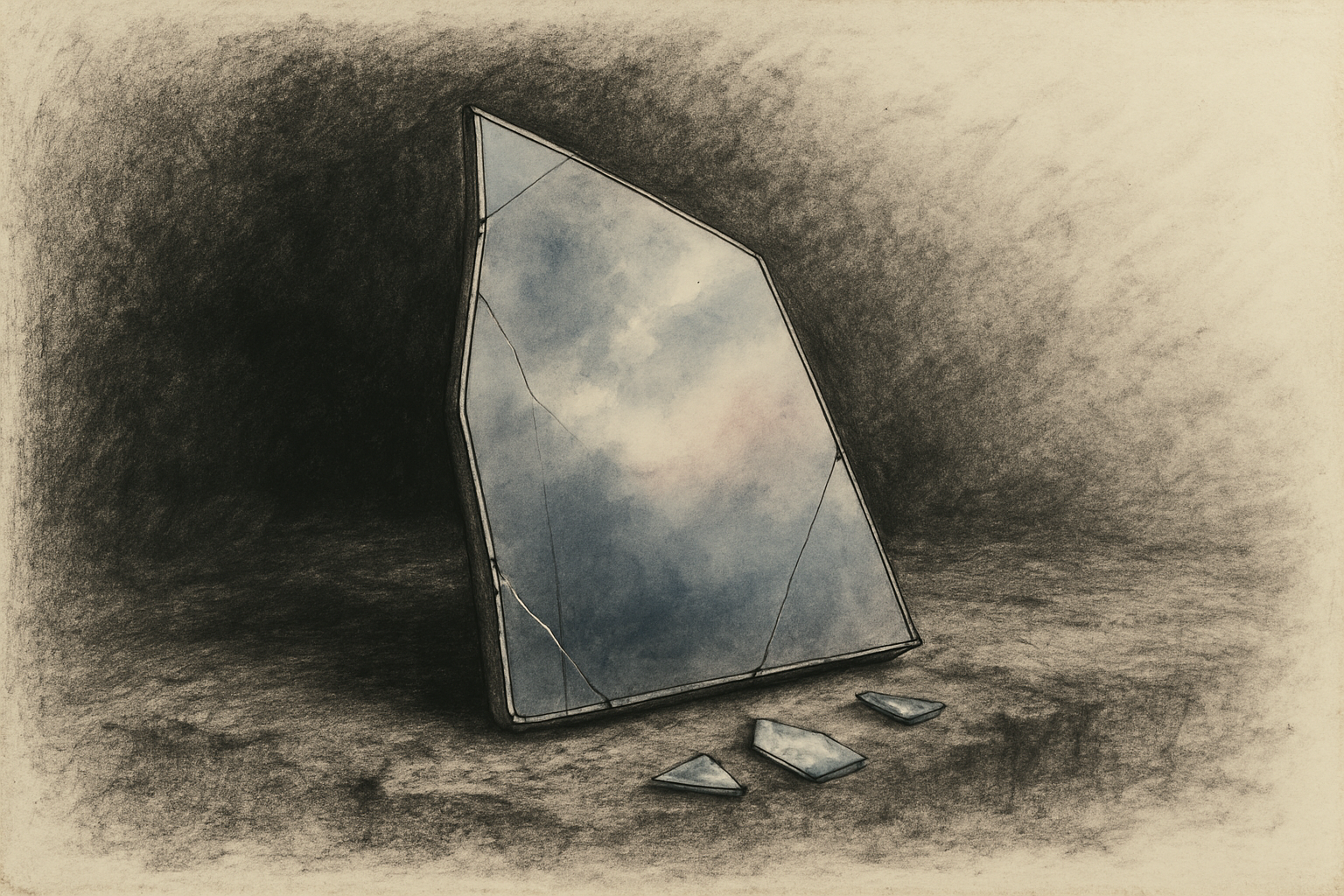
That's always a mirror. If it's challenging for you, it's a mirror. If it's overwhelming to you, it's a mirror. What is difficult is what you experience. And that's where the opportunity lies.
So their trauma is my trauma.
It's not that linear, but when you experience what you call the trauma coming up, and for you it's difficult, overwhelming, or challenging, it's you. It's not their trauma. What is difficult is in you. You could say it's a trigger. But you could also say you lose your center, you lose your ground, you lose your peace, and that's you.
By isolating yourself from those situations, you are, in a sense, denying life. Life is bringing situations for you to go deeper. You could avoid those situations, but you still bring with you that which gets triggered. So that's not a solution. It could be a valid path temporarily, so that you find a ground, a center, a peace. But if you stay in the mechanism of isolating in order to not get triggered, in order to not feel what overwhelms you, it's still a valid option, but it's limited.
I guess that's why I'm bringing it up.
And you could tell yourself it's really them and you're just avoiding them. But you're avoiding yourself. You're avoiding the part of you that is hurt.
How would I engage with it? If I do choose to engage with it, I don't really know how, and sometimes the other person isn't ready to engage with that either.
When you say "it" or "that," what are you referring to? If we're talking about your pain, it's not for the other person to engage with. It's for you to engage with. The "how" begins with owning it, with responsibility. It's you.
It can happen that somebody else is triggered and caught in their trauma. But what you can do something about is what's yours. It's as simple as recognizing when something comes up in you. Your experience, which you were describing a few minutes ago as their trauma that's overwhelming, is you being overwhelmed by something you are feeling.
I feel like they're suffering a lot, and I'm suffering watching them suffer.
You are suffering.
It's my own suffering. I know it's partly me too, a big part of it, but I don't really fully understand it.
Knowing what's really happening
Question (second student): Do you know that it's their trauma? Whatever is happening in front of your eyes that you're witnessing or hearing from them, do you know that it's their trauma? What do you really know for sure? There are so many possibilities.
Question (first student): Maybe "trauma" isn't a good word. I feel like they're relating to me from a place where they're reactive because of the past.
Question (second student): Are they angry with you, or acting toward you in an angry way?
Question (first student): They're sharing something with me that's overwhelming. It could be they're sharing an experience. It could be they're telling me about a problem. It could be I'm witnessing something happening in front of me that I feel is coming from a very hurt place.
Question (second student): In the first two cases, if they're opening up to you, telling you about themselves or their past, and it's too much for you, maybe that's the thing to look at. Maybe you're going too far into somebody else's needs and problems. It would be better to let them know when it gets too much, to include yourself in your own boundaries. Sometimes people do get codependent. They can't handle their own feelings and pain, so they seek somebody else to help them with it. If it's too much, you can kindly or gently offer it back to them, just to keep your own center.
Question (first student): I think it's coming more from their behavior than from direct sharing. I just find that in many of my interactions with people, I see so much more deeply now. I see a lot of hurt, and I also feel that in myself. It's overwhelming. This year I've just preferred my peace alone, and I know that's not really good for me either. I guess it came up because of what was said about seeing the beauty, about everything being awake and inside me. I'm really open to that. But when it's something really challenging, when someone's suffering or behaving in a way that's coming from suffering, it's so much for me. I feel it way more deeply this year.
The door is in the mirror
I really just want to say that it's a mirror, and that's a door. What overwhelms you is your own, and that's the door: to recognize that the only thing that overwhelms you is yours. Maybe it's hard to see or believe. I would just say, trust me enough to explore that possibility, not blindly, but as an experiment.
Once I feel that and see that, it's like these stories start running in my head again, and suddenly it's not about me, it's about them.
Exactly. And that's how you know.
It's probably me projecting onto them. They're not suffering; I'm making myself suffer through them.
Even if they are suffering, that part isn't the relevant part. Because it's all you.
It's on me, isn't it? It's always me.
It's very simple. Just recognize when it becomes "the problem is them, so I just need to isolate, and then I'd be at peace." You're not at peace. You're hiding. You're in an inner cave, controlling your environment so that you don't get triggered by your own pain.
This isn't unique to you. The way it's happening for you is unique to you. But just trust that it is you and that it is a door. Trust also that there is a way it can be resolved in you, where somebody could be in pain or in trauma or in whatever it is, and you can be there and not feel overwhelmed. You can be at peace. You can be in beauty and love and openness.
What was said earlier about boundaries is also very relevant. We always have to dance in relationships around what is right for the moment. It might be very appropriate to say no to certain conversations if they're not feeling right.
I definitely have difficulty setting up boundaries. I guess my question wasn't very clear.
You didn't have a question, but you shared, we started exploring, and this came up.
It always comes back to me, doesn't it?
Welcome back.
When pointers become beliefs
Question (third student): I am more aware of how my mind interprets things. I can get quite single-minded about it sometimes. Also, when we say "everything is inside of me," very often when that's heard, it might turn into a belief and become an artificial acceptance. That caused a lot of suffering for me. When we hear something expansive, the mind often turns it into a belief. We think that if everything is inside of me, it feels like openness and acceptance. But when it's still held as a belief, it is artificial. It's not real acceptance. Without realizing that we're holding a belief, we haven't really gone to the level where acceptance is actually happening.
That's correct. This is related to what you were asking before, because it has to do with certainty. One rule I could offer is: the more certain we are about something, the more likely we're biased and wrong.
One thing is to say, "I know I can be wrong, but I feel really strongly," or "I have a very strong intellectual assessment of something." I can feel very convinced but know that I could be wrong. That's different. For example, I have a very strong sense that if I drop something, it's going to fall. But I still have an openness to the possibility it won't, even though that possibility is only in the realm of miracle.
Certainty and probability
The more I can see my sense of certainty about things, the more they can become, in a sense, like probabilities. First of all, I can see if I'm biased. The more I notice that I'm convinced of something and I can recognize the thoughts behind it, the more it becomes clear that those are assumptions or biases. But after doing that, after looking, I can still have a sense or a decision: I still feel very strongly about this, or I still hold this as very high probability. That's part of learning how to operate with the mind.
This is related to the point you're making about pointers in this work. Take the words "everything is inside of you." I remember very specifically, I said something a little different. It was something like, "let everything be inside," as an exploration. What if everything is inside of you? How does it feel?
If that becomes a belief, "everything's inside of me," and yet I don't actually experience everything inside of me, I just have the belief, then we're back into the same problem. I have a belief about reality that isn't true, because "everything inside of me" is not true. It's words. It's false. Everything that is said in words is false. "Everything is inside of me" and "everything is outside of me" would both have to be denied in order to get closer to truth.
But if I'm feeling like everything is outside of me, and there's a very strong division between me and what is outside, then that too is a belief. It's become a form of perceiving, a form of interpreting perception, which has a feeling tone to it of things being outside and inside. And it's based on a belief.
Softening the previous belief
So to explore in meditation, as you're paying attention to sensation and perception, "How does it feel to interpret all of this as inside?" can produce a little shift. The point is not for this to become a new belief, but to soften the previous belief that everything's outside, that there's an inside and an outside and they're very separate. But yes, you're right that all of these pointers can become beliefs, and that can be very problematic.
Question (third student): I do experience this to a degree. The birds are immediately heard, they're aware. Your talk is heard. Awareness has no boundary, no distance. So I do have, to a level, the experience of everything in awareness. And awareness can't not be the body. It's not possible. It is very obvious.
That's great. And wherever it's not obvious, you can contemplate.
Question (second student): I think when we get into the psychological or the interpersonal realm, the degree of certainty should be way, way lower. The laws of the physical universe seem more reliable. Something is going to drop, and I have more certainty about that than about knowing what you're thinking.
That's why I said: in the realm of probabilities, the physical is up there near miracle-level certainty. But I actually consider even that open.
Question (second student): But when we start thinking we know what another person is thinking, it's like, whoa, look out.
That's a very big sign of trouble.