Seeing Through the Mind's Clouds
Ver a Través de las Nubes de la Mente
A question about the default mode network, the desire to know, and how to relate to thoughts that arise during ordinary activities like washing dishes.
Seeing Through the Mind's Clouds
A question about the default mode network, the desire to know, and how to relate to thoughts that arise during ordinary activities like washing dishes.
I can relate to some of what was just discussed. I remember in one of the earlier talks you spoke about the perspective of not knowing. I struggled with that for a while. It's so much easier to work with at first, and then you realize you don't know anything, and then the doing comes back: the wanting to know, to analyze, to understand.
What came up for me is this: as part of my understanding of meditation and these shifts in awareness, I've been reading about things like the default mode network in the brain. I'm starting to realize that, for example, when I'm washing dishes, I'm paying attention to washing the dishes, but then sometimes the default mode network kicks in, and these thoughts and judgments arise, this not being happy, this trying to get somewhere, this not appreciating the moment. I can see a parallel between being present and not being present. And I'm wondering: is that also happening when I'm interacting with people and having conversations? Am I working from that framework rather than being present?
It's important to distinguish here. One thing is the practice of presence, as you're describing it. It's also talked about as mindfulness: doing the dishes and your mind is full with only the dishes. It's a funny expression, "mindfulness."
The trap of polarity
The problem is that we can become very conditioned on the notion that if there are thoughts, then it's wrong, we're not doing it right. When you describe the default mode network coming on, the implication is that something's wrong, that we're not doing it right. Then there's this polarity: "I'm getting it, it's working, I'm doing it right" versus not. The antidote to that is to see that all that is needed is that you notice what's happening.
Two kinds of knowing
Same with wanting to know. As a child, there is a natural love for knowing. Some of us have more of a propensity to understand things in an intellectual way. That's a beautiful thing. That's how things are invented. But there's a difference between the passion, the love, and the playfulness of learning on the one hand, and the torture of "I need to know, and if I don't know, things aren't going to go well" on the other.
There are two kinds of drive. One is a free, open love for knowing. It's playful. The other is a contraction around the need for control, where knowing is in service of controlling.
I wouldn't want you to throw out the baby with the bathwater. You will naturally have a love and curiosity for knowing; that's your makeup. But you can hold that love alongside the recognition that all knowing is relative, that it's not going to give you ultimate well-being, satisfaction, or freedom. When it's free, the knowing comes from the love of it, just for the fun and the beauty of it. You could have very interesting conversations with people who share your interests, and that could be quite lovely.
That is different from knowing that comes from contraction, from fear, from needing to know: "If only I understand how my brain works, if I understand my psychology, then I will find peace, freedom, satisfaction." The antidote to that is to see not only that you can't ultimately know, but also that knowing isn't going to give you that satisfaction.
Clouds and puppies
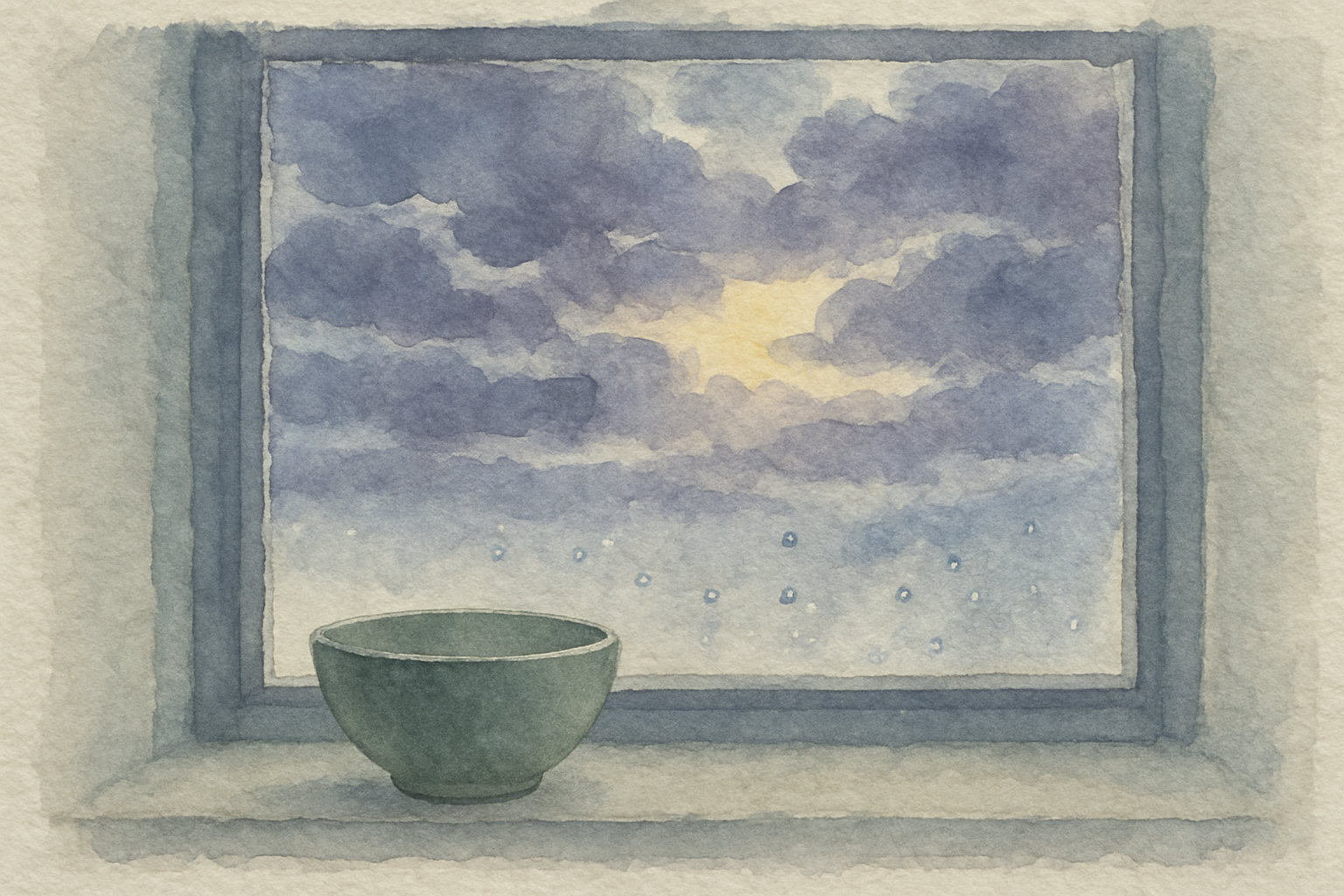
Back to the washing of dishes and the mind coming in with its thoughts. There's nothing wrong with that. It's like looking at clouds and seeing a puppy. You don't try to unsee the puppy. You just see that you're imagining a puppy on a cloud. That's the difference: knowing it's actually a cloud, while the mind sees a pattern of a bunny rabbit or something.
You're washing the dishes, the mind comes on in the way you're describing it, and all you see is the mind doing its colors and shapes. Compare that with: "I'm no longer seeing a cloud; I'm seeing reality, which is the puppy in the sky." That's the difference. That's all that is needed. It's just knowing the mind is doing what the mind does, and knowing that all it is, is mind, that you cannot know any of it to be true or real. You know it's just thought. Then it's like looking at the sky with the added playfulness of sometimes seeing shapes that you recognize. You're not trying to fight the mind.
What if you see a scary monster rather than a puppy?
You have fun with it. "Oh, that's my mind imagining a scary monster." It's like going to the movies. That's all it is. The problem is when you believe the monster is absolutely true and real.
You see a scary monster in the sky, there's adrenaline running through your body, and you notice: "My mind is seeing a scary monster and it's activating an adrenaline rush. Interesting." The more you see that, the more discernment will happen naturally. It's not you doing it. The discernment arises on its own. If you are riding a bike down a hill and there's a cloud in the way, you just move through it. But if there's a rock, you're going to swerve around it.
Discernment arises on its own
The more you can see through the mind and see through all the ways it makes things that aren't real, the more there will be a natural discernment of what's important to pay attention to and what isn't. That which is just an imagined monster won't invoke unnecessary action and fear. When you see something that is a relatively important problem to address, there will be a natural addressing of it.
And in between those monsters, there are puppies. All the monsters are just interpretations. But the more you see through them, the more you'll recognize what actually needs to be addressed, and it will happen spontaneously. That which is not real, you will see through. And then for some things, there will be a natural, wise response, a natural, wise action. But that wise action comes after you see through the illusions, and it too is not something you do. It is the natural response of a body-mind that is attuned.
What if you don't trust your natural responses?
That's exactly what I'm describing. The more you see through the illusion, the more you will see that not trusting a true, natural response is itself because of illusion. It's because you're believing things that aren't real. The more you see that, the more the natural response, which is wise, will happen, and the trust will be there.
The distrust of a true, wise, natural response is because of a fear, because of a monster that isn't real. But again, you can't know what a natural, wise response is. It can't come from knowing in the intellectual sense, not from a mind image. It will come spontaneously. And then life, the whole body-mind, attunes and becomes deeper and wiser through the experience and the exploration. It's like riding a bicycle: you fall on your face, you get up, you fall on your face again, until you get better and better. But the getting better is mostly the body-mind doing the learning. You're not calculating every muscle that moves and every twitch of every nerve.
A leap of faith
The discernment happens more and more as you see through the illusions you're choosing to buy into. It's basically an attunement with what you truly want, with where love is. And that is a leap of faith, a trust in yourself and in the universe. It must happen spontaneously, with a sense of not knowing. Otherwise, you can be telling yourself, "This is discernment, this is the right thing, this is the wrong thing," and it's more knowing, knowing, knowing.
If you think you know what discernment is, you don't. If you think you know what love is, that's not it. If you think you know what freedom is, that's not it. Any book you can write about it, it's not it.