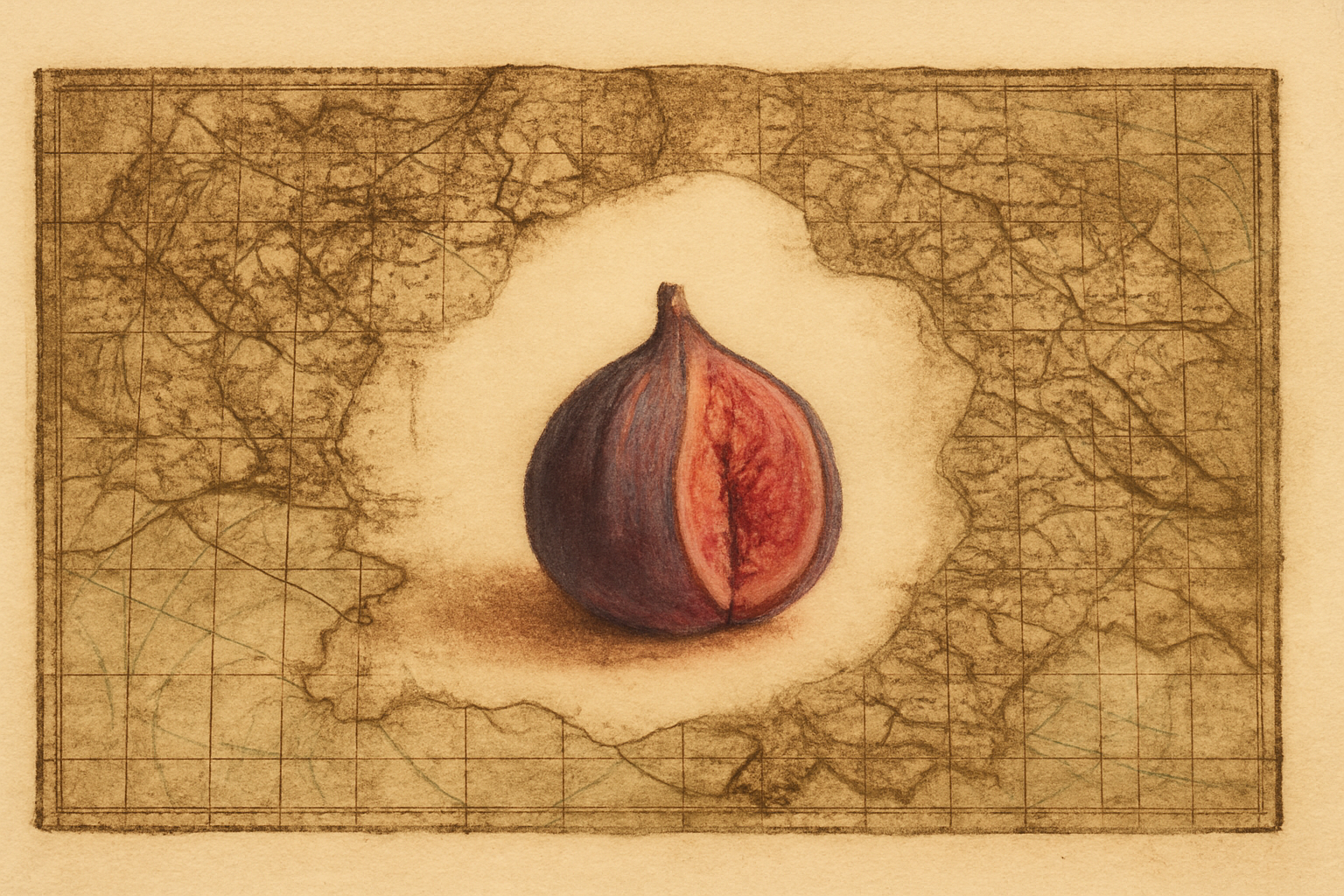
The Taste Beyond the Map
El Sabor Más Allá del Mapa
A question about whether a meeting is truly happening, and how conceptual understanding can obscure the mysterious reality of direct experience.
The Taste Beyond the Map
A question about whether a meeting is truly happening, and how conceptual understanding can obscure the mysterious reality of direct experience.
Attending this meeting: it is this. It's appearing, and the meeting is not happening.
What is not happening?
The meeting is not happening.
I can only say yes or no to that if we really understand what you are referring to as "the meeting." What is happening is happening. Now, there may be ideas about what the meeting is, and then what is happening is ideas about the meeting and what the meeting is. But that is happening as well, as thoughts. And those thoughts could be useful and practical, or not. Some thoughts are practical and useful, and some are not. What matters is to recognize what is happening as what it is.
The map mistaken for reality
Specifically, what we tend to misinterpret is thoughts. We interpret thoughts to be the reality, so the map that the mind makes is interpreted to be fundamentally what reality is. Then what the map refers to starts to become a kind of background, less real than the thoughts themselves.
For example, if I pick up a cup and there is a thought process of "cup" and "getting water," what starts to become fundamentally more real is the concept world of cup, water, drink, rather than the experience of cup, water, drink. The thoughts about the fruit become more prominent than the taste. Both are happening, both are part of what's happening, but because of the focus on thought, we make the conceptual world appear to be more foreground, more fundamentally real, and we forget that it is made of thought.
The conceptual map of reality, of "me" and "other" (which only appear as a conceptual world), becomes a reality. It becomes self. The concept "I" is interpreted to be what I am, and then everything that stems from that, the concepts and the world-map that comes from that in thought, becomes more fundamentally real. It is quite complex in experience, but the reality of it is very simple once you see it is just thought.
It doesn't have to be battled with or thrown away. That would be giving it too much reality again. It could simply be seen as thought. It is like a dream, a reflection. It is a part of nature, a part of the human experience. And when it is seen for what it is, it becomes useful and practical, like a hand.
Yes. I realize any idea about the meeting is just ideas; it's not the reality of the meeting. So in that, there is a slight loss of "what is this meeting?"
The mind cannot grasp what is beyond it
That's what I'm speaking to. What they say is: you cannot ever fully know. Not because there is something there you cannot reach, but because the mind cannot grasp it. It is beyond the mind. What can be known from the world of thought and language cannot go that far. That is what I am referring to as mystery.
This is the point where I get frustration. There is that texture.
You get frustration because you are attached to the mental understanding. You want to understand from a conceptual, mental place, and part of you is attached to that.
Yes. And also there is a seeing that is loud, that is an expression.
Frustration as a signal to taste rather than grasp
That is totally fine. Frustration just arises, like a sound arises, or seeing arises and subsides. It is great to not make a problem of that, to notice that it is simply what is happening.
You can also see more clearly, more deeply, but "see" not from mental understanding. For example, you can recognize that there is something that is mystery, something the mind cannot grasp. But you can know that from a different place. It is not a mind-map knowing. It is a knowing like touching, tasting, sensing. It is like the knowing of the taste of a fruit, which is different from the knowing of the description of the taste, or the understanding of what makes the taste.
When the frustration appears, it could be a nice signal for you to lean into the tasting. Savor it. Savor the textures, the flavors of the experience, the mystery, including the part of you that feels frustrated, the part that wants to understand, the part that has a longing to create an accurate map. That is grasping.
The point is not to remain in the frustration, but to allow it. If you fight the frustration, if you interpret it as problematic, you will be stuck there. If you allow it, you can swim with it, dance with it, and explore more deeply what is underneath.
That is very clear. Thank you.
You're welcome.