The Seed of Seeking
La Semilla de la Búsqueda
A question about the circular nature of resistance: knowing something isn't right, believing it should be better, and the subtle contraction that fuels the loop of seeking.
The Seed of Seeking
A question about the circular nature of resistance: knowing something isn't right, believing it should be better, and the subtle contraction that fuels the loop of seeking.
The resistance we were exploring in the meditation seems like a kind of circle, like a cat chasing its own tail. "I know this isn't right. I know it should be better. I think I know how to make it better." We can inquire into that, and I do. But at the same time, what do we think we know?
You've already said quite a lot. There's a lot there already, so let's dive into the juicy bits. You said something about knowing how things are, that they could be better, and that you'd know how to make them better. You're talking about the present, right?
Yes.
The distinction between what is and what could be
What I'm speaking about has to do with what is, which is different from what could be. What could be is creativity. It could also be interpreted as a problem to be solved, in the sense that there is something now that is a problem and "what could be" is the solution.
Something's wrong; something isn't what it should be. But if what is is simply what is, and there's no objection to it, then "what could be" is creativity: the universe and beingness co-creating without any friction or illusion getting in the way.
Now, if I see what is and believe there's a problem, and I know how it should be, then there is illusion. There is resistance. There is friction in the creative process, because I now have an agenda, and the agenda is solving a problem that is, at a fundamental level, an illusion.
This is where words get tricky. Is there something fundamentally wrong in what is? There's a difference between: "Something about what is now, I'd prefer it to be different, and I will engage with the creativity that I am and that is this reality, to bring more light, truth, beauty, love, freedom, enjoyment, joy, well-being" versus: "Something about what is shouldn't be, and I know how it should be." In the latter case, there's a fighting and struggling with the reality that is. The place I'm coming from is illusion, and it requires a belief of separation: I know what is shouldn't be, and I know how it should be.
Creativity from acceptance vs. resistance to what is
These are two very different ways of relating to what is. On one hand, there's the co-creative dance. On the other, there's resistance, fighting with what is. And it really stems from a very subtle interpretation, which can be an illusion or can be truth.
One can see that what is is exactly what is. It cannot be named, cannot be judged, cannot be criticized. In a way, it is what it is, and then there can be a creativity coming from the full acceptance of what is. Or there can be fighting, struggling, resisting, which is what's called "seeking" in these conversations. Seeking is going into thoughts of how things should be and fighting with what is. It's a never-ending investment of energy into thought, into an idea of how things should be, based on "I cannot accept what is."
I wanted to unpack that because there's an important distinction in how we deal with what we could call the future, the movement of the present.
I understand the distinction you're making, and it's a helpful one to meditate on. I think what I was speaking about was the latter: the dukkha, the seeking. I almost feel so content I don't even know what to talk about. But at the same time, there is an illusion I want to explore. It seems like there's energetic chiropractic work that happens in these meetings or in the meditation, where that subtle illusion gets shown for what it is, not only at the conceptual level as we hear the words, but also in a space that's created. Something vibes with that, and I can click into clear seeing. I'm not saying it's dependent on this meeting, but there is still something in me that wants to hold on to this as special, because I'm in this frequency of things simply being what they are, this lack of seeking. It becomes clear in that space.
Nothing is sacred, nothing is special
The specialness of anything is ultimately an illusion. It can become very clear that nothing is sacred anymore. By "sacred," I mean anything we feel is "the way": teachers, rituality, meditation, satsang, all of it. It's important not to throw the baby out with the bathwater, but ultimately none of that is sacred or special, including this, including shifts, including anything that feels profound. It needs to be seen that it's not special.
That's where the distinction between sacred and ordinary, form and formlessness, collapses. Anything is sacred and not sacred. Anything is ordinary and extraordinary. That is ultimately the end of seeking, because there is nothing divided into "more important, more special, more valuable, more sacred." In order to pursue something sacred, I have to go into thought, because time only exists in thought.
When I name something that's happening now as less spiritual, less special, less "the way," that's how I go into thought. "The way is this way," with whatever agenda or strategy I have, and "what is here" is not it. It could be some interpretation of my mental-emotional state, some interpretation of how my life is, how relationships are, how the external world is. Whenever that starts to be mapped as "something's not right here and I need to make it more right," and that becomes fundamentally the way I'm engaging with the present moment most of the time, that is what I was defining as resistance.
Acceptance cannot be forced
When that is seen through (and it's not something we can force, because acceptance is reality), then there isn't any fundamental problem with what is. There are things that could be changed, and a creativity comes from that, but it comes from love, which is the acceptance of what is, versus the rejection of what is.
I see what you're talking about. It seems like both happen at the same time. There can be clear seeing of the simplicity of this being what it is and not needing anything, and still that illusion can come up. Seeing that illusion as a problem is part of the same pattern. But there's some tightness, and a feeling that I need to do something about it.
The contraction we call a problem
That's exactly what I'm referring to. Thoughts, sensations, emotions: it includes that tightness. It really is that subtle thing we have the habit of creating and then calling a problem.
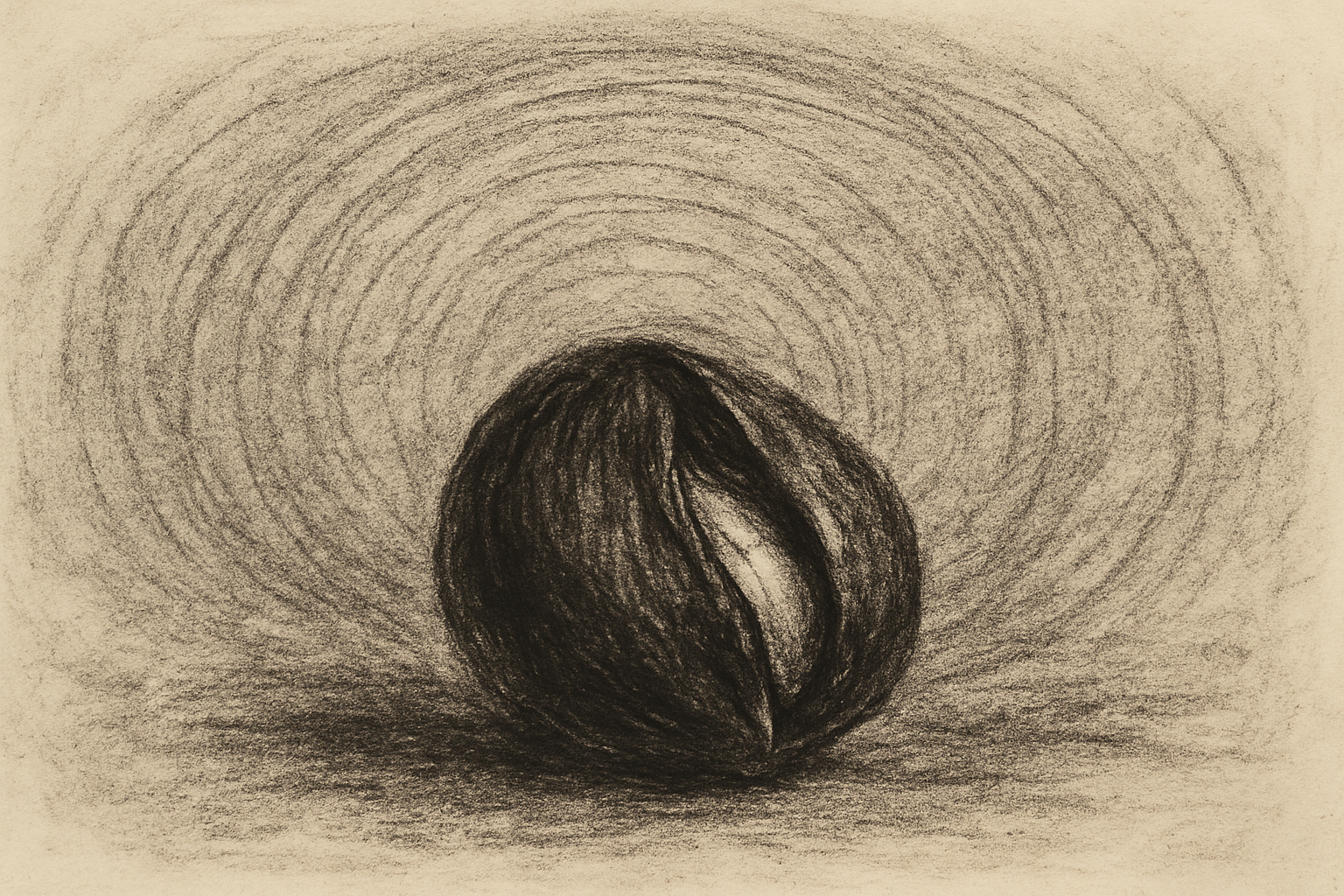
When I speak in the meditation about the acceptance of what is happening, that thing you would normally say no to will fall through the cracks. In the meditation, you might realize that what is being perceived is fully accepted, what is being thought about is fully accepted. But then there's that one little thing, that sense of contraction, that's not accepted. "That's not really what's happening. That needs to change. I can change that." That subtle thing is the seed of the seeking that pushes into thought.
The other perspective is to see that the contraction is exactly what is happening.
Yes.
That contraction is where this will be tested. What will be tested is your appetite for truth and reality, because it can be seen that that contraction is exactly what's happening and cannot be changed. It cannot be changed right now.
Yes.
And then a thought will arise: "Yes, but it's a problem." It might not be a literal verbal thought, but it will take that form of engaging and relating to the contraction. "Yes, that's exactly what's happening. I cannot change it, but maybe I can, and it's a problem." In fact, most likely that contraction is actually the consequence of that very belief: that there's something that needs to be changed in what is exactly happening now.
I see that and feel that clearly. And the other thing I noticed: there are two things happening. What you were just describing, and when that appetite for truth is in the forefront. Lately, when truth is more present, a lot of grief comes up. It's not a problem, because it feels very beautiful in a way. But it can bring quite a bit of sadness with it.
Grief as a free process
It's more likely that the grief is not the root issue, because grief will come and go. That contraction you described is the kind of thing there can be an attachment to change, because there are many interpretations of what's causing it. It's a constant annoyance, like a thorn in your foot. Then there's going to be the interpretation that freedom is possible and available on the other side of it: "Freedom will be when this contraction stops. The cause of this contraction is some problem, some challenge, something that needs to be resolved." All of what I'm describing is illusion. By that, I mean it is not the way.
I had been interpreting that grief as connected, because it comes when this is more clear, what we're talking about: the simplicity of what is, something childlike or reminiscent of childhood. It's not always grief, but it can come up. I don't know what I'm trying to figure out there. Maybe that is just what you're talking about: trying to figure out why it's there and what it means.
This is where there's going to be a narrative, a belief system, a constant constructing: what is the problem, what needs to be resolved, how is it going to be resolved, tying that grief into that narrative. But grief is grief, and it is often a good thing to process. There are times where it's being created through a loopy process. I don't know if that's the case for you, and that's not what it feels like right now. So it's a natural, healthy process. But I don't think there is much to get involved in that process of grief as it relates to this work of waking up.
I did have a big loss at the end of September. I guess I didn't make that connection to the grief because it's non-conceptual. It just comes up. But maybe it's just the body processing it.
And that's very healthy. It's natural and beautiful. Life will have many circumstances where grief is the most natural response, and to be able to live through that is health at the level of body, mind, and heart. I would just really try not to tie it into some kind of process that is important for any kind of seeing or recognizing. Just let it be a free process of grieving. When you said it's non-conceptual, that there isn't a lot of thought content in the grieving, that's the healthiest and the deepest.
Thank you. I appreciate it.
You're welcome. I hope it helps.