What Cannot Be Harmed
Lo que no puede ser dañado
A reflection on the distinction between the psyche, which needs care and protection, and the heart, which remains open and unharmed regardless of circumstances.
What Cannot Be Harmed
A reflection on the distinction between the psyche, which needs care and protection, and the heart, which remains open and unharmed regardless of circumstances.
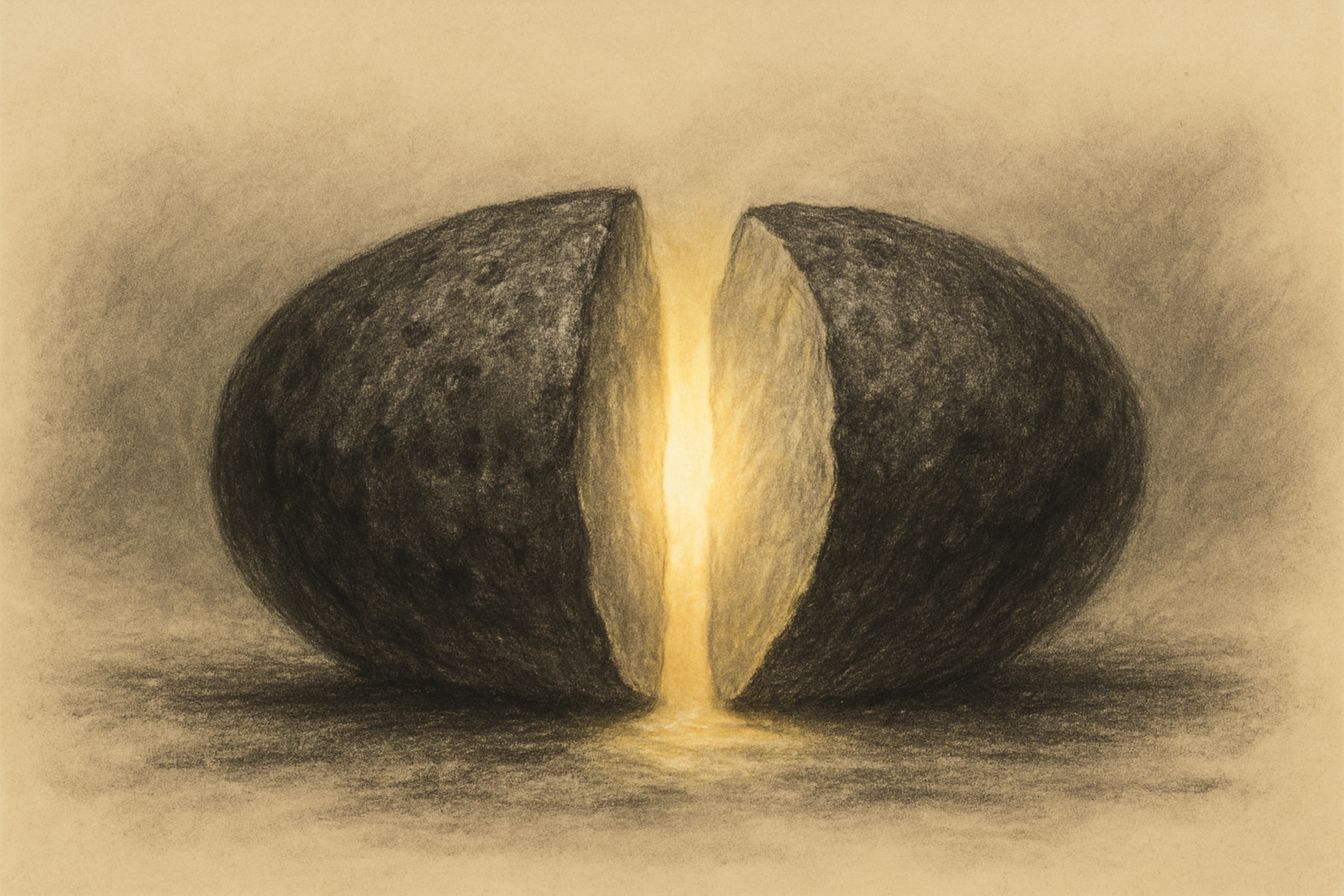
What I call the heart cannot be harmed. It is always open and loving. The mind can close down, and our psyche needs attention and protection. Our bodies need attention and protection. But what I'm calling the heart does not.
In relationships, our mind and psyche need attention and, let's call it, protection. I use that word simply to create a contrast so that we can see things as different. To highlight that there is something that doesn't need protection, I say that the mind, the psyche, needs protection.
Healthy boundaries as care for the psyche
In relationship, having healthy boundaries is a form of taking care of and protecting our mind, our psyche. Not our mind in the sense of our thinking, but the human psyche: healthy relationships, healthy functioning. And the body as well. That is easier to understand and doesn't need much explanation, but we need to protect, feed, and bring a healthy attention and caring to the body.
The same is true of our minds in the broader sense: our psychology, our persona, our person. That is why I recommend therapy, and all kinds of ways in which we can work with our mind.
The heart is beyond harm
What I'm calling the heart is different. It simply cannot be harmed. It is always open, always loving. That is what can be recognized. It can be realized, and it is a very freeing thing.
We think that all of what we are is our psyche, and so when it is threatened, there is a contraction. We can interpret or feel that pain as reaching the core of us, as though something in a very core place (the heart of us, the center of us) is being hurt. But it is not. What is being hurt is not the deepest part of us.
Going through what we fear most
I am drawn to the metaphor of the crucifixion. The body and the mind were completely threatened and sacrificed. Yet we can go through what we are most afraid of and come out on the other side, discovering that something was already there, something that is completely okay.
I can use some small examples. If you are terrified of an exam, and the worst thing you can imagine (these are the kinds of things we know more from being young) seems like death: failing the exam, or the end of a relationship. Once we go through it, once we actually fail the exam, we realize we are fine. That which seemed to be the end of our world hasn't ended.
That is a very small example. The end of a relationship goes a little deeper. But what I am pointing to is something far deeper than either of those. In theory, it can start with something very small when we are an infant, like a caregiver taking food away. Then failing an exam. Then something larger still. At every level, the same discovery is waiting: the heart, the deepest part of us, remains untouched.